I've always heard that the pre-Christian Germanic peoples (including Scandinavians) were preliterate societies but why is this the case when they obviously made runic inscriptions; did these serve a solely ceremonial purpose as opposed to record-keeping, literature, etc.?
They were literate societies but not literary ones. I.e. they had a writing system, but they did not use it to transmit stories, knowledge and so on.
Writing technology
The means to do so did not really exist. The main medium for writing runes was by making knife-marks on wood. And they were adapted to that medium; e.g. by lacking horizontal lines, which become very difficult to see if they're parallel to the wood grain.
Even if someone wanted to write down a long story, knife-marks on wood severely limits how long a text you can conveniently write. Inscriptions on stone and metal are even more limited. So not only was there no culture of writing long runic inscriptions of stories, the technology was not there; i.e. the making of parchment, of quills, of gall ink, etc. Both written literature, its technology, and knowledge of calligraphy, would be introduced alongside the Latin alphabet. It was therefore natural that ink-on-parchment writing would be done using Latin script.
The few manuscripts of any length in runes (primary the Codex Runicus from Denmark and KB MS A120 from Sweden) are essentially exceptions-that-prove-the-rule, both produced around 1300, a point in time by which Latin script was dominant and runes on their way out. Thus, they're considered a bit of a novelty, an 'archaising' style even at the time. A close-up view of the pen strokes also shows that, compared to Latin calligraphy, it must've been quite awkward to write. (requiring constant changes of stroke angle, whereas the hand is kept at a constant angle in contemporary calligraphy like Textualis)
So even after the introduction of the Latin script in Scandinavia (11th century), rune use still continued for centuries (mid-14th in general, 16th century in Gotland, possibly until the 20th in Dalarna) but it remained used only for short inscriptions, not ink-on-paper/parchment.
Vernacular literary tradition
Likewise, even after the introduction of parchment and ink and Latin calligraphy so on, most Scandinavians were hesitant to use it for the vernacular language. Up to and including the 13th century, almost all letters and manuscripts - the exception being laws - were written in Latin. This seems likely to have influenced the fact that very little of the oral storytelling tradition (not least the poetry) made its way onto parchment to be preserved for posterity. In Demark, only a little folklore was recorded insofar that it was included in the histories of Saxo Grammaticus and the Lejre chronicle. From Sweden only a few paragraphs of Gutnish (from Gotland) foklore was recorded (the Gutasaga) because it was a prologue to their law text.
Norway and Iceland however, wrote in the vernacular to a higher extent, and therefore what we know of Old Norse stories and mythology is heavily indebted to what was written down there, and particularly in Iceland, in the 12th and 13th centuries. To the extent that in many contexts 'Old Norse' is often synonymous with the West Norse dialect of that era. (even though a large majority of Scandinavians spoke East Norse)
So not only did runes by-and-large not make the transition to parchment, by-and-large the traditional oral stories didn't do so either. The Icelandic sagas is basically the exception that proves the rule, attributable to the very particular, strong literary culture that developed there.
My point is, they didn't have the means to write longer things, nor necessarily the concept of doing so. By the time they did have those things the oral storytelling still didn't carry over to the other medium. So there were a number of hurdles to overcome to have a literary runic culture that never were overcome.
Mystical rune use
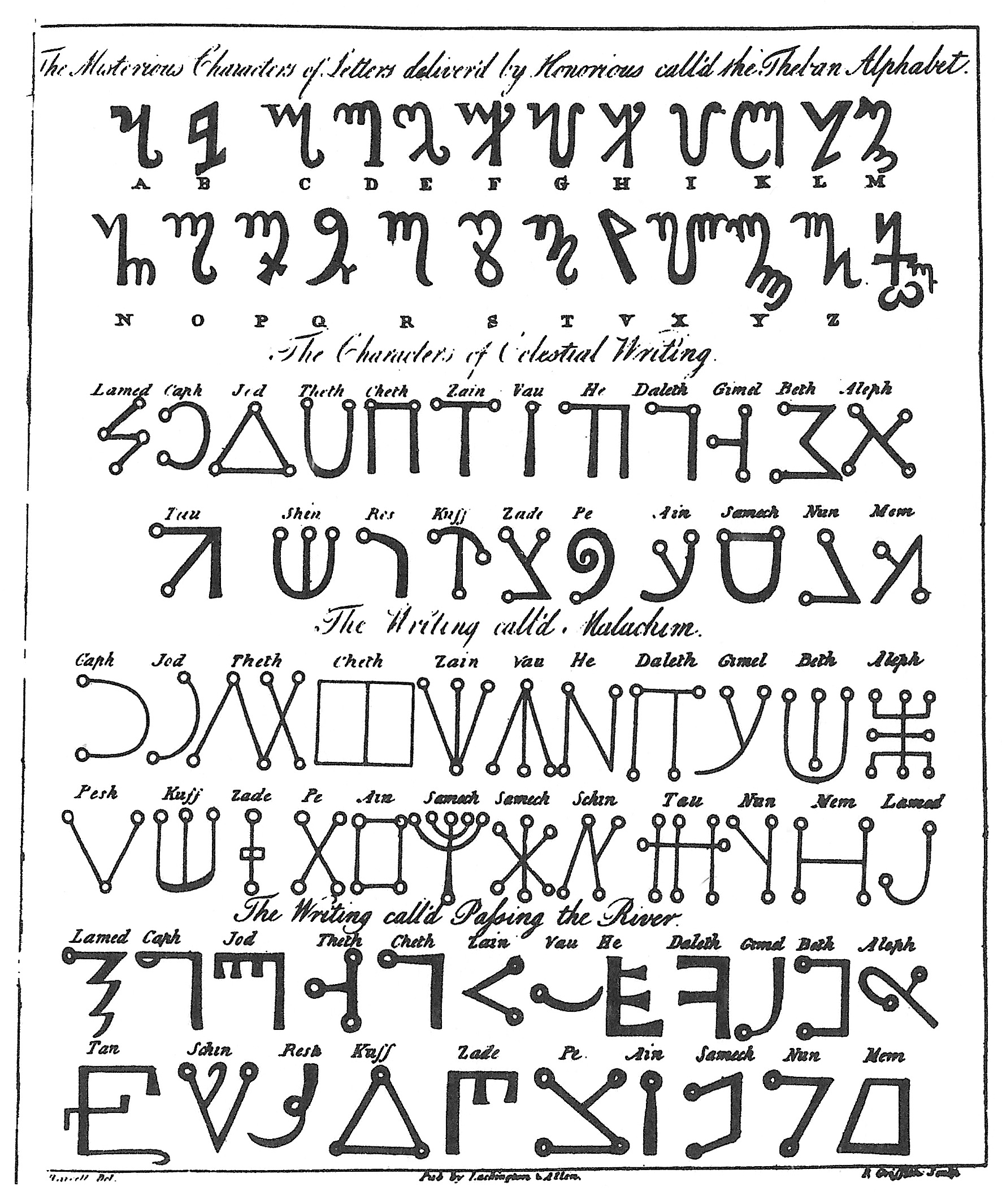
For a very long time, historians had associated runes with magic. Literally since the first academic runologists, such as Johan Bure (AKA Johannes Bureus, 1568-1652). To the extent that it wouldn't even be something many would consider questioning a century ago. Yet in recent decades this has undergone revisionism, to the extent that today the consensus among runologists is rather than they definitely weren't inherently magical. A perception that they had been, seemed to arise in Scandinavia only by the end of the Middle Ages, by which time (as said) they'd fallen out of use (except a few regions). But the broader context here is that interest in magical/occult/'ancient' alphabets (some examples ) came into vogue in the renaissance (e.g. with Heinrich Cornelius Agrippa) and would continue to be popular through the 16th and 17th centuries until the whole trend began to die down with the Enlightenment. (it's may be surprising that runes didn't get more popularity than they did in that era, as an 'ancient, magical alphabet'. Perhaps the problem was that it was not an ancient people Renaissance occultists held in much esteem, compared to Hebrews, Assyrians or Egyptians) Nevertheless this is not an entirely distinct thing from the renewed interest in runes in that era; Johan Bure for instance was also an occultist who dabbled in Kabbalah.
Now, when I'm saying here that runes weren't magical, I'm certainly not saying that magical inscriptions with runes don't exist. They absolutely do, and from every time period. Rather, what I mean is that runes do not seem to have been considered inherently magical, or having some sort of magical or ritual function that any other alphabet wouldn't have. (that said, to a society that's highly illiterate and superstitious all alphabets could be regarded as somewhat 'magical', from an unabashedly-presentist POV)
The nature of inscriptions
The time period from which we have the most inscriptions is (predictably) the most recent period they were in broad use, namely from 11th-14th century Scandinavia. The majority of these are short carvings on rather ephemeral things; short messages on sticks and bones. For instance:
"Gyða says you must go home" (N B149, wood stick)
"Read this!" (U Sl 89, bone fragment)
"fuþorkhniastbkmlʀ" (the runes in order. a common thing that was formerly always assumed to have magic attributed to it, and in some contexts probably did. But a substantial number are probably just people learning/practicing the alphabet)
"Geirbjörn owns me." (Sm 162, knife handle), "Botvid of Alskog owns me" (G 150, arm-ring)
"cross, Mark, cross, Luke, cross Matthew [...] cross, Mary, mother of God. " (U Fv1990;37,metal plate)
"I carve healing runes, I carve helping runes, once against elves, twice against trolls, thrice against giants." (N B257, wood stick)
"All souls here are baptized into the congregation through me, the bowl." (Vg 244, on a somewhat boastful baptismal font)
On an pork rib: "Marre(?) donated the rib. He owns the most property.." .. but then on the back "The king is the best man. He owns the most property. He is generous." (U Sl 34) - This one seems to bear witness of some presumably high-status fellows drunkenly bantering by writing messages on their leftover bones after some feast.
This is just a few out of thousands of inscriptions, but it gives an idea of the range, which is essentially the broadest imaginable. Runes were being used in the most everyday of contexts, such as marking ownership of objects, and sending short messages. They were used for blessings, for invocations and amulets. They were used on formal, high-status monuments and for jokes, riddles and banter. In other words, a full-fledged script.
(continued..)