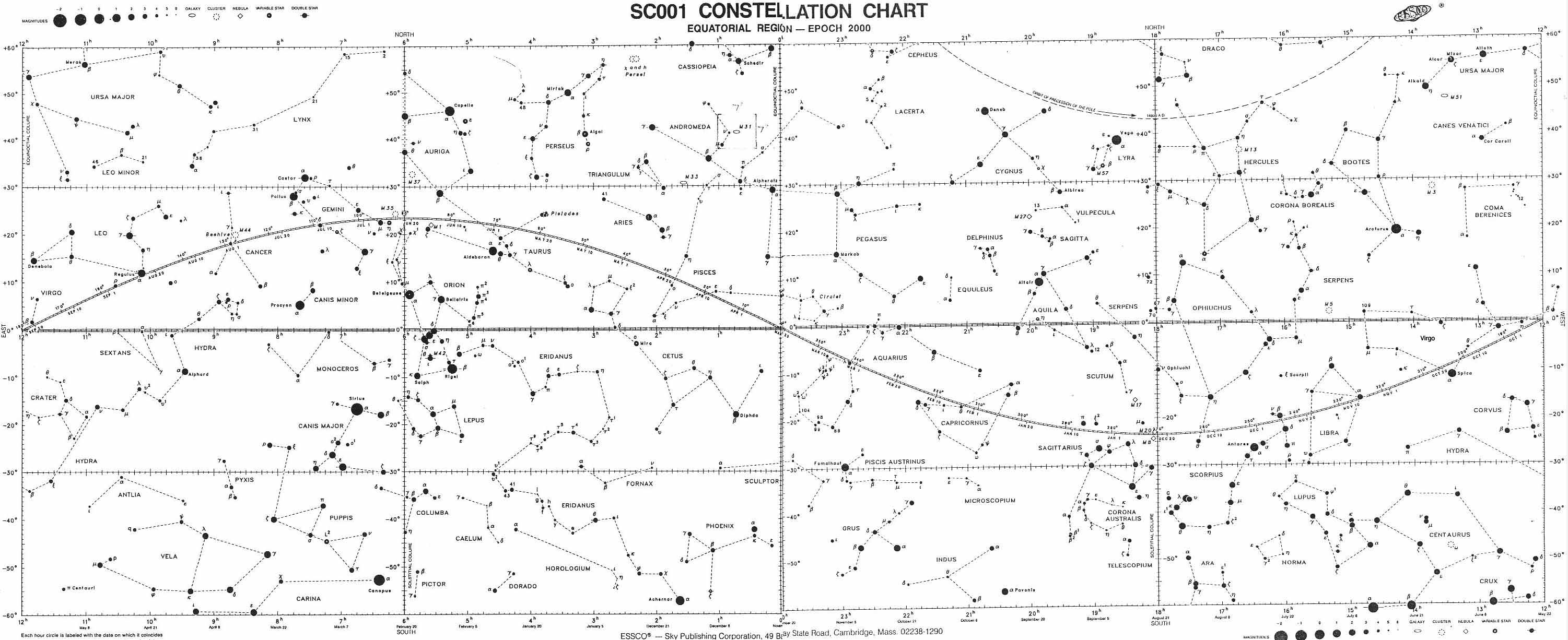
For anyone who has a passing acquaintance with modern astronomy, the main obstacle to occupying ancient astronomers' headspace is the challenge of seeing the ecliptic geocentrically: that is, as a fixed path against the fixed stars, rather than as the plane of the planets' orbit around the sun.
With that in mind, Babylonian and Greek astronomers were absolutely aware that the sun, moon, and planets roughly follow the path of the ecliptic. (That's the whole point of talking about planets being in a particular constellation of the Zodiac, that is, the twelve constellations along the path of the ecliptic.)
They certainly realised that the ecliptic is a great circle on the celestial sphere of the heavens. Nowadays we are perhaps more accustomed to rectilinear star charts, and if you plot the ecliptic on that kind of map you get an S-curve, like this. Rectilinear maps weren't a thing in antiquity, so they didn't have that problem.
The fact that all the moving bodies in the sky move along the ecliptic certainly encouraged astronomers to think of the sun, moon, and planets as essentially akin. All the various cosmologies that we get from the Greek world accordingly treat them as functioning similarly. In Anaximander's cosmology, for example, the moving heavenly bodies are attached to bands that slowly rotate around the earth, while the fixed stars are separate. And of course in Ptolemy you get each body orbiting the earth with a bit more complexity to their harmonic motion, in the form of epicycles, but still fundamentally moving around the earth using the same mechanism.
It's very likely that the ecliptic played a decisive role in the discovery of the earth's sphericity. We don't have details of precisely what evidence led to the discovery, but the exposition used in Cleomedes' Circular motions of heavenly bodies suggests a close link, and the discovery was made around the same time as the measurement of the angle between the plane of the ecliptic and the plane of the celestial equator -- like this, but with the sun orbiting the earth rather than the other way round.
The fact that the celestial equator and the ecliptic form two great circles at an angle was probably enough to imply a spherical geometry for the sky; and in conjunction with the observations of a different angle to the celestial pole at different latitudes, and different stars, I'd suggest this is probably what led to the realisation that the evidence also implied a spherical geometry for the earth. That's the logic in Cleomedes, at any rate, and the timeline fits well. We're told that it was the 5th century BCE astronomer Oenopides that measured the angle of the ecliptic; just a few decades later we find Plato taking a spherical earth for granted. If you're reading up on this I should perhaps point out that the angle of the ecliptic was different back then: nowadays it's about 23.5°, but it wobbles slowly, and in antiquity it was closer to 23.9°.
I'd recommend Couprie's Heaven and earth in ancient Greek cosmology (2011) for further reading on the subject. If you're interested in the discovery of the earth's shape, and the role that the ecliptic played in that, I wrote a piece earlier this year that may be worth a read.