I mean generally: size, "importance" (socially, economically, etc), how well-known or important to the people of the country?
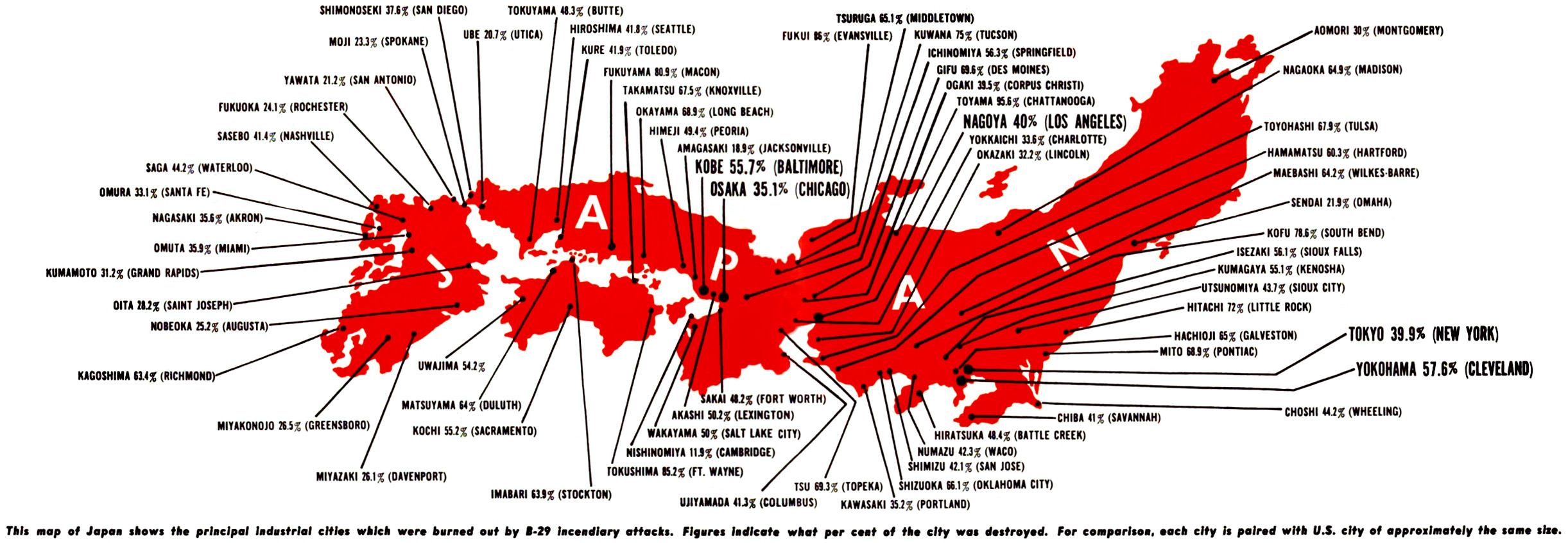
The similar cities used by the US Army Air Forces to compare them were Akron, OH for Nagasaki, and Seattle, WA for Hiroshima. This was based on population, from what I can tell. Hiroshima had a pre-bombing population of about 350,000, Nagasaki about 240,000, and this maps for those American cities.
I am not sure how to come up with similar compares on the other metrics. They do not map one-to-one with American cities, obviously. Nagasaki was the more famous of the two, because of its role as a historical port.
The only thing I might add is that neither were major cities at the time. This is part of the reason that they were not attacked prior to the atomic bombings (Hiroshima was put on a "do not bomb" list in May 1945, but Nagasaki never was). The "major" cities of the time were targeted for firebombing much earlier (Tokyo, Yokohama, Osaka, Kobe, Nagoya, etc.). I only bring this up because one of the persistent "justifications" of the bombing is the importance of these targets, but it is literally the fact that they were not that important that they were available to be attacked that late in the war in the first place. Of the two, Hiroshima was more important to the Japanese war effort than Nagasaki.