For example France is much closer to England and Germany in art style, economic system, politics, and a whole bunch of other things than Southern Europe. Yet because French is a romance language, the culture a the core is considered Latin and in turn one of the direct descendants of Roman civilizations.
The Philippines is basically adopted Spaniard culture in all but the tongue on the surface. Architecture, religions, social customs, traditional clothing, music, and so on are indistinguishable from Latin America. Even the main language has a lot of loan words from Portuguese and Spanish. Yet Philippines is classified under SouthEast Asian culture despite outsiders often mistaking pictures of the country as being Mexico or Cuba or some other Latin American place. The biggest arguments about why Filipinos are not Hispanic or even Latino is primarily because Spanish is not the tongue of the country and Tagalog is not romance either in the way Portugal is which is why Brazil is classified as a Latin country. Tagalog is far closer to Austronesian, the family language of Indonesia and Malaysia along with much of SouthEast Asia so Philippines is not considered Hispanic or Latino but within the Austronesian cultural grouping even with the major amount of Spanish in various Filipino tongues.
So it makes me wonder. Why to be considered in the "same culture" language is almost the sole thing to qualify and stuff like architecture is disregarded?
Maybe you can ask this question in r/linguistics as well because the answer to this is quite complex.
Language is definitely ONE of the main identifiers of a culture because it is probably one of the most pervasive aspect of a culture. Say, a homeless person might not even live in that culture's building or participate in their economic, legal and sociopolitical sphere. However, they still participate and form a part of the culture because they speak the same language. Same goes with the diaspora, their ability to connect with their ancestral language might be the only thing connecting them culturally to the "mother culture".
Moreover, compared to race, language can become a more apparent way at assigning people onto groups, since every social group (education level, profession, religion, hobby circles, etc...) and region has its own language to some extent (language variety, technically speaking). In concrete terms, an Asian and a Caucasian can belong to the same culture; on the other hand a surfer and a cowboy will almost always have different slangs, expressions and mannerisms due to their social circle. A group will always create a way to communicate something between themselves, and if given sufficient time and isolation from others, the group, along with its way of communication will slowly diverge from its cousins and become a new culture (and language). This is called ethnogenesis, and language is a big part of it since even if the group itself has no territory, no architectural style, or others "cultural products", they will always have a way of communication that is unique to them, however slight. In linguistic history, there are many examples of these such as Yiddish, African-American Vernacular English and the many working class/upper class accents and slangs.
Then, language itself also contains a lot of cultural markers. In Tagalog, for example, what kind of kinship system do they use? How do they talk about food in their language? What kind of relationship that they project unto people with their language? In English, for example, we talk with our parents the same way as how we talk to our friends. However, in some language, a person talks to their "superiors" and "inferiors" using different words and even grammar. The interaction between language and culture is a very complex topic worth its own book, but it can be said that language helps to shape someone's mindset about their world around them, and at the same time it is affected by the surrounding culture.
That being said, the categorization of cultures itself is quite a difficult thing. Is it due to religion? Is it due to material culture? Is it due to language? Each culture is unique and categorizing them into a larger part inevitably simplifies them. Sure, we can say that French is a Germanic nation because the Franks built the foundations of the French people, and we can say that Tunisia is Mediterranean because of their geography. However, reality is much more complex then that and there is no single "primary" classifier that can objectively satisfy all the criteria.
Just look at Hungary and Finland. They are usually considered culturally Central European/Nordic respectively, yet their languages are from the Ural Mountains of Russia. There are others "gray areas" like this such as Turkey, Madagascar, Indonesia and as in your example, The Philippines. Turkey is a steppe nomad language-speaking country in the Middle East and Europe. Madagascar is Austronesian but is off the coast of Africa. Indonesia has been greatly influenced by Hinduism and Islam, and historically and culturally has had more to do with India and the Middle East than say, Sinospheric Vietnam. Finally, The Philippines have also had massive Spanish influence due to centuries of colonialism.
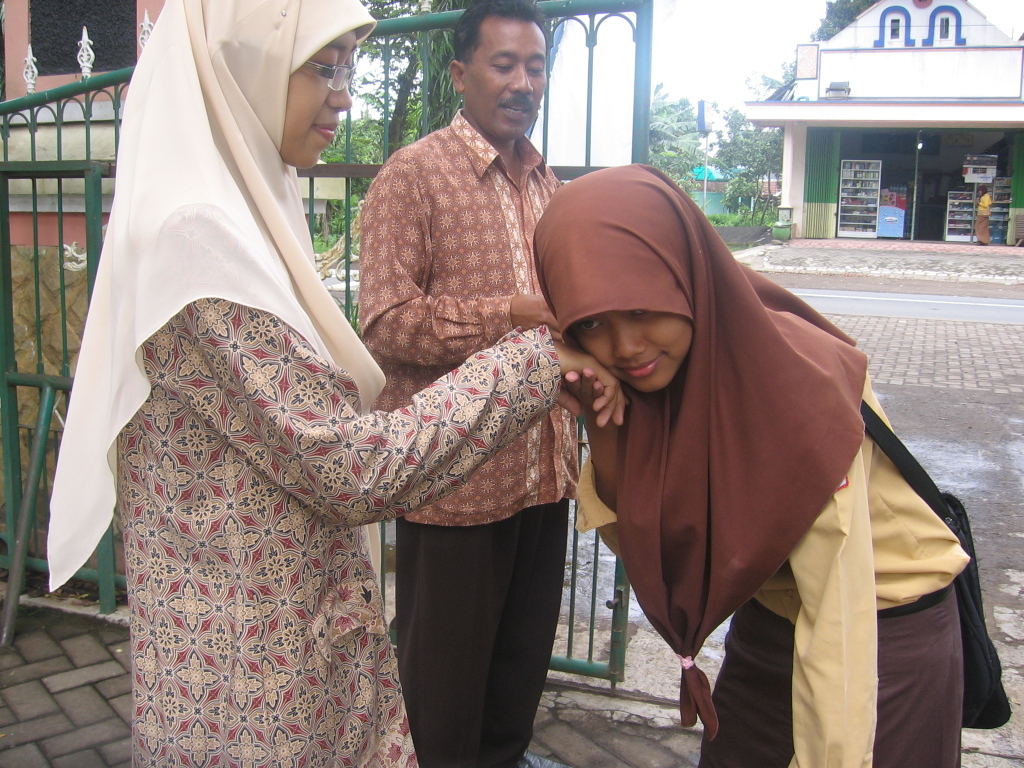
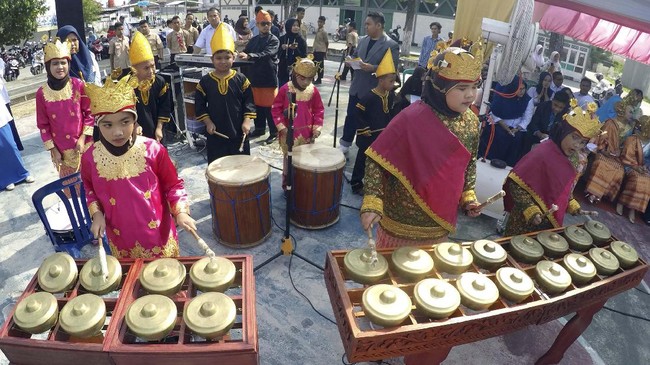
However, different to what you said about cultures is that when you look deeper, these cultures rarely are just "Austronesian speaking Latins", or "Latin-speaking Germans". For example, there are a quite a few common cultural elements that can be found between Indonesia, the Philippines and even Madagascar, who are all Austronesian. All three cultures have a style of feast where rice and meals are poured onto banana leaves and eaten communally with one's hand (see links below). All three cultures used the same kind of boats and sails before petrol engines became commonplace (See Robert Blust's The Austronesian Languages and Peter Bellwood's The Austronesians: A Historical and Comparative Perspectives). Kids still do the same gesture to their parents in Indonesia and the Philippines (see links below). There are also many similarities in the music and dances of Indonesia and the Philippines, such as with the Kulintang/Gamelan/Talempong music (links are below) and the Tinikling/Rangkuk/Magunatip dance (again, links below), as well as many others. I can't really speak for the French, since I'm not really familiar with their culture, yet I can tell you that as an Indonesian, I can clearly distinguish Philippine culture from Latin culture from what cultural elements we share.
This is the complexity of classifying cultures. There is probably a tendency of people using language as the sole classifier because it's the most prevalent and probably one of the "easiest", as I have talked before, yet these are by no means the only main classifier, because each culture forms a tangled web of interactions with other cultures it encountered, both through geography, shared history, et cetera. Hope this answer helps!
Links:
Peter Bellwood's The Austronesians: A Historical and Comparative Perspectives: https://openresearch-repository.anu.edu.au/bitstream/1885/10191/6/Blust-2013-AustronesianLanguages.pdf
Feasts:
Indonesia/Malaysia (bancakan): https://www.wartabromo.com/wp-content/uploads/PicsArt_09-16-01.53.31.jpg
Philippines (boodle fight/kamayan): https://i.pinimg.com/originals/3b/ba/5a/3bba5aa59e274ba9537136a615bdd0c5.png
Madagascar (I don't really know the term yet): https://madmissions.com/wordpress/wp-content/uploads/2018/04/EatingRice-Madagascar.jpg
Greeting:
Indonesia/Malaysia (salim/salam): https://rencanamu.id/assets/file_uploaded/editor/1480067914-img-01121.jpg
Philippines (mano/pagmamano): https://stfrancis.edu.ph/wp-content/uploads/2019/08/Filipino-Custom-Pagmamano-Still-Alive-Within-the-SFAC-System.png
Music:
Gamelan (Greater Java, Indonesia): https://photos1.blogger.com/x/blogger/4507/549/1600/359348/Kulintang%20Ensemble%20002.jpg
Talempong (Sumatra, Indonesia): https://akcdn.detik.net.id/visual/2020/04/19/dd20f24e-e842-433f-b961-2e45b503dad0_169.jpeg?w=650&q=90
Kulintang (Philippines): https://photos1.blogger.com/x/blogger/4507/549/1600/359348/Kulintang%20Ensemble%20002.jpg
Dance:
Tinikling (Philippines): https://www.youtube.com/watch?v=kckR6wf5xe8
Rangkuk Alu (Flores, Indonesia): https://www.youtube.com/watch?v=-6k-gYkcRCw
Magunatip (Sabah, Malaysia): https://www.youtube.com/watch?v=KQ0oYLnfGRc
I want to be very direct in saying OP is mistaken here, while agreeing with the great response by u/filipusandika
The Philippines isn’t considered Hispanic or Latin in part, yes, because Spanish isn’t spoken there. Philippine languages are Austronesian languages and in fact are a major part of the reconstruction of the proto-Austronesian language. The grammar and syntax of Philippine languages are extremely close to that ancient proto language. So not only has Spanish language been insignificant in that sense, but Philippine languages have been extremely important to studying the history of the entire language family, a family which stretches from Madagascar to Rapa Nui.
But in addition, I don’t think you really know much about the country if you think they adopted Spanish culture in all but language. Filipino food is not Spanish, for example. The vast majority of traditional Filipino foods are indigenous or part of the greater South/Southeast Asian cultural sphere: ginataan, paksiw, kakanin, inihaw, pinakbet, the list goes on and on. By far the most quintessential foods in the Philippines have nothing to do with Spain. Additionally, the way the food is eaten is not Spanish. Filipinos generally eat with their hands traditionally. This is the same as, you guessed it, most of the rest of South and Southeast Asia.
In terms of religion, the Philippines is very complex. Most Christian Filipinos still acknowledge indigenous belief systems, as well as beliefs derived from Hinduism, Buddhism, and Islam. As the other post mentioned, greeting someone in the Philippines is salam, which is Muslim. This is practiced by all Filipinos, not just Muslim Filipinos. It goes deeper. Anito (“spirit” in Tagalog) are absolutely still acknowledged in society. Things like diwata (which comes from Hinduism) and other spirits are popular parts of folklore. A lot of seasons, harvests, and other events are ushered in by sacrifices of animals, indigenous dances, and feasts. I have observed them myself (and participated in them when invited to). In certain areas these religious events are also led by women, as was the norm in the Philippine tradition before colonialism; religion and/or politics being led by women would generally be unthinkable in most of the cultures of the West during the colonial period, and both Spain and the US tried to eliminate the social position of women in the Philippines. The great scholar of Southeast Asia, Benedict Anderson, even said that Filipinos are only really Christian in name.
In terms of music, yes there is Spanish influence. However, the indigenous music is alive and well. Anyone who spends time outside of the big city in the Philippines can easily observe native music. And, again, as pointed out before, it’s extremely similar to the music found in Indonesia.
Indigenous cloth making: from the Barong Tagalog to the Pis Siyabit, Filipino traditional clothing is indigenous. Not only are the clothes worn for special occasions indigenous, they are very closely tied to the cloth traditions of Indonesia for example. Actually, the guayabera of Latin America is most likely adapted from the indigenous Filipino barong Tagalog. So it’s really that Latin America adopted some Southeast Asian clothes due to colonialism. What is sometimes “Latin”-looking in the Philippines is sometimes actually indigenous but then adopted by Latino cultures. And Latin America all still has ITS own indigenous clothing history. As another example, cloths of many of the people of Mindanao look exactly like the cloths of the people of Sulawesi. Barong Tagalog doesn’t look dissimilar from many kinds of Batik, and Baro’t Saya is literally made of a sarong. Sarong is a type of cloth that is popular in traditional clothes in the Philippines, as well as Indonesia and India.
Additionally, the Philippines is not Latin because its history even during and after colonialism is different. It’s actually a major criticism by Filipino scholars of Western scholars that Westerners continually think of the Philippines politically in terms of Latin colonialism. Filipinos criticize this scholarship because they rightly point out the differences in culture and society. Basically, the Philippines is Asian. What we think of as “Latino” cultures are a fusion of various Native American, African, and European cultures. The Philippines doesn’t fit into this, really. The base culture in the Philippines is in many ways quintessential maritime Southeast Asian culture.