I'd like to know what r/askhistorians thinks of Shadiversity's content - whether it's factually correct, presenting the information in an unbiased manner, and any other criticisms you have of the channel.
I recently had a go at another prominent pop-military history channel and I don't mean to make a habit of it, but again, at least when it comes to the period for which I can claim some expertise, Shadiversity's video seems to be very weak. He's clearly working with a limited range of outdated scholarship and commits some really basic errors. I don't want to be mean to people who make these videos out of sheer enthusiasm for the topic and are doing what they can to read up on each aspect of it, but I couldn't recommend this to anyone in good conscience.
Just to demonstrate how fundamentally he gets his facs wrong: in his video on Greek weapons and armour, he describes the hoplite shield as "the hoplon, also known as the aspis," and continues to refer to it as the hoplon throughout. The shield was in fact exclusively known as the aspis. The idea that it was called hoplon derives from a common misreading of one particular late and self-contradictory source. Since a pair of prominent scholars back in 1996 thoroughly rubbed Greek historians' faces in the obvious fact that this label is wrong, anyone who still refers to the shield as hoplon today is merely displaying their ignorance of Greek warfare and the scholarship on the subject. (Shad also claims that the shield weighed as much as 7.5kg, despite Peter Krentz publishing his much lower estimate of 4.5-6kg nearly a decade ago.)
I won't hold it against him that he seems unaware of the latest theories on the nature and use of this shield, since it can be hard to get the material together (although much of the cutting-edge work is done by non-academic enthusiasts through communities like Roman Army Talk, meaning you can find it easily online). The construction of the shield on a lathe is doubted; the shield almost certainly did not rest on the shoulder in combat. But it's more annoying to see him perpetuate the myth that the aspis was "designed" for use in the phalanx, when the shield appears on vase images hundreds of years before the earliest secure attestation of the phalanx formation. There are some theories that the aspis is particularly suited for tightly packed groups fighting in close combat, and may therefore have developed to suit earlier forms of crowd fighting, but this is something quite different from the regular Classical hoplite phalanx. The way he suggests Greeks held their spears is also wrong (they usually stabbed overhand, not underhand).
The fact that he brought in Overly Sarcastic Productions to fill out the historical side of things does not speak for him, because OSP makes it clear in each of his segments that he is enormously out of his depth talking about Greek warfare, and mostly just regurgitates scholarly views that have been dismissed decades ago (with a bit of Orientalist nonsense sprinkled in for good measure).
As /u/Iphikrates brings up, one of Shad's major constraints is the level and quality of research he does when making his videos. One thing I've noticed, from quite early on, is that Shad often relies on older scholarship, such as this video, where he brings up the old idea that stirrups enabled shock cavalry tactics and changed warfare. To his credit, he did make a later video acknowledging that he was wrong, but the fact remains that the stirrup hypothesis was killed in the 1970s, made only dying gasps in the 1980s and had been buried by 1990. Reading some more modern scholarly sources/non-internet sources would have let him pick up on this earlier.
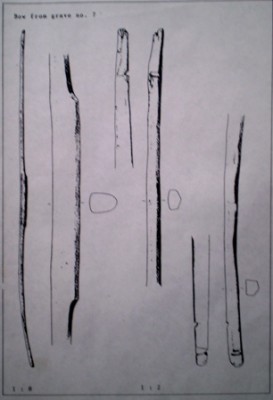
Unfortunately, the trend continues to the present. In a recent video, he made the observation that the Mary Rose bows, while not medieval, are the closest "point of reference" to what medieval bows were like. The problem is, discounting a few examples of Sami bows, an odd 9th century bow from modern Czechoslovakia and the Hedgeley Moor bow (which AFAIK hasn't been dated and may be post-medieval), there are at least 17 complete or near complete bows from Medieval Europe, 15 of which are definitely military bows.
Military Bows
Non-military or uncertain bows
Some of these bows are pretty obscure but others, like the Ballinderry and Hedeby examples, are quite well known in modern scholarship on medieval archery. The downside to Shad's video is that a lot of people are going to continue to think that the Mary Rose bows are representative of military bows in earlier medieval periods in both form and function, which is one of the very few complaints I have about Strickland and Hardy's The Great Warbow and the recent "Lockdown Longbow" tests by Tod Todeschini.
Now, I can't say that this problem effects all of his videos, as I haven't watched more than a handful of them, but the ones I have watched generally have at least one aspect that is based on old scholarship or, at times, contradicts both older and modern scholarship. I can't speak for the HEMA side of things, as I don't practice any of them, so he may be on more solid ground there, but in general I'd recommend taking his videos with a large pinch of salt and double checking what he says against modern scholarship on the topic.