What were ways that black fashion in the 1950's (early days civil rights movement) differed from white 'mainstream' fashion?
When I've looked, websites seem to clump the 50's solidly in with the 60's, but they seem such different eras to me - were women starting to wear their hair naturally with fit and flare dresses?
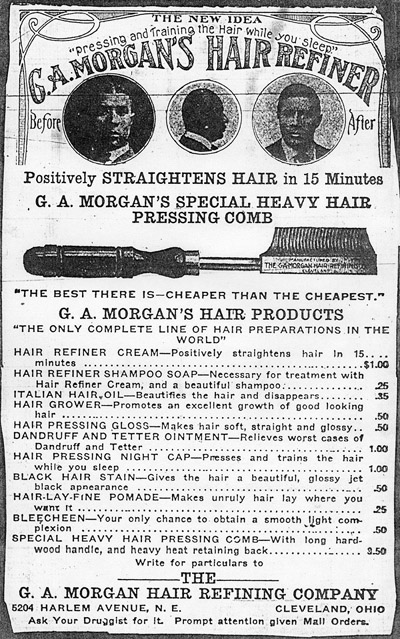
Generally speaking, it's very much worth noting that Africans Americans in the (Especially early-to-mid) 20th century were living in a point in time where being African American had very different connotations from what being African American today might carry, both personally and to others around them. While it was certainly burgeoning, the idea of "African American" specific culture and trends was not nearly as poignant as it is today. One thing worth noting is that a lot of what you see as being African American-specific today is not necessarily rooted in fundamental differences between the cultural backgrounds of African Americans and non-African Americans, but is a result (And a long-lasting effect) of segregation, based largely around race. It is safe to assume that if Jim Crow laws never cropped up, the idea of African American specific culture, language, and community would be near if not completely non-existent today. Getting back to the 1950s (And other decades of the early 20th century), black people in America were living at a crossroads where they struggled to actually find an identity for themselves that wasn't based on what white people perceived of them, more often than not succumbing to the standards of white American upper class society, all the while being repeatedly delegated to being second class citizens no matter how they presented themselves. It also must be pointed out that during the time period of slavery, African Americans (Even if being able to develop practices related to music, story telling, and religious worship) were generally not in a position to develop a specific fashion identity, nor were they in much of a position to preserve any sort of fashion-related practices that they may have brought over from Africa. All in all, this means that black people coming out of emancipation in the late-19th century, were, as far as fashion was concerned, very, "Europeanized", and had very little to no reference to anything else. This means, in the first half of the ensuing century, the fashion of African Americans was very much the fashion of Americans in general, or vice versa. They were just as susceptible to attitudes related to casual clothing and the shifts we see in that around the 1960s (I.e, in the 1950s and especially prior, you were just as likely to see a majority of black males wearing suits and fedora-like hats casually, and women wearing dresses). Hair is an interesting part of this subject, but still a part that doesn't deviate from the premise that black Americans were largely adopting of White American fashion. Around the turn of the century, we start to see black people using hair gel (Often marketed specifically towards them) to straighten their hair. This was a thing since about the 1910s, and lasted pretty strongly until the 1950s (Here is an advertisement, probably from the 1920s, advertising "Morgan's Hair Refiner", with Morgan referring to Garrett Morgan, who is generally credited with being an early pioneer of black hair products like these). And yes, this was as much of a thing for black men as for black women. If you ever wondered why Nat King Cole, Chuck Berry, or any popular black male from around the 1950s looked a little strange, it's because they (As well as many other black men at the time) had straightened their hair into what is generally referred to as a "conk do", allegedly by mixing lye (A caustic solution), eggs, and potatoes together and applying it to their hair. It wouldn't really be until the 1990s that black males straightening their hair became a truly unpopular thing, with the jheri curl having been a widespread (But definitely not all-encompassing) thing in just the preceding decade. It is now really only popular for black women to gel and straighten their hair. All in all, in the 1950s, black people in America did not have much in the way of "black fashion". We do not start to see African Americans embrace things like their naturally coiled hair, and make fashion statements and choices that deviate strongly from standard "white American" society until the 1970s, when pan-Africanism began to really take off.