Also, did it happen?
Yes to all of that... but with a big ol' asterisk on it. First, enslaved souls couldn't just "become" freed without self emancipating which took a whole lot of courage due to the risks. For most it just wasn't an option. And you couldn't just buy your freedom unless your "owner" agreed, and then it was up to them as to the price or terms. Still, numerous persons were able to negotiate for their freedom. Often times it took the form of a "generous" slave holder freeing someone who would then repay the cost by selling their labor. Sometimes it was an act of humanity, and sometimes it was a combination. Sometimes they said no. York, the enslaved man that accompanied the Corp of Discovery (Lewis and Clark's Expedition), had begged Clark to free him under those terms so he could be with his wife after their return, but Clark refused the arrangement of repayment (it's really a [heartbreaking story] (https://www.reddit.com/r/AskHistorians/comments/j2vdgc/what_do_we_know_of_york_from_the_corps_of/) tbh). James Hemings, brother of the famous Sally Hemings, was able to negotiate his freedom and secure it by teaching another what he learned in France about "cookery" (at Jefferson's expense) and over a lengthy period (a couple years or so of teaching his brother the art before TJ was satisfied enough to release James). Sally was able to secure the freedom of her unborn children by a special arrangement of her own, but that included sacrificing her freedom. So step one was securing freedom, and that was a very high obstacle. Some people tried to help and use their wealth to free others. A great example is the Revolutionary War hero Tadeusz Kosciuszko, who was instrumental in several areas including forcing Burgoyne to attack at Freeman's Farm during Saratoga by a well positioned and properly fortified battery preventing their passage towards Albany, which turned the whole tide of the war and brought the French in. His will of 1798;
I Thaddeus Kosciuszko being just in my departure from America do hereby declare and direct that should I make no other testamentory disposition of my property in the United States I hereby authorise my friend Thomas Jefferson to employ the whole thereof in purchasing Negroes from among his own or any others and giving them Liberty in my name, in giving them en education in trades or othervise and in having them instructed for their new condition in the duties of morality which may make them good neigh bours good fathers or moders, husbands or vives and in their duties as citisens teeching them to be defenders of their Liberty and Country and of the good order of Society and in whatsoever may Make them happy and useful, and I make the said Thomas Jefferson my executor of this.
T. Kosciuszko
When he died years later, Jefferson refused to execute it and for a few reasons. There were valid complications, but he literally had an opportunity to "sell" his enslaved families and simultaneously free them - even Ms Hemings and her remaining family members - but he did not. He suggested another man to execute the will saying he would be dead by the time it cleared the courts, but then four different wills were claimed including one claiming the whole estate by Francis Xavier Zeltner, who had spent the last years of Kosciuszko's life with him in Europe, so the whole thing went to the courts and wasn't settled until long after Jefferson's death in 1852. Sadly, in the end not one penny was spent freeing and educating enslaved souls. Still, TJ never perused the opportunity. For instance he took months to travel the short distance to Charlottesville and officially renounce the executorship claiming old age as his excuse, and he was in his mid 70s, but he also rode Eagle two or three hours everyday around Monticello and the surrounding fields at this same time. He really just gave up on it.
Bridge time - the guy he picked to carry the torch was John Hartwell Cocke. He likewise refused, citing the lack of schools in his area but also;
an effect which might be produced on the minds of my own people.
Fun Fact, kiddos! Wikipedia's page on Tadeusz Kosciuszko attributes this quote to Jefferson, when in fact [it was written to TJ by Cocke] (https://founders.archives.gov/documents/Jefferson/03-14-02-0250). Careful of your sources!
Also in his letter which primarily deals with the foundation of a state university, dated 3 May 1819, he says;
I presume the terms of the Will give you no discretion that wou’d admit of your directing the fund to the accomplishment of the object in the way set forth in the inclosed paper—I however send you the paper, as I shou’d be glad to know your opinion as to the practicability of the scheme of the Colonization Society—I suppose you are in possession of the late information collected by Mess^rs Mills & Burgess on the Coast of Africa with a view to this object.
"[T]he scheme of the Colonization Society" ... In 1815 a man named Paul Cuffe took 38 African American freemen to Sierra Leone, which inspired a group of guys centered on a New Jersey Presbyterian, the Reverend Robert Finley, to start a new group called the American Society for Colonizing the Free People of Color of the United States - that group also included Daniel Webster and Francis Scott Key, as well as a handful of others. Soon they were renamed simply the American Colonization Society (ACS). They sent "Mess^rs Mills & Burgess" - Samuel J. Mills and Ebenezer Burgess - to the African coast in 1817 to find a good spot, but Mills died on the voyage. Burgess presented their efforts to the society in November of 1818. So then this letter is written thr following May. Interestingly, Jefferson had essentially proposed the same thing some 30 years earlier in his Notes on the State of Virginia, and while president he even contacted Rufus King (our rep in England) to feel out the British on using Sierra Leone as a settlement location (they weren't interested). All of this his inspired Monroe, who became president in 1817, but was very close with TJ particularly during Monroe's governorship in 1800 when he dealt with Gabriel's Rebellion, an insurrection resulting in the hanging of 26, including Gabriel, and the sale with provision of banishment of eight others - for those eight, their stay of execution was delivered by Gov Monroe. This idea of foreign colonization helped form Monroe's opinion and he became a huge advocate for the ACS. Well, in 1820 a ship with 68 free souls (plus crew) went to the land they purchased for the colony, then called Montserado. Today we call it Liberia and the capital of that nation, Monrovia, was literally named for James Monroe from his support for the effort.
Now all that sounds nice and brotherly; that's because it's somewhat sugar coated. Jefferson also wrote in his Notes that he was fearful of white Americans being exterminated in an unavoidable race war, to put it bluntly. This became a huge factor for supporting the effort, and while many abolitionists were involved, a large patronage (and financial source) was those who held their fellow humans in bondage. Why support it? Freeman caused problems. Consider the case of York, his knowledge about the possibility of freedom led to a huge split with Clark who threatened to send him to a particularly abusive plantation to correct his attitude problem - then did send him to one. This was a man that was allowed a rifle for hunting on the expedition, so events like Gabriel and his followers sent a huge message to reinforce the fears of Virginia planters (as well as those in other states). Long story medium, soon the ACS was a proslavery group focusing on the removal of those pesky freeman who could so easily inspire others to seek their freedom. By the time of the civil war, they had very little financial backing and worked mostly to improve conditions in Liberia (which were always a bit of a mess to put it lightly). As a result, by the time a great many people were able to be emancipated and desired to live in the nation, the ACS had no ability (or real desire) to make it happen. Overall they moved about 13,000 people who had acquired freedom someway or another to Liberia but the ACS was rather unsuccessful in establishing the haven for emancipated souls it once envisioned establishing.
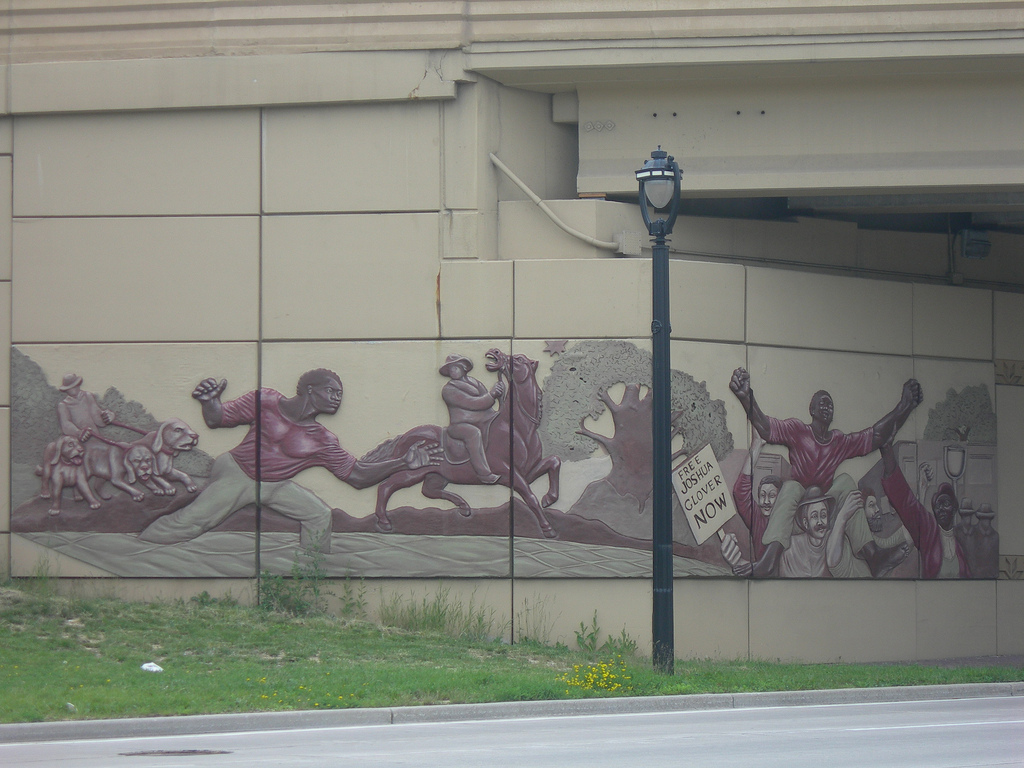
So yes it could and did happen, but it was incredibly unlikely that you would secure your freedom legally and return to Africa. Much easier than that was "illegally" escaping to another state - or even Canada, where you could live legally free, which many folks that had been formerly enslaved did. [Joshua Glover] (https://emke.uwm.edu/wp-content/uploads/2018/06/5919752521_0e228c86d7_b.jpg) is one such example, and his jailbreak in Wisconsin caused a big stink that essentially resulted in a thing called the Republican Party.
E for clarity and typos