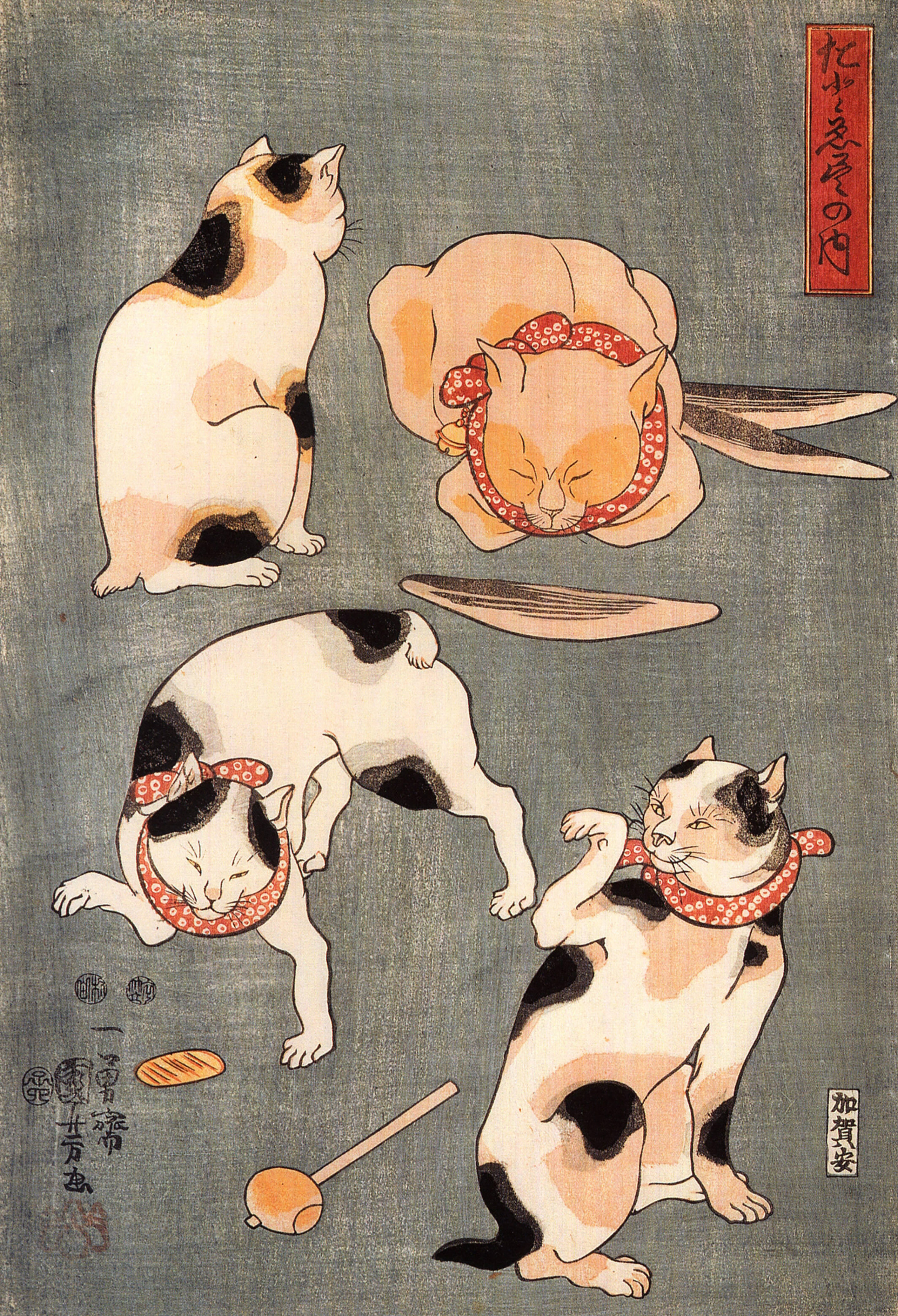
Hello, (food) historians. I'm working on short-story that features a Japanese girl from a wealthy family in the warring states period. It would be most convenient if she could bribe a cat yōkai that takes up residence in her house with some kind of milk treat.
I thought that historical sweets would be easy to research... but here I am. Any insight into Japanese desserts of the period would be much appreciated, so I can get back to working on her clothes and naginata practice.
It is the New Year period here in Japan, and just yesterday while eating the traditional Japanese osechi New Year food my bicultural daughter and I ended up having a conversation about the history of the various celebration foods, and about Japanese traditional sweets (Wagashi) in particular and spent some time happily researching all the little details.
The first important point is that there were no dairy products eaten in Sengoku Japan, so she could not bribe a cat youkai with a milk treat. According to the Japan Dairy Association although dairy cows were introduced to Japan from China in the Asuka period (592-710) and milk began to be consumed for its medicinal properties, the end of the Heien period saw an end to that with the rise of the warlords and the warring states and the need for war horses rather than dairy cows. Milk didn’t return to Japan until the Meiji period and didn’t start to achieve its current widespread popularity until after World War 2.
So you can forget about a milk treat.
She would be much more likely to be able to sneak wagashi. Wagashi are said to have a two thousand year old history, particularly dango and mochi, and are eaten during a tea ceremony and to mark the various seasons and celebrations. They are made from such ingredients as ground beans, rice, soy beans, sesame and agar agar and a Sengoku era girl would certainly enjoy them.
However, due to the fact that these snacks are entirely vegetarian, I imagine that a cat youkai would be as unimpressed by these sweets as my very Japanese cat.
But all is not lost. A young Sengoku girl would also have access to seafood products such as kamaboko various kinds of fish paste cakes, and she would know that cats and presumably cat youkai could easily be bribed with a little piece. Here we can seecats with fish cakes at their feet.