Please Be Aware: We expect everyone to read the rules and guidelines of this thread. Mods will remove questions which we deem to be too involved for the theme in place here. We will remove answers which don't include a source. These removals will be without notice. Please follow the rules.
Some questions people have just don't require depth. This thread is a recurring feature intended to provide a space for those simple, straight forward questions that are otherwise unsuited for the format of the subreddit.
Here are the ground rules:
Did most Americans know what Presidents looked like pre-photography?
When did French replace Provençal/Occitan as the main spoken language among the middle classes in the south of France?
What would a western European noble call the Byzantine Empire after the formation of the Holy Roman Empire? I've seen 'Empire of the Greeks' thrown around but I don't know if that's actually correct.
1800 was the 1000 year anniversary of the Holy Roman Empire. Did Emperor Francis II have any celebrations or plans for celebrations?
I have a question that I'm not sure is short/simple or not, so I figured I'd start here.
How appropriate is the term 'medieval' for non European places like China, Japan, Africa or elsewhere? It seems to be a normal enough short hand, but at the same time places can be so different it seems strange to paint everything with the same term.
Why were the Nazis called “national socialists” if they were the complete opposite of socialists?
In WW2, would German U-boats in the Atlantic try to prioritize boats/convoys going West to East (with cargo), as opposed to East to West (empty)? Or the direction wouldn't matter?
My dad's grandmother immigrated to America from Poland in 1918. She spoke very little english, so my dad never was able to get to know her in depth or ask her questions about her life. He seems certain that it was in 1918 because he references WWI and the 1918 pandemic flu as issues she dealt with when immigrating. He also said she had a tattoo on her arm of a string of numbers, like those given at concentration camps during the holocaust.
If she came in 1918, what would that tattoo be? Is it likely he's just misremembering some part of it, whether it's date she immigrated or if she had the tattoo? Or was there some type of tattoo similar to WWII going on in 1918 Poland?
What was Enver Hoxha like as a person? Was he as paranoid as Stalin was? And was that behavior ever justified for Albania?
Did the kingdom of Mali ever have a presence on the coast of Africa?
What are some WWII books that focus exclusively on the socio-economic part of the Germans? I'm not interested at all in battles and military equipment. I'm curious about things like Hitler crushing the labor movement.
What are some books focusing on this?
Did they US provide P38 and P51 can openers to the USSR as part of Lend-Lease?
I was trying to pin down hair styles in some photos I was analyzing and realized that I'm just generally really interested in the history of hair styling. Not so much from Europe/America and not within the last century, but that's all I'm seemingly able to find with all the search terms I could think of. Does anyone have any suggestions for books or scholars who work[ed] in this area I could look for?
Before modern technologies, how did they measured mountains? I understand they used trigonometry to determine the relative high to the surroundings, but what I cannot find is how they for example in Nepal determined how high they were above the sea level to know which number to add to the trigonometry-based relative high? So I should probably ask more specifically: How did they measured the sea level so far from any sea?
I've found a picture of Goebbels wearing an armband with the greek letter phi in my history book. I seems familiar to me but I'm not sure what it means or anything about it. Does anyone know about it? Also, the phi is capital and black on a white armband
Are multiple questions allowed? If not, I'm sorry
Who could be elected as the Emperor of HRE? Where there any written requirements/restrictions (title, sex, faith, etc)?
Many cultures around the globe* have in their mythic past tales of the Fair Strangers: tall, pale skinned, blonde/red of hair, blue/green of eye. Often possessing 'occult' powers and strange abilities.
What's with that?
(*i.e. North/South America, Eurasia from the Atlantic Islands to the far Pacific, down into SE Asia, back West again to India and up into the Mid-East and over to the Mediterranean. I think also Egypt, though I know little of mythology from most of the rest of the African continent...)
If you weren't a soldier and wanted to take a commercial flight from US to Berlin during World War II, would you be allowed? Were there commercial flights?
When was this picture of a Georgia prison camp taken, based on the clothing worn by the guards in the center? https://imgur.com/mnOWaDE
Did the late Roman/Byzantine empire use the Ab urbe condita calander or The Anno Domini calender or another calender if one of the latter when did this change occur?
Another can opener question: why did the US have both the P-38 and the P-51 at once? They're not even really that different in terms of their size. You really don't gain much compactness with the P-38, and you really don't gain much leverage with the P-51 — at least that's my perception from using them myself. Am I wrong?
Has there ever been a battle in history with three different sides in the same battle? Not two sides with multiple allies, but three separate groups with three separate goals trying to wipe the other two out in the same single battle?
https://www.geographicus.com/P/AntiqueMap/worldsearoutes-warren-1879
In this map the Gilbert and Ellice islands are labelled as Central Archipleago.
Why? Was this a common name at the time?
https://en.wikipedia.org/wiki/Gilbert_and_Ellice_Islands#Naming
There's no information on the Wikipedia page, and I've never seen/heard of this name before now.
Any place to look or anything explaining this would be great
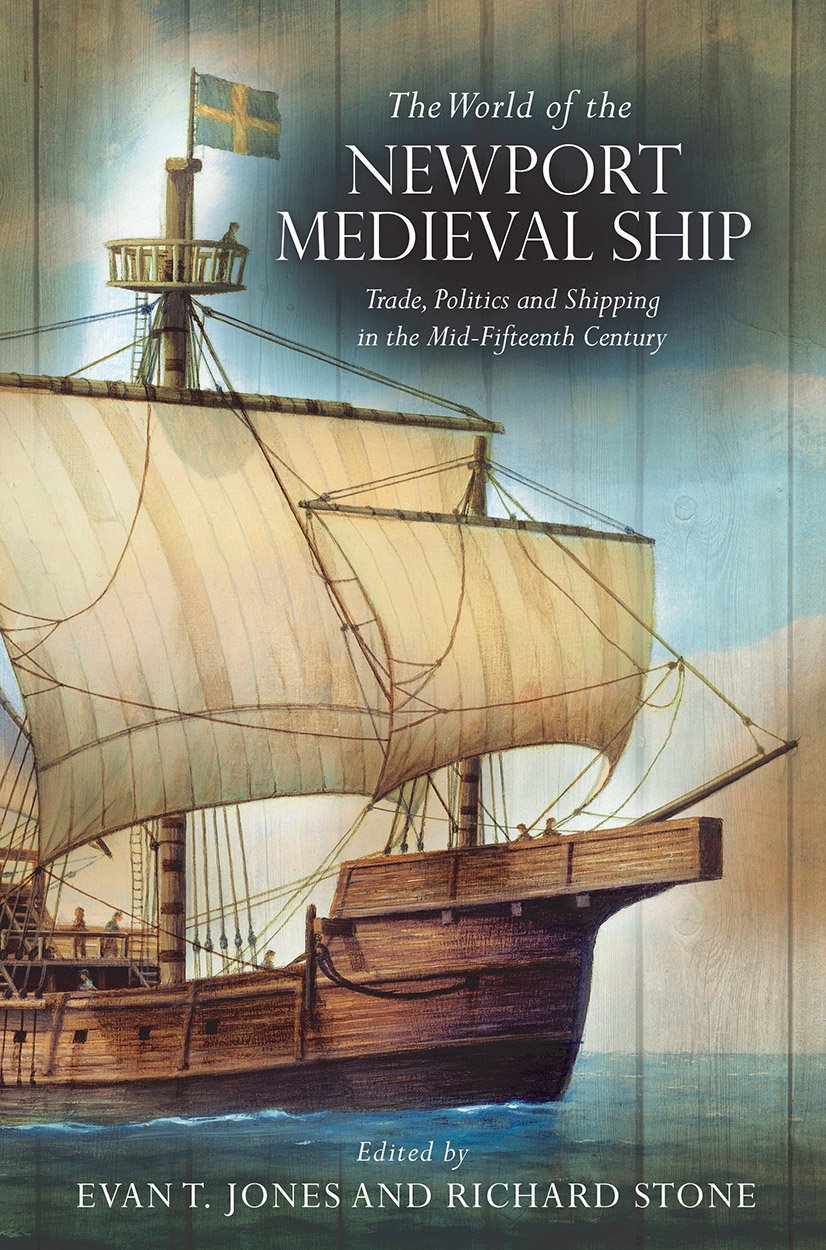
I feel like this is a stupid question, but it's going to bug me unless I at least try. Why does the ship in this picture have a Swedish flag on it despite the book being about a ship that wasn't from Sweden? Is there a special significance to the image? Is there something about flags that I don't know about? Again, I feel like it's a stupid question. But on the other hand, it legitimately wouldn't surprise me if one of the mods knew the author or something.
I'm looking for a good book on the Spring and Autumn period, and Warring States period - something accurate and respected, but for a popular audience, not designed just for academics. Any advice?
Art is often pointed to as the early marker of humanity but do we know when musical expression began and was it pre or post artistic expression. And if it is pre-art does that change the idea of the capacity of earlier hominids.
Shameless repost from my question on last week's SASQ...
In The Campaigns of Napoleon, while the French were preparing for campaign in Egypt, there is a passage that states:
"Twentieth April was the original sailing date laid down, but administrative problems and a political crisis in Vienna, where General Bernadotte became the center of an international incident which for a while threatened a new outbreak of the European war, caused a postponement to May 19."
What incident is this referring to? A quick look in Wikipedia found me:
Paul Barras, one of five directors, was cautious that Napoleon would overturn the Republic, so he appointed Bernadotte commander-in-chief of the Italian Army in order to offset Napoleon's power. Bernadotte was pleased with this appointment but Napoleon lobbied Talleyrand-Périgord, the Minister of Foreign Affairs, to appoint him to the embassy of Vienna instead. Bernadotte was very dissatisfied; he finally accepted the post in Vienna, but had to quit owing to the disturbances caused by his hoisting the tricolour over the embassy.
Is this likely the incident that is being referred to? If so, what's the significance of this scandal? Wasn't the tricolour the flag of the French Republic at this time, what's so 'disturbing' about hoisting their flag on their own embassy?
Why are felt pads traditionally green?
I recently read the novel Hamnet by Maggie O'Farrell and loved it. Are there any recommended nonfiction books about Shakespeare's life? I did a search and checked the sub book rec list but didn't see anything.
Are there percentages for the types of people killed in the Holocaust?
I know there were jews, gays, dissabled, dissenters. Any percentages for these? All I can find is percentage of jewish population murdered. Thanks!
I assume this is minor, apologies if it is not. In the Holy Roman Empire, let's say in the 1500s or 1600s, who - at least in theory - had the power to ennoble commoners? Also in general the power of ennoblement in Europe was something only the King/Monarch had, right? Like - if they theoretically wanted to - a Duke or Count couldn't be like 'hey you're a baron now' to some peasant they liked.
So I was told to post this question on the short answers thread,so here it goes.
If the Economist Intelligence Unit's Democracy Index existed in 1920,which countries would be classified as democratic (either full or flawed) and which would be considered authoritarian (assuming we use it's modern criteria)? I always thought that our definition of democracy has improved over time and thus many old democracies would not be classified as such in the modern world
How would I go about finding what girl's name is present in the most number of nations or cultures? I assume it's something simple like Lee, but how do I go about finding that exact information?
When was the last time I could reasonably expect to hear Beowulf sung in an English hall?
Why is Russia Orthodox and not Catholic?
In the Dictatus Papae there is a line smth like "All princes shall kiss the feet of the Pope alone"
As much as I wanted to I don't think the Pope was that much of a 'feet guy' XD So, what is the context of this phrase? What did it actually mean?
So I was wondering about the history of leatherworking. In the 1400s, 1500s, and early 1600s. Was the person who made the leather the same person who made the finished goods? Like would a tanner know how to make a leather jacket? Would a leatherworker know how to take animal hide and make leather from it? Or was the job of tanner and leatherworker the same in the pre-modern era?
Did William The Conqueror really offer to settle the dispute with Harold via judgement of peers and then single combat rather than battle? Or is this likely a post battle invention to make him appear caring for normal soldiers?
Could someone recommend a book on the Korean War, preferably one with a wide ranging POV, not just the American or the Chinese? Thanks.
Regarding Mycenaean names, I often see them rendered with dashes, such as wa-na-ka for wanax. Were these marks actually done in their writing, or is it some sort of modern convention, like to the macrons used to teach Latin students?
Who was the governor or other politician who said (something to the effect of) that he’d rather take away the rights of white people before he gave them to black people? I know I’ve read of this, but I can’t find the quote, no matter my google phrasing.
Looking for something like this for the entire Russian Empire, preferably with pop numbers
https://upload.wikimedia.org/wikipedia/commons/3/3e/Population_density_of_Russian_Empire_%28European_side%29.jpg like this but you know, in english
https://commons.wikimedia.org/wiki/File:Population_density_of_Russian_Empire_(Asian_side).jpg
The Pickelhaube was Prussian or Russian?
There is a man in antiquity that fake an attempt of murdering on himself to justify having bodyguards(having bodyguards was retricted I think) and then he takeover the power with the bodyguards. I completely forgot his name and try to google him in vain. Who it is?
Who was the last sitting proslavery member of Congress?
Most of my surface level research (googling) about proslavery members of Congress basically shows the ideology dying out after the passage of the 13th Amendment, but who was the last known (openly) proslavery member of Congress?
Who would I ask if I wanted to sort of, not exactly fact-check, but interpretation-check, something I'm writing, about Great Depression American politics? I feel like assertions followed by "does this interpretation hold up?" is not a good framing for a question here. But as an amateur I don't have historian colleagues I can run things by.
It would be for a zine or blog post which less than 50 people will probably ever read, but that doesn't mean I don't care if my assertions are supportable or not...
Is a source primary or secondary depending entirely on the context of your work relating to said source?
I have to write a commentary on a primary source of my choice. I want to do this on a Victorian kids periodical, whose content is mostly pirated short stories, bible quotes and how-to's. This seems to make it secondary.
However if the context I focus on in my commentary is Victorian attitudes towards children's publications, does it make it a primary?
What are good secondary sources for a short undergrad research project on China’s Cultural Revolution?
what was the attitude of the anglican/protesant chiurch towards queen-endorsed pirates?
Have there been other stormings of the US Capitol involving other incumbent Presidents who won the election, such as GHWB in 1993?
Is there a database or other source that gives prices for a wide variety of goods during the Renaissance?
So where can I go to find more information about pre-Luddite, anti-“industrial” uprisings in proto-industrial England. Preferably in non-academic context.
How much did a ship cost in medieval europe? Let's say 1300-1500. Do we have any bills of sale or appraisals from that time?
Dimensions for "The Ram Tortoise of Hegetor"?
I just saw a 2016 video from "Invicta" about it (https://www.youtube.com/watch?v=bi4f8CTbhhg&t=238s) and although he gives some dimensions on it's base and how high high some of the pillars are, he doesn't give a dimension for how tall the equipment was nor does he for how tall the Ram itself was. With the info from the video I would guess that the Ram would be standing about 20 meters tall, but the problem I have with this number is that the Ram would be standing above all walls of the period that I know of.
Granted, I don't know in which siege it was deployed. So was the wall in that siege particularly tall? Or maybe the wall could have been built upon a cliff and that's why that thing was so enormous? Is the information in the video not reliable? Or my guess is just way off?
I think there was Western female scholar who called her works her children as she had no actual children. Who was she?
Does anyone know what the person on the stairs is wearing on their head here? https://i.redd.it/8zosqwygyzf61.jpg
when an 18th or 19th century account says a distance is "within pistol shot" about how close do they mean in modern measurement?
What class would the quality of life of a wealthy person in 18th or 19th century America equate to today? I imagine the US founding fathers living in the lap of luxury but that’s obviously very different to our current time. It’d just be luxurious as compared to their contemporaries.
Is there a term for the people in charge of Japan that wasn't just Japanese? Like if I were writing a story about some kind of Japanese Operation Werewolf what would you call them? A political party name or something?
Would blunt impact lessen a gambeson's effectiveness, by squishing it down, making a subsequent hit do more damage?
So a quite tricky question:
On the transition of the portuguese empire during the 1600s from east (indian and malasyan routes) to west (atlantic routes) how much did contribute the portuguese-dutch conflicts? Was more influencial the restoration war? Was just the logical thing to do, mostly due to resources and new players like England, France and VOC?
For me the whole dynamic is quite complex to understand as basically i see a broken empire purged with a restoration war and out of resources due to the needs from the spanish empire. Thks!
Does anyone know of some good books or reference material for the history of the Gurkhas?
I recently read "world of the shining prince" and "hired swords" while preparing to run a heian inspired role playing game, blew me away.
Problem is that now I want to go further back and learn about the asuka and nara periods, so I'm looking for reading recommendations. It would probably be great to read something about china too relating to those times to tie everything up (maybe even something on korea).
Hopefully someone can hook me up with some cool reading material!
Is there any difference between 3rd and 4th partitions of Poland, or was 4th partition just repetition of 3rd partition after Napoleonic wars?
Was King Louis XVI Related To Mary Tudor Queen Of France?
How long did the average pandemic last before vaccines? After?
A wide range of years is a perfectly fine answer.
The famous meeting of J.S. Bach and Frederick the Great; where would it have taken place? I can't find a source that simply says "in this specific palace"-- the year was 1747, and wiki just says that Sanssouci was built "between 1745 and 1747", so would it have been there, or in the City Palace?
Hey guys, in ww2, how many American divisions were allocated to the Pacific front and how many were allocated to the European front separately?


.jpg)
