Before the age of its Empire, England seemed to constantly be at war, being traded back and forth between Vikings, French invaders, and the Anglo-Saxons. They fought wars for centuries over what appears to be a tiny island with little significant value. So what made all these factions, Hardrada, William the Conqueror, Herald Godwinson, Ragnar Lothbrok and his sons, and many others launched campaigns to control a landmass with limited farmland, limited grazeland, and requires ocean trade to make up for it. What made England such a desired target?
Sorry for really late response as well as the divided in [Part I] and [Part II] due to the word limitation of single post in Reddit.
[Part I]:
Medieval England since middle to late 10th century CE at least had a particular attraction to the invaders in contemporary Latin West: An hierarchical administrative machinery with better royal control, jokes aside. On the other hand, it can also means that the significance of this land [England] for possible invaders had greatly so increased in course of the 10th century that we should not consider that of the 9th century and that of about 1000 altogether (the former is another story).
As /u/mikedash argued before in Was the Anglo-Saxon kingdom of 1066 really such a fine-tuned administrative machine?, the kingdom of the English under the 10th century English rulers like King Aethelstan and King Edgar (d. 975) achieved the political unification of southern British Isles, with help of the shire system, the networks of the fortifications (burh), the taxation (see Williams 1999, Chap. 7), and among others, the tight royal control (reform) of the silver coinage as well as its circulation (issue-recall-re-issue) of high finesse in a relatively short period of cycle since the reign of King Edgar.
King Edgar stipulates in his third law that:
"One [unified] coinage should be valid upon the whole kingdom, and no one shall refuse it" (III Edgar 8).
We can find some complementary instructions in a series of laws issued by King Æthelred the Ill-Counseled (Unready) around 1000 CE (Tsurushima 2017: 8-10):
- "No one shall refuse pure money wherever it has been properly coined in any port of my kingdom, supervised by my moneyer" (IV Æthelred 6, in: Liebermann (hrsg.) 1903: 234).
- "No one except for the king should have the moneyer [appointed/ worked]" (III Æthelred 8, in: Liebermann (hrsg.) 1903: 230).
- "The moneyers shall take care of their workers so that they produce the pure and proper weight money" (IV Æthelred 9-1, in: Liebermann (hrsg.) 1903: 236).
In short, Late Anglo-Saxon England was indeed the very rare example in Latin West that the king could actually monopolize and guarantee the issue and the circulation of good quality silver coins in all of his kingdom. One calculate that the minimum finesse (purity) of the silver coin minted under the royal authority in England from the late 10th century to the late 14th century had kept about 92.5% to 93% throughout Anglo-Saxon, Anglo-Norman, and Plantagenet dynasties (Tsurushima 2017: 10).
This stable, high average finesse of English silver coins (pennies) was also exceptional if we look at other areas in contemporary medieval West [in the 10th century]: Late Frankish rulers and their successors in now Germany and France often granted the privilege of minting the coins to both secular and ecclesiastical aristocrats, so they lost grip on the kingdom-wide coinage system. Such locally produced silver coins were of uneven quality and finesse (purity), and very few of them could match the quality/ finesse of the English one.
High reputation and wider circulation of English silver coins, even before this monetary reform under King Edgar, is also confirmed by the very rich money bag found in 1883 in one of the houses in Roman Forum, called Forum Hoard: It was the present from Bishop of London to the Pope Marius II (r. 942-46), and consists mostly (over 99%) of English coins, probably minted in London (Naismith 2019: 135-38). Dozen [ca. 50-70] of moneyers across the kingdom, mainly located in the consolidating towns like London in southern England, produced such high quality silver pennies in Anglo-Saxon England.
Recent scholarly debates have also focuses on how much late Anglo-Saxon and Anglo-Norman society was actually 'monetized', that is to say, based on the money transactions (Fairbairn 2019). Fairbairn illustrates the wide and rapid circulation of the minted money in the 11th century, around 100 kilometers around the original minted place like London and York (Fairbairn 2019: 1106-10), and also points out the possibility that not only within the towns, but also even peasants in rural countryside could access to the silver pennies, at least in southern and eastern England.
It was this high quality silver pennies that the English kings (including the Cnut the Great, ex-Viking himself) paid en masse to the Viking fleet in the late 10th and early 11th century, as I briefly mentioned in What held the North Sea Empire together, and why didn't it last past the life of Cnut?. To give an example, in 1018 alone, the English had to 82,500 pounds (ca. 28.875 tons) of silver pennies to Cnut and his (ex-)fleet crews of the invasion army (Swanton trans. 2000: 154). Even some skeptics of this very high amount like Bolton admit that the king of the English can collect large scale of silver pennies in circulation to pay this kind of tribute to the Vikings.
Bolton comments on this point: "England was probably seen as an easy target by the Danish invaders partly because of its relative wealth, but also because the king could raise the money needed to buy them off quickly, through national taxation system. It was much easier negotiating for large payments from a central source than it was travelling around looting individual monasteries, or being bought off piecemeal by local leaders (Bolton 2012: 99f.).".
So, the well-handled royal silver coinage and the national wide administrative system like the taxation attracted the Vikings "again" to England in the last decades of the 10th century.
As I argued before in After a successful viking raid, how did all the riches change their life and what did they do with their new found wealth?, silver was the primary form of wealth in Viking Age Scandinavia, not only as medium of economic transactions, but also as of forging the social bond between the chieftain and his military retinue. It was not until the end of the 10th century, however, that very few Scandinavian rulers issued the coin (especially silver ones) under their authority, at least in their homeland, Scandinavia. They actually imitated how the king of the English could do in Late Viking Age by inviting English moneyers into newly established towns and issuing the first silver coin in Anglo-Saxon style like this crude silver coin issue by King Olof Skotkonung in Sigtuna, Central Sweden. Instead, the Viking Age Scandinavians valued silver primarily in weight, so the English silver pennies must have been precious one in their society.
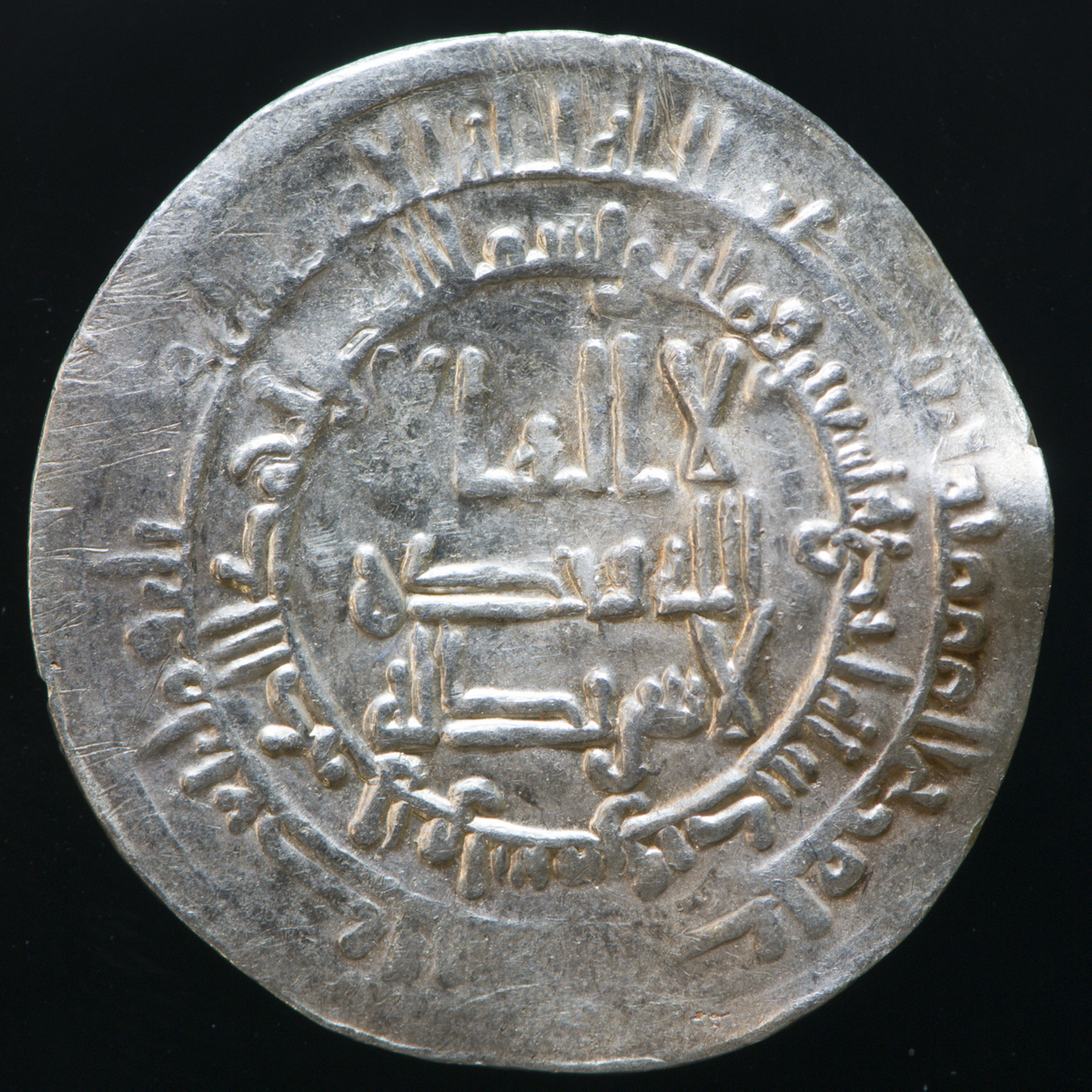
There was another reason that the Scandinavians turned their attention "again" to England. In fact, the number of the recorded Viking raids was generally decreasing in the West in the first half of the 10th century. Some scholars (especially economic historians and archaeologists) tried to explain this ebb and flows of Viking invasions from a point of view of changing the source of silver for Scandinavian society: In late 9th and early 10th centuries, the Scandinavians imported very large quantity of Islamic silver coins originated in Central Asia, in exchange of fur in the far North and slaves, as testified by some Arab authors who witnesses their activity in Russian waterways as well as as far near the Caspian Sea. A famous Veil of York hoard, found in 2007 near York, dated to the late 920s, indeed includes Islamic silver coins (dirham) minted in Samarkand around 910-915 by the authority of Samanid emirates in Central Asia. Vikings participated in this global exchange of wealth (silver) between the East and the West. However, the inflow of this "Eastern" silver into [Eastern] Scandinavia firstly seriously decreased, then stop by the last decades of the 10th century. Thus, the Scandinavians must have sought to explore another source of silver, important for their political economy at that time.
[Sorry, will be continued to the Part II]
References:
+++