I had a teacher pose a question asking whether the class believed that the US were only willing to commence with the nuclear bombings because of anti-Japanese sentiments that would not have been shared with their European counterparts. Can this claim be supported or disproved in any way?
Is there evidence that any racial tendencies played a role in how the Allies approached the Pacific theater
Racism and racist stereotypes certainly featured in US anti-Japanese propaganda.
https://commons.wikimedia.org/wiki/File:%22Buy_This_Man_A_Hari-Kari_Kit_On_December_7,1944%22-NARA-_513999.jpg
https://commons.wikimedia.org/wiki/File:%22Go_Ahead,Please-Take_Day_Off%22-NARA-_513555.jpg
https://commons.wikimedia.org/wiki/File:%22For_Playee_%27Hookey%27_Thanks_Please%22_Every_Minute_Counts_-NARA-_514298.jpg
https://commons.wikimedia.org/wiki/File:%22Beat_the_promise%22_-NARA-_513941.jpg
https://commons.wikimedia.org/wiki/File:%22Careless_Matches_Aid_the_Axis%22_-NARA-_514036.jpg
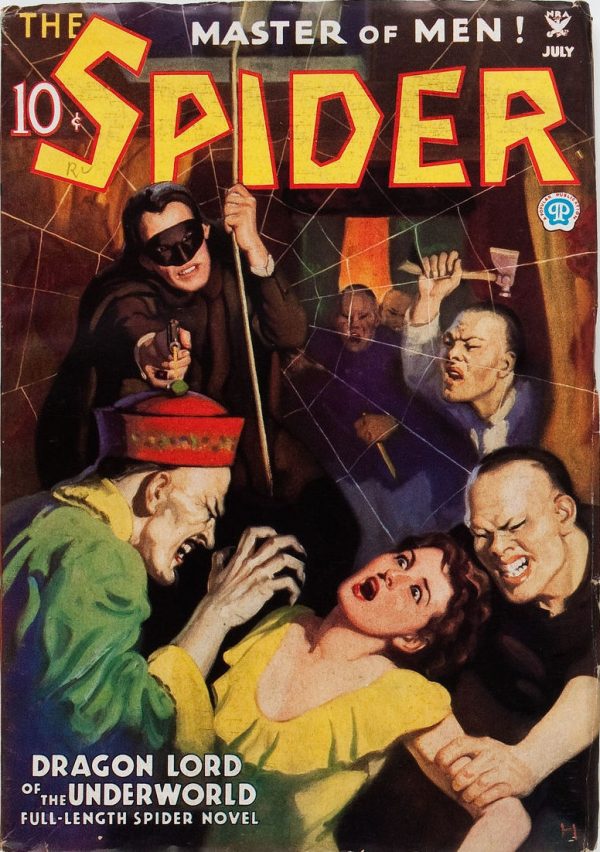
Some emphasised the Japanese threat to American women, along the lines of earlier anti-Chinese "Yellow Peril" propaganda such as https://commons.wikimedia.org/wiki/File:YellowTerror.jpg and lurid pulp covers such as https://pulpcovers.com/wp-content/uploads/2014/02/The-Spider-July-19351-600x852.jpg
https://commons.wikimedia.org/wiki/File:Anti-Japanese_World_War_II_propaganda_poster_war_bonds.jpg
https://commons.wikimedia.org/wiki/File:US_propaganda_Japanese_enemy.jpg
Comparing these anti-Japanese posters with pro-Chinese and pro-Filipino posters:
which show that US propaganda artists were perfectly capable of depicting Asian peoples less stereotypically.
Not all US anti-Japanese propaganda was racist. Some propaganda simply reminded the reader of Japanese atrocities and the attack on Peal Harbor:
https://commons.wikimedia.org/wiki/File:%22Japs_Execute_DooLittle_Men.We%27ll_Pay_You_Back_Tojo%22-NARA-_513574.jpg
https://commons.wikimedia.org/wiki/File:Avenge_Pearl_Harbor-Our_Bullets_Will_Do_It.jpg
https://commons.wikimedia.org/wiki/File:%22DECEMBER_7th_-REMEMBER%5E%22-NARA-_535613.jpg
To what extent did racism, and such racist propaganda, influence the conduct of the war? It certainly had an influence on the home front, as a major contributor to the internment of Japanese Americans on the West Coast.
On the ground, the Pacific War was conducted with frequent brutality. Atrocities such as killing prisoners and mutilating enemy dead were more common than in the European theatre. It isn't possible to say how much of this was driven by racism, as one common motive was simply revenge for similar atrocities committed by the enemy. Hastings (2008) considers that racism was only a minor motivation, and enemy atrocities and enemy fanaticism were the main cause.
This doesn't tell us much that's relevant to the atomic bombings. Public opinion didn't play an important role, since the public didn't debate the use of the bombs before the event. Since Germany surrendered months before the bombs were ready, we can't know whether they would have been used on Germany (but we know of no reason to suggest that they wouldn't have been, if they had been ready and were thought to be able to contribute to victory). What we can compare is the conventional bombing of German and Japanese cities. Both were heavily bombed, and many German and Japanese civilians were killed. Perhaps about 400,000 German civilians were killed by bombing. Estimate of the Japanese death toll vary greatly, from about 300,000 to about 900,000 (not counting the atomic bombings); the median estimate are about 400,000, similar to the number of German deaths.
There doesn't appear to be any reason to think that racism affected the bombing of Japan vs the bombing of Germany. The bombing of Hamburg in July 1943 (Operation Gomorrah), resulting in a large firestorm and about 40,000 civilian deaths, was considered a success, and similar damage was a goal of raids on other cities. The next most destructive firestorm produced in Germany was in Dresden, with perhaps 25,000 dead, and there were smaller firestorms in Kassel and Darmstadt. The damage due to the Hamburg firestorm was comparable to that of an atomic bombing - the Allies were willing to cause atomic-bomb-level damage on German cities, and to kill tens of thousands of civilians in raids. The Allies (i.e., the US) attempted the same in Japan, with notable success in March 1945, with a major firestorm in Tokyo, killing about 100,000.
The repeated attempts to produce Hamburg-style firestorms in attacks on German cities strongly suggests that race would not have been a barrier to the use of atomic bombs on German cities.
References and further reading:
For more examples of racist propaganda, see http://j387mediahistory.weebly.com/anti-japanese-propaganda-in-wwii.html
The Yellow Peril pulp cover linked above is from https://pulpcovers.com/tag/yellowperil/page/6/
For battlefield atrocities by Allied troops in the Pacific theatre, see
For a review of this book and discussion of such atrocities, see https://www.hoover.org/research/brutal-pacific-theater