Please Be Aware: We expect everyone to read the rules and guidelines of this thread. Mods will remove questions which we deem to be too involved for the theme in place here. We will remove answers which don't include a source. These removals will be without notice. Please follow the rules.
Some questions people have just don't require depth. This thread is a recurring feature intended to provide a space for those simple, straight forward questions that are otherwise unsuited for the format of the subreddit.
Here are the ground rules:
In the coronation of Napoleon, did Napoleon actually take the crown from Pope Pius VII and crown himself and Joséphine as depicted in the the famous painting?
Or is it embellished to make Napoleon more grandiose (like in his other portraits)?
Why was Hanoi chosen as administrative capital of French Indochina despite they had a much stronger foothold in Saigon (or Cochinchina in general)?
Did people believe in myths and legends? Like did they actually think there were actual goblins in the woods and fairies out there?
What is the oldest civilization known to man?
From my research it seems that there is some variation on dates for both ancient Egypt and Sumer. At this point, I’m not sure which one is older as there seems to be less agreement as to when either civilization actually began. I’m seeing various sources for ancient Egypt anywhere from 3400-3100 BCE and Sumer from 3500-3000 BCE.
Could someone confirm which civilization began first? Any help would be greatly appreciated!
Did Eisenhower divest his stocks upon being elected POTUS?
When was the first recorded instance of deep-frying foods?
Deep-frying requires a fair bit of oil or fat. If you look at in the modern world, it is an incredibly inefficient way of cooking if you don't use the fat afterwards for something.
At 9 calories per gram, a common restaurant deep-frier may hold 30 litres of fat. That's the caloric equivalent to feeding about 110 people.
Is it possible, or is there any evidence, that pre-Agriculture humans deep-fried in rendered animal fat? I'll accept confit as deep-fried, as it's basically the same concept just at a lower temperature.
Did it take the invention of mass agriculture and mills to allow using vegetable oils as just a cooking medium, not as a food itself?
We commonly associate deep-fried foods as cheap and common today, was there a stage in history where having deep-fried foods was a sign of prosperity?
Thanks
First of all, thank you for maintaining such an incredibly interesting sub. I find myself reading here every day, though this is my first time posting.
Can anyone out there recommend to me and online archive and/or a recently published collection of letters or diaries pertaining to the Chinese American experience or the Chinese Exclusion Act? I would be very grateful for any guidance, thanks!
Are there any more recent books on Silla/Goryeo/Joseon Korea? The AskHistorians recommended books are from the early 90s, so I'm wondering if there have been any major works in the last few decades.
In western europe during the middle ages, what kind of staff would a small household have? Like if they could only employ three servants, what would their roles be?
What's the origins of Royal regalia? Crown, throne, scepter, mantle, etc.
How were medieval universities governed in Germany, France, and England? Council of Professors? Abbots or Bishops? Appointed Dean by the King or Emperor?
[meta] as much as the answers are moderated, one often sees questions on the front page affirming things and asking for an explanation. Quite a few times, the initial assertion is blatantly false, and no one answers. Yet, it remains on the page and on the subreddit. Should there be some filtering of questions before they are even published? Is it even possible anyway?
Are any historians familiar with the Youtube channel The Histocrat? What is your view of him and his reliability and quality? He's the only history source I've seen, mainstream or otherwise, discuss sources and uncertainties in depth, which made me trust him as a source a lot. But I recently learned he has no formal history training, which is surprising and makes me wonder.
Wellington apparently wished he had longbowmen at Waterloo. Has it been verified?
Was Germany ever considered as a target for nuclear bombs during WW2? How early was Japan choosen as a target and for what reasons? At what point did the allies consider the nuclear bomb as an option?
Can I get a book recommendation about the rise of homeschooling, particularly religious homeschooling, in America?
I am reading One Nation Under God by Kevin Kruse, and the 60s-era Prayer Amendment touches on how Americans saw the intersection of faith and public school policy - I'd like to go more in depth on that topic in 20th century America if you've got any recommendations there too.
Thank you!
Can anyone suggest to me a book about the inter-war British navy (1918 - 1939)? Specifically I'd like to know about advances in design, technology and strategy at the higher level and their reasoning, but also a look at more mundane operations of the British fleet during this period, like for example what were the ships actually doing? Anti piracy patrols, gunboat diplomacy, pointing 14 inch cannons at helpless natives?? It's such an intense period I am sure there must be many works examining it but I am not an historian, nor do I have access to academic literature about it.
Not really a simple question, but it's so broad I cant think of a way to ask the question that wouldn't break the rules.
Today is Thursday, Feb 25 2021
How far back does the current 7 day cycle of days of the week go?
Take the year 1021, that is 1000 years ago.
46,928 weeks ago.
364,750 days ago. (Including leap year)
In 1021, was it also a Thursday?
When did the current weekly cycle that the world uses become established?
Who established it?
What year (or month) did england (It's predecessors or successors) have the most land in mainland europe? And yes, puppets and subjects would be allowed as "England's territory"
Looking for ethnic census data for Qing China, especially on number of Mongolians in Xinjiang (and their location)
I'm trying to remember the details of something I vaguely remember hearing about a couple years ago.
Basically a scientist made a new discovery (possibly something to do with electrons?) and he was being interviewed about it.
He is asked something like "What use will this discovery have?" And his reply was pretty much just "Nothing, this has no practical use".
Did this actually happen? And if so what was the guys name?
Edit: Looks like it was Heinrich Hertz
What was the population number of Muslims at the time of Muhammad’s death?
Is Michael Roaf's Cultural Atlas of Mesopotamia (1990) still mostly up to date on information that we know of Mesopotamia? Or are there more current books that do what it set out to do better? in which case any recommendations?
If the 'Amen' in the name of the ancient Egyptian pharaoh Amenhotep refers to the god Amun, and other pharaohs whose names contain references to Amun use the spelling 'Amun' (e.g. Tutankhamun), why isn't it standard to spell 'Amenhotep' as 'Amunhotep'?
Do scholars believe that the 'Amen' in 'Amenhotep' was actually pronounced differently from the 'amun' in 'Tutankhamun', or is the 'Amen' spelling more the result of relatively modern popular convention?
What amount of African blood defined a "free person of color" during slavery? Would it apply to anyone who got out of slavery? For example, if there was a slave that was 1/8 African and they gained their freedom some how, would they be considered a "free person of color"? Or if someone who is 1/8 African was never born into slavery, would they?
Why was the imperial crown of Germany never completed? They certainly had the money, time and materials to knock it out. The design was set.
Which organ was mistakenly believed to be "abnormally large" in healthy babies?
I heard a story once that doctors used to buy up baby corpses from poor families to do their dissection on and learn about anatomy. With this material, an entire generation of doctors formed an understanding of what a human body should look like when it comes to the shape, size, appearance, etc. of the human internal anatomy.
However, these babies from poor families were consistently malnourished on a certain nutrient, which had a marked effect on the size of an organ. Hence, when these doctors later in their career looked at babies/children of wealthy families, who actually had normal, healthy organs, they mistakenly diagnosed them with having "enlargement of the ..."
I'd like to find out more details about this but I've forgotten what organ or what nutrient deficiency the story was about. Does someone recognize?
Hello Ive been listening to The Great Courses lectures on the Persian Empire and came across this woman, Mania of Dardanus (440 BC). Apparently she was the wife of a man named Zenis who was what the lecturer described as a “sub-satrap” of Dardanus under the leadership of Pharnabazus. This is all during the reign of Artaxerxes I. When Mania’s husband died, she convinced Pharnabazus to allow her to take over his position and ran the “sub-satrap” for many years after. I’m interested to see if anyone has more information on her, or to open it up even more, other women in the Persian Empire around the same time. In addition, if anyone knows of any primary or secondary sources with more details about Mania or other women, I would greatly appreciate
This is a request for a reference, some years ago there was an article, maybe in Science, it was one of those major magazines of that sort, which described recent archeological work in Rome that revealed that the city was surprisingly big already in 500 BC. In particular it was talking about the very surprising type of walls that they uncovered, with giant stone blocks.
Gavrilo Princip was a Bosnian Serb. What does this actually mean/entail ethnically? Just that he was Serbian and was born in Bosnia or is it more complicated? I would love an answer, or a recommendation of good resources which explain more about this Bosnian/Serbian aspect. Thanks!
https://info-buddhism.com/bilder/TBC-7.jpg
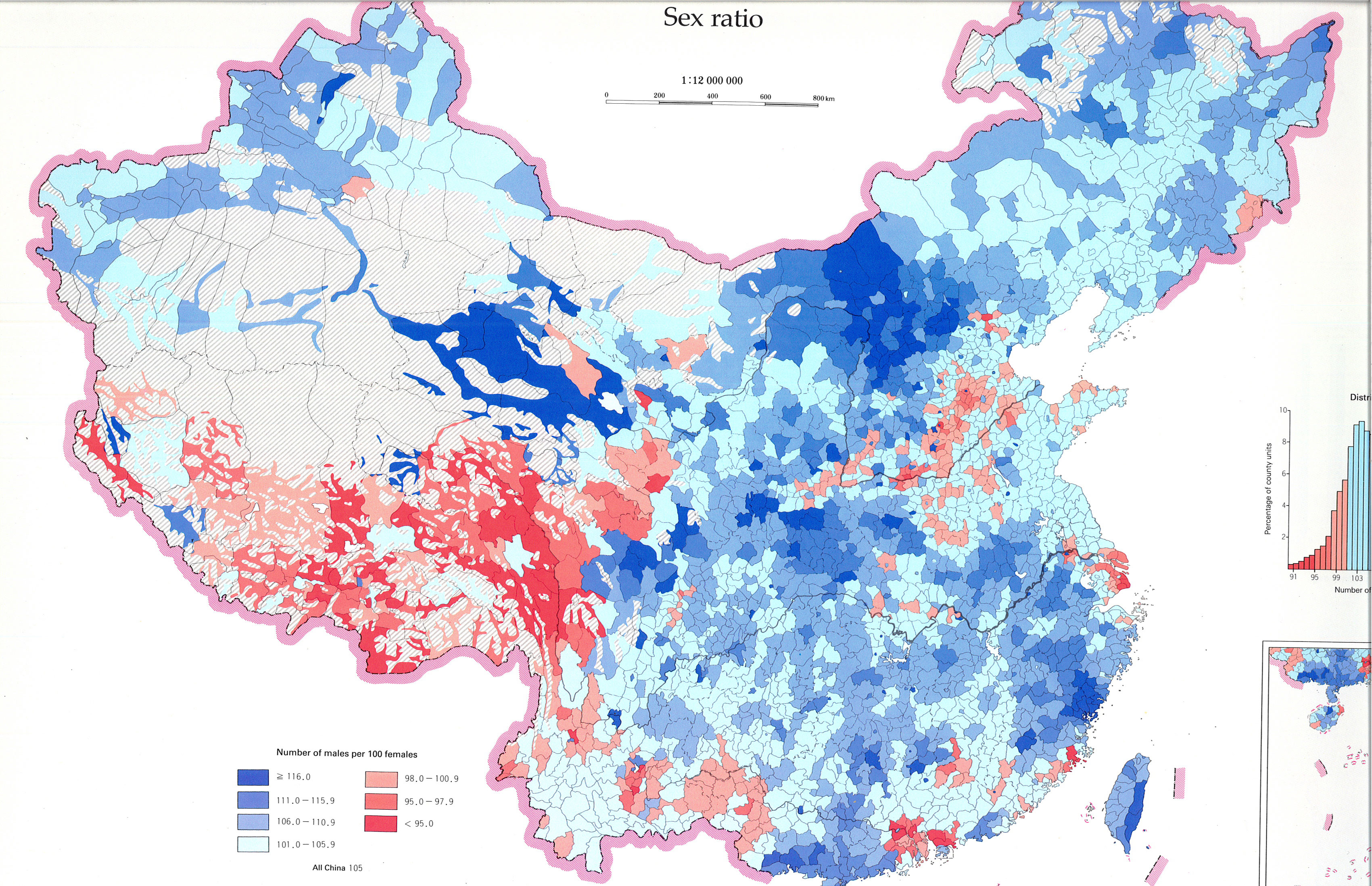
I like this population map of China, but is there one that shows population density instead of sex ratio? Also what's the source of this image? Can only find one image
I also want to find population statistics for Xinjiang/Dzungaria in the period of Qing rule, to 1911?
I like learning would World War 2, but recently I realized I have a huge gap in my knowledge when it comes to the fighting in an near India. I was wondering if anyone has any book suggestions to fill in this knowledge gap.
What is the purchasing power of 1 German Goldmark in the 1910s?
Is there a historical list of all US nuclear bomb codenames. Not the operations, but the names of the bombs themselves
I've read three sources now that are very vague in how England became Anglo-Saxon again after being ruled by Cnut. How did this happen?
I've seen online (not just reddot questions/comments) questioning the accuracy of Band of Brothers by Stephen Ambrose and the HBO miniseries of the same name. Can anyone shed light on this?
I want to read a book about medieval heraldry. Would anyone like to give me recommendations?
Did the Kingdom of Saxony support German Unification?
During the Age of Discovery, how exactly were explorers rewarded/paid for new discoveries? Was all geographical data valuable, or just the resources?
What are some nonfiction books that tell stories of people on both sides of the Troubles? I'd especially like to get some narratives of people from the IRA/PIRA, UDA/RUC, etc. I recently read Armed Struggle and would like to dive a little more personally into the period.
In 200 BCE what year did the Romans consider it to be?
How about the year 200 CE?
I asked this on r/FindAReddit and someone told me to ask this here. Is there a subreddit specifically about immigration?
What were the members of the Supreme Soviet called?
What is the oldest civilization we know of?
Is there a reason the term Lifeguard is used instead of Royal Guard or something like that?
How did the Yugoslav government become so dominated by Serbia? Was anything done about this?
Did any significant number of Chinese people migrate to Japan between circa 200 BC and 1800s?
Any recommendations on a biography of Pilsudski? The most common search result, Unvanquished, advertises itself as reading "like an adventure novel" with a "sufficient" historical depth - needless to say, this is not what I am looking for.
At some point in the last couple of months I'm pretty sure I read something about a culture in Africa that made it a practice to marry outside of their own language group as sort of a way to ensure multilingualism and strong connections with the neighbors, but I've spent the last hour checking my notes and searching Google broadly and limited to this subreddit and turned up nothing. I thought it was in the how would ancient people go about learning a totally foreign language question from last month, but I couldn't find anything there or in my notes from The Civilizations of Africa by Christopher Ehret, which is the only other place I can think of where I might have read that.
The Konbaung dynasty ruled Burma/Myanmar from 1752 to 1885 but were eventually defeated in a series of wars and annexed by the British Empire. My question is what was the name of the Kingdom or Empire that the majority of Burmese or Myanmar people called their country? The closest English equivalent anyway.