Greetings! This question has a few interesting assumptions about it, so before we get into the actual historiography of the Austro-Hungarian government's actions in the July Crisis of 1914, we need to clear the air around those preconceptions. Firstly, OP's use of the term "ripple effect" is certainly an interesting one, as it suggests that the Austro-Hungarian government was aware of the true and full extent of the consequences which would arise from their declaration of war on Serbia. This of course, includes the "seminal tragedy" of all the major European powers (Great Britain, Russia, Germany, and France) as well as other nations (America, Japan, the Ottoman Empire, Bulgaria etc.) getting involved in the conflict over Archduke Franz Ferdinand's assassination. I would urge caution from going into this question with such a broad definition of the "ripple effect", and instead reframe the question to be a tad more generous to the diplomats of the age:
"To what extend did Austria-Hungary foresee continental war by declaring war on Serbia?"
With that preamble out of the way, let us see if we can shed some light on that question, and find out whether the Austro-Hungarian court (or any hall of power for that matter) had any premonition of how disastrous this "squabble over the Balkans" (as one observer termed it) would become.
When news of the assassination of the Archduke Franz Ferdinand and his wife Sophie in Sarajevo reached the Austro-Hungarian government, the general mood was immediately one of hardline action and anti-Serbian rhetoric. Chief of the Austro-Hungarian General Staff Franz Conrad von Hötzendorf was the chief proponent of striking at Serbia, but he was by no means the lone wolf in the Austro-Hungarian government who wished to neutralise this longstanding threat from the Balkans. There were however, three key problem with declaring war quickly. The first was simple and rather coincidental: the Austro-Hungarian army was on harvest leave. It was not due to end until the 25th of July, and calling back the troops for active deployment too quickly would not only leave the food supply in critical disarray, but upset the delicate mobilisation plans which Conrad and his staff had revised for years. Until the troops returned from the fields (the ones on the farms, not those of a battle), the Habsburg armies would be unable to initiate hostilities against the Serbians. Secondly, there was the Russian concern. Everyone in the Austro-Hungarian Foreign Office knew quite well (as in previous Balkan Wars), that a war against Serbia would no doubt propel the Russians to support their Slavic ally in southeastern Europe. Here we have the first sign of "awareness" that a "localised" conflict between Serbia and Austria-Hungary would likely lead to a greater conflict with the Russians. Third, and herein lies the critical point of the question, was the German factor. As in previous war scares, the Austrians were reluctant to take the initiative in declaring war unless they had the firm support of their Dual Alliance partner in Berlin. If German support was secured, then the politicians in Vienna would have added another domino which would fall upon the declaration of war with Serbia.
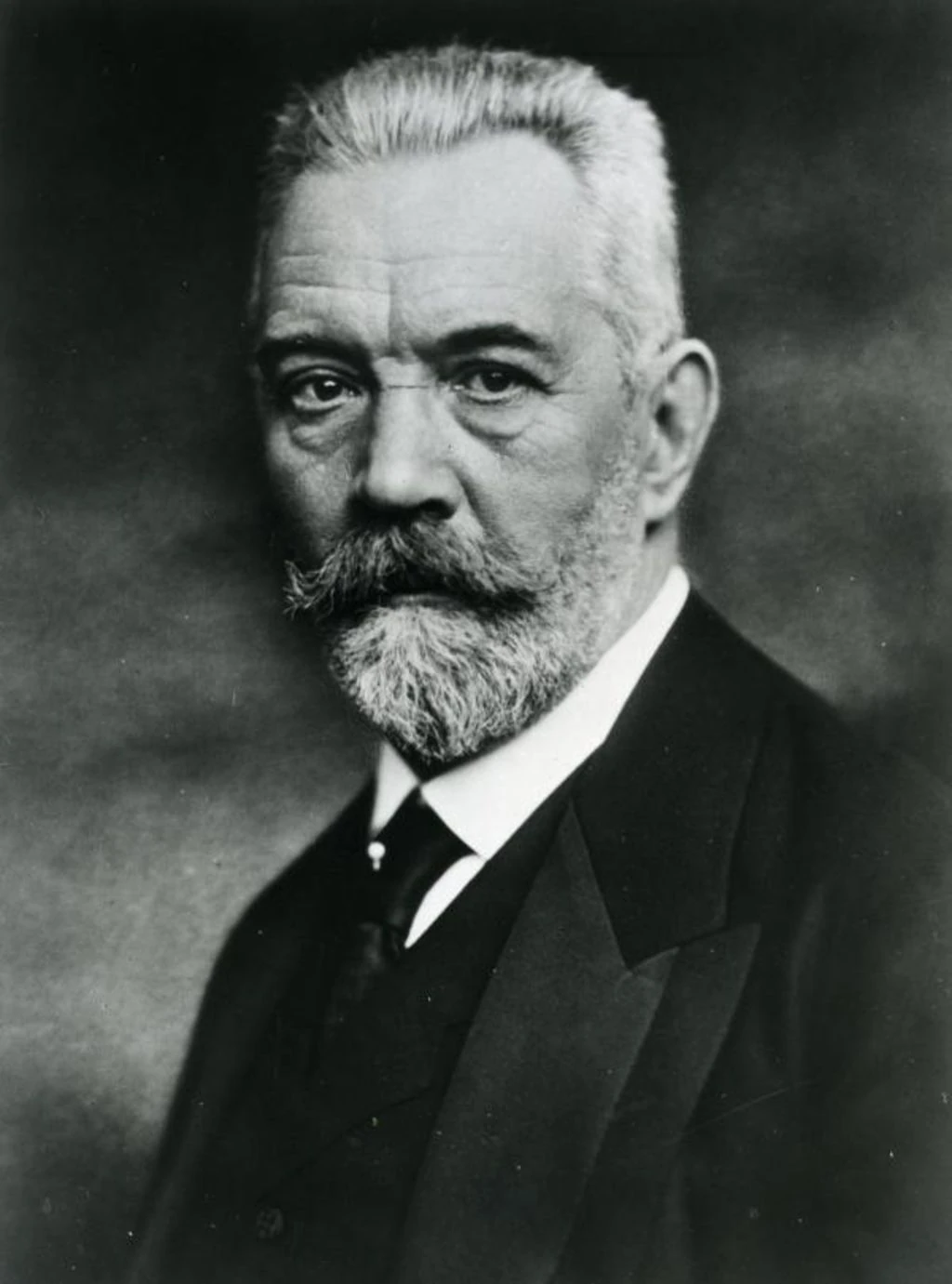
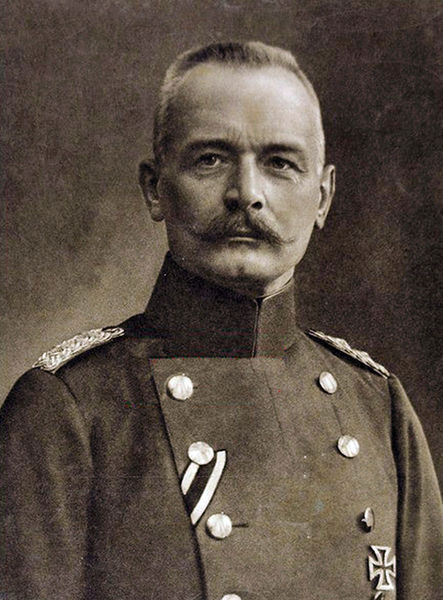
This was, as many historians have analysed, the critical moment of the entire summer of 1914. If the Austro-Hungarians could secure firm German political and military support for a war against Serbia, then they would go ahead with their declaration. To that end, the Foreign Office under the leadership of Count Leopold von Berchtold dispatched an emissary to Berlin to secure this support: Ludwig Alexander Georg Graf von Hoyos, on July the 4th 1914. Carrying with him an revised memorandum on the situation in the Balkans, and a personal letter from Franz Joseph I to Kaiser Wilhelm II, Hoyos met with the Kaiser the following afternoon, and presented the memorandum to him. The Kaiser remarked that such a commitment would require him to consult with the Chancellor and the Minister of War. This he did in the evening, meeting with Chancellor Theobald von Bethmann-Hollweg (who gave his support as Chancellor for the backing of Austria-Hungary) and Prussian Minister of War Erich von Falkenhayn (who told the Kaiser that the armies were ready for war if it came). Thus on the 6th of July, the German government formally gave its support for their Austro-Hungarian counterparts, issuing the infamous "blank cheque" and pledging firm assistance in the case of war with Serbia. What about the other European powers then?
The Foreign Office in Vienna was particularly concerned about British Foreign Secretary Edward Grey, whom they believed would attempt to call a "conference of ambassadors" in London to negotiate a diplomatic way out of the crisis. They could not however, act as fast as their German allies encouraged them to (mostly due to the troops being away as mentioned earlier, but also due to initial opposition from the Hungarian Prime Minister, Count István Imre Lajos Pál Tisza de Borosjenő et Szeged). The Germans on the other hand, knew that as a result of their mobilisation to support Austria-Hungary, the French and British would likely be drawn deeper into the conflict. Bethmann-Hollweg remarked rather revealingly to a nationalist politician in the Reichstag (German imperial parliament)after giving the Blank Cheque that:
"If there is war with France, England will march against us to the last man."
Austria-Hungary was also keeping a close watch on the Russians, who were known for escalating war scares by ordering so-called "trial mobilisations" in provinces of the empire alarmingly close to Austria-Hungary and Germany (most recently, it had done so in 1912 at the outbreak of the First Balkan War, causing Austria-Hungary and Germany to almost respond with their own mobilisations). Reassurance from their German allies however, led the Austro-Hungarians to believe that the Russian army was not ready for war, and that its mobilisation would take significantly longer than initially projected. France and Britain, until the middle of July, also appeared to be biding their time and dragging their stately feet with the Balkans crisis, so Austria-Hungary was confident in sending the ultimatum to Serbia, which as we know led to the declaration of war on July 28th, 1914.
So to sum it all up then:
"To what extend did Austria-Hungary foresee continental war by declaring war on Serbia?"
A war with Russia? Most likely. Dragging Germany into the fray? Highly likely. Involving the Entente Cordiale of Britain and France? Probable, but (hopefully) not with open hostilities. More can, and already has, be(en) written about the days and weeks leading up to the "Guns of August" as Barbara Tuchman's famous work titles the outbreak of World War I, but for the question at hand I can only hope that this has sufficed. Feel free however, to ask any follow-up questions as you see fit!