I was listening to a podcast today and the host was talking about how much literature from the past just doesn't exist anymore (Sulla wrote a memoir!), and I began to wonder if historians are still looking for this stuff? What are the chances that historians will find something like more of Polybius’ history, or the Cypria? Is this something that scholars are still actively looking into, or is it more of a case deeming these things “lost” until proven otherwise? Are there recent examples of something we thought was lost turning up?
Yes, new discoveries of "lost" texts from antiquity are still being made. The majority are just fragments, though, and in fact there are vast amounts of known fragments of ancient texts that nobody has translated and/or figured out what text it's a fragment of yet. To begin with, you can check out this answer by /u/Daeres for an overview of how the texts we now know were passed down to us through history.
Adding to that answer, papyrus fragments (from various sources, including the huge collection from Oxyrhynchus) are still a major source of texts previously thought lost, but again, they are mostly fragmentary by their nature. Still, that's nothing to sneeze at - lost poems by Sappho have been found in this way as recently as 2014, for example.
More complete text finds are much rarer, but they still happen - every once in a while someone runs across medieval manuscripts containing copies of texts previously thought lost. For example, six lost sermons by St. Augustine were discovered in a medieval manuscript in the Erfurt university library in 2008, and in 2005 a lost treatise by Galen of Pergamon was found in the library of a Greek monastery.
Then, there's been some significant progress made in the last decade or so in regards to recovering texts from sources that were previously considered unreadable. One example of this is palimpsests, parchment manuscripts that have been scraped clean and reused for a new text. In many cases it's been known that an older text was there, but it wasn't possible to read it. Now, however, using various imaging technologies it can sometimes be possible to recover the older text, or at least fragments of it. There have also been some recent efforts in trying to non-destructively recover text fragments from burned papyrus rolls from Herculaneum using CT scans, but as far as I know this has proven to be extremely challenging and hasn't yielded any major breakthroughs yet.
As for the likelihood of discovering any specific text, well, who knows? I really don't know if anyone could say. (edit: it quickly turned out that there are in fact things that could be said about this - check out the great answer by /u/KiwiHellenist !)
As an addendum to the excellent explanations given by /u/renhanxue and /u/MichaelJTaylorPhD, I'll just add a note on the specific examples you mention, because the likelihood of a lost text turning up varies enormously depending on its genre and date.
First, complete manuscripts that are preserved in libraries -- mostly in Europe -- will not normally yield new lost texts because they are extremely well catalogued, and people have been poring through them for centuries. I don't just mean robust institutions like the Biblioteca Laurenziana or the Bibliothèque nationale: this also applies to archives in eastern Europe and the Asian and African parts of the Mediterranean. The only realistic scenario where a new text is going to turn up is when a known manuscript hasn't been correctly identified, and the author has previously been anonymous; but then someone discovers that it's actually a text by someone well known. This is mostly going to be the case with Christian writings, such as the Augustine that /u/renhanxue mentions, or the 29 homilies by Origen that Marina Molin Pradel discovered in Munich in 2012.
Polybius and the Cypria aren't going to be sitting around being anonymous, however. If they were in a complete manuscript, they'd have been identified long ago.
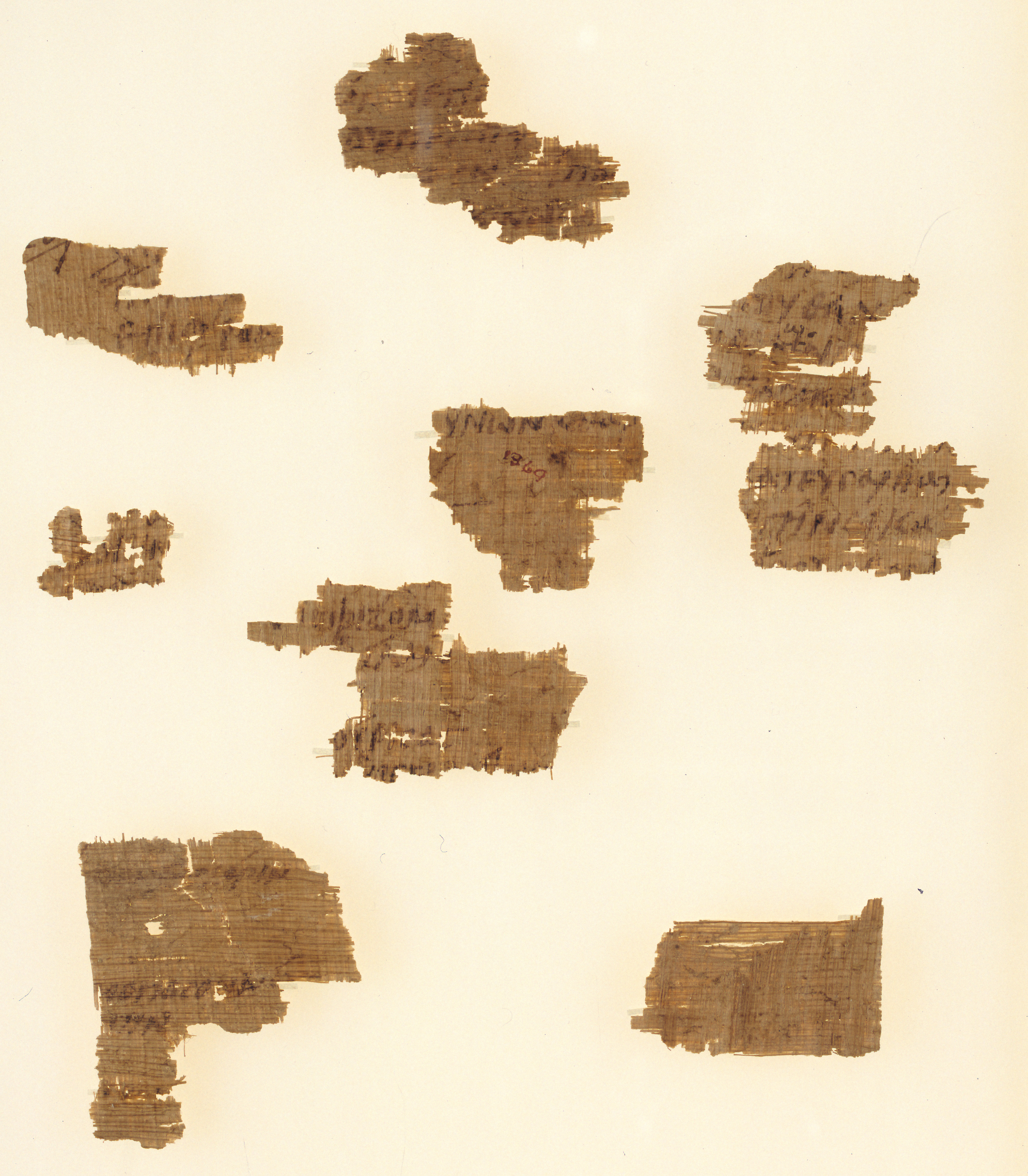
The main other possibility is papyri found at archaeological sites. As both of the previous respondents have pointed out, there have been some major discoveries over the last 120-odd years; but scarcely anything in the way of complete or near-complete texts. The Nag Hammadi corpus and the Dead Sea scrolls are tremendous flukes. We hope they might happen again, but it's the kind of thing that only happens by chance. We can hope for more finds like the Aristotle, but that, too, was a tremendous fluke -- papyrus finds normally look more like this.
And lastly, the selection that's available to be found depends on what people who lived at the archaeological site were reading. Nearly all papyrus finds come from Roman-era Egypt. That means what may turn up depends entirely on the reading habits of Roman-era Egyptians.
And Roman-era Egyptians weren't nearly as interested in lost literary works as you might hope. For the most part, their books were exactly the same texts that have survived to the present. (That's why they survived, after all: they were popular, and there were lots of copies!)
Polybius is a possibility, even if it's only fragments. But the Cypria, alas, is not a realistic hope. I will gladly eat my hat if a papyrus fragment of any cyclic epic poem is ever found. Because no one was interested in them. Even among ancient writers who were interested in the subject, you can count on one hand the ones who actually knew them first-hand: dozens of sources report odd snippets of information about them, but only Herodotus, Aristotle, and Pausanias claim to have actually read any of them. We have thousands of papyrus fragments of Homer, hundreds of Hesiod -- but not a single papyrus fragment of any other pre-classical epic. I'm very much afraid that is not likely to change.
Things do turn up, and have been for a while. The main source of "new" literature is papyrus, mostly preserved in Egypt. A particularly common source is busted open mummies, as used books were recycled as mummy cartonage.
One of the earliest, famous modern papyrus finds was Aristotle's "Constitution of the Athenians" (Ath. Pol.) was only discovered in 1890 (with some earlier pages discovered a decade before). During the 20th century, significant chunks of the playwright Menander, who was exceedingly popular in antiquity but whose works were hereto known only from Roman translations, also turned up, including in 1958 (published, the papyrus had been recovered somewhat earlier) a complete version of his play the Dyskolos, "the Misanthrope," although a number of literary critics at the time were disappointed by is mediocre sit-com plot.
One of the most recent, if controversial new finds is a new Sappho poem supposedly recovered by the (now criminally indicted) papyrologist Dirk Obbink, the so-called "Brothers' poem," published in 2014. This is a very dubious piece of new literature because of Obbink's many other nefarious activities, even if it seems the current if not necessarily stable consensus is that it is an authentic ancient poem but possibly sourced illegally through the black market.
Of course some of the most exciting new finds of the 20th century were in the realm of early Christianity, from the discovery of the "Gnostic" gospels at Nag Hammadi in 1945, published and translated over the 1970s, and providing extraordinary insight into heterorthodox Christian beliefs hereto only known from the assaults of orthodox authors. In 1990, some new sermons of Augustine were discovered, this time not on papyrus, but buried in a manuscript; these give a sense of Augustine not as a theologian, but as a working priest and bishop.
It is therefore entirely possible that new lost ancient works might fortuitously come to light, either through new excavation or identification of un-studied material held in a collection. As an ancient historian, I certainly hope they do!
I would like to thank u/MichaelJTaylorPhD , u/rehaxue , and u/KiwiHellenist for answering my questions. It’s great to know some pieces are still being discovered, but the way it was described it’s mostly a jigsaw puzzle problem, and not a case of finding the complete writings of Livy in an out of the way monastery, on a shelf next to Ibn Fadlan’s full account of his battles with the mist monsters.