Hello everyone, a casual writer who. I am working on a fantasy story heavily inspired by the medieval ages, specifically the 15th century when it comes to technology.
With my research, I figured out that a village had a population that can range from 50-150 people, but how well-defended were they? Did everyone at least have a spear maybe even a somewhat standing militia or is it pretty much every able body person, grab your pitchforks and sickle to fight off the bandits?
I am afraid that your questions touches on many aspects which often intertwine with each other in a frequently messy way.
First of all, metal was expensive in the Middle Ages and Early Modern Age. So expansive in fact that in one registry from 1477 of the Hospital of Our Lady of Annunciation of Capua in the Aragonese kingdom of Naples, among the tools listed, out of ten hoes, two are specified of having been made out of iron. Some historians have speculated that the amount of workhours required to produce 100 kg (something around 200 lbs) of iron can be estimated to have been around 5000. What metal present would most likely have been used in tools such as axes and plough blades rather than pitchforks.
Second, during the closing decades of the Middle Ages (or the second phase of the Renaissance, depending on who you ask), localized armed forces were less relied upon than increasing numbers of professional mercenary troops, often drawn from rural nobility in financial need, especially when very urban societies were involved like Northern Italy. Villages and settlements within a city's territory were not required to join the military effort like they used to two centuries earlier. Whereas citiziens might be required to possess a minimum amount of military gear, peasants in some rural zone usually weren't. Thus, we can assume that the amount of "combat hardware" they had was rather scarce.
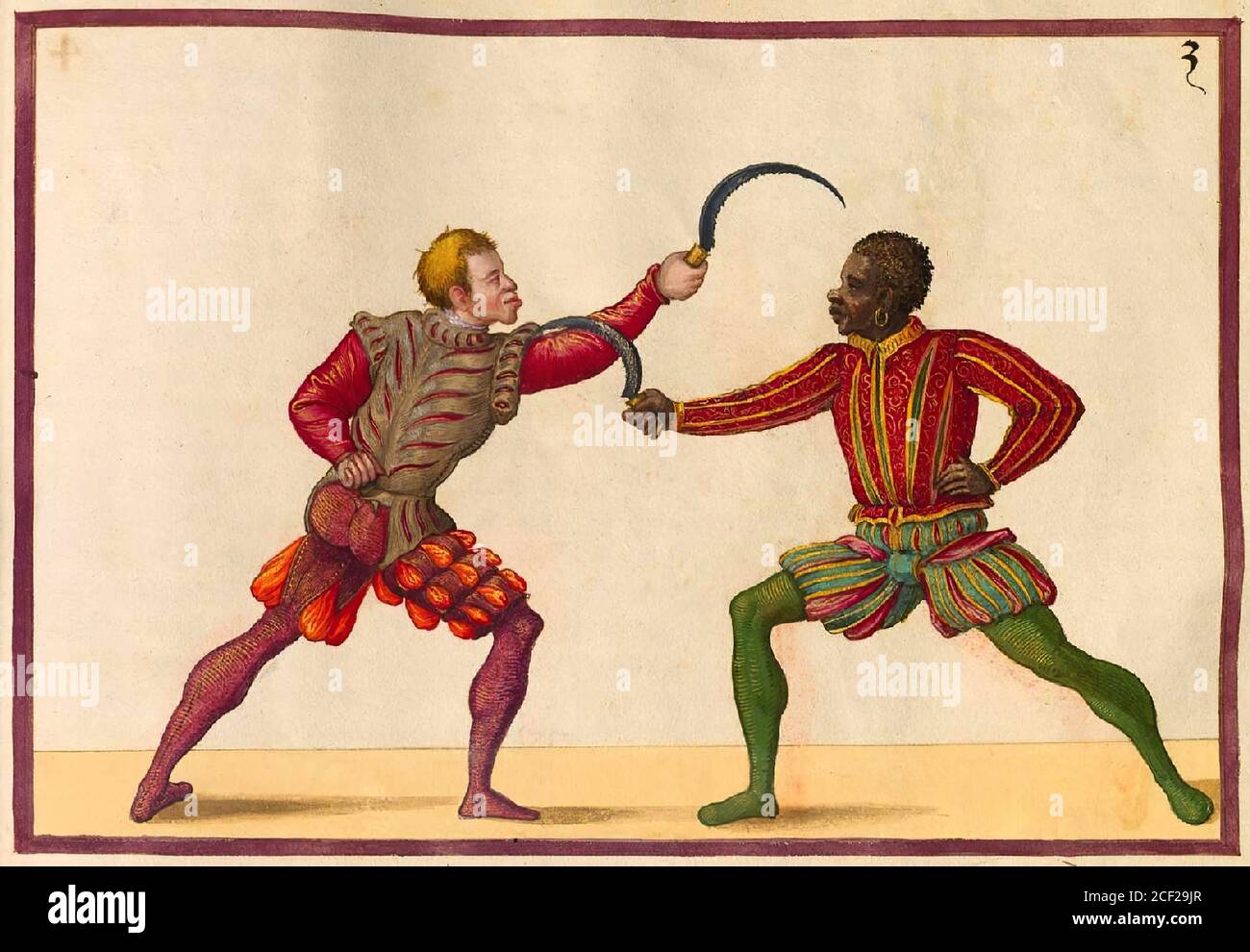
We must also specify that some "military-capable" items might have been present. If the need arose to protect themselves, knives and hatchets could be relied upon for defense. Scythes (not the anime kind but something like this) could also work out for an improvised weapon, to the extent that in several occasions were actively converted into combat-oriented items, aptly named "war scythes". Bows and crossbows were used for hunting game and their presence can be speculated in some capacity in any village of modest size and personally I wouldn't rule out the presence of slings, as they were cheap and effective ranged weapons. Lastly, a thick piece of wood is always a good choice if you want to cave someone's skull in.
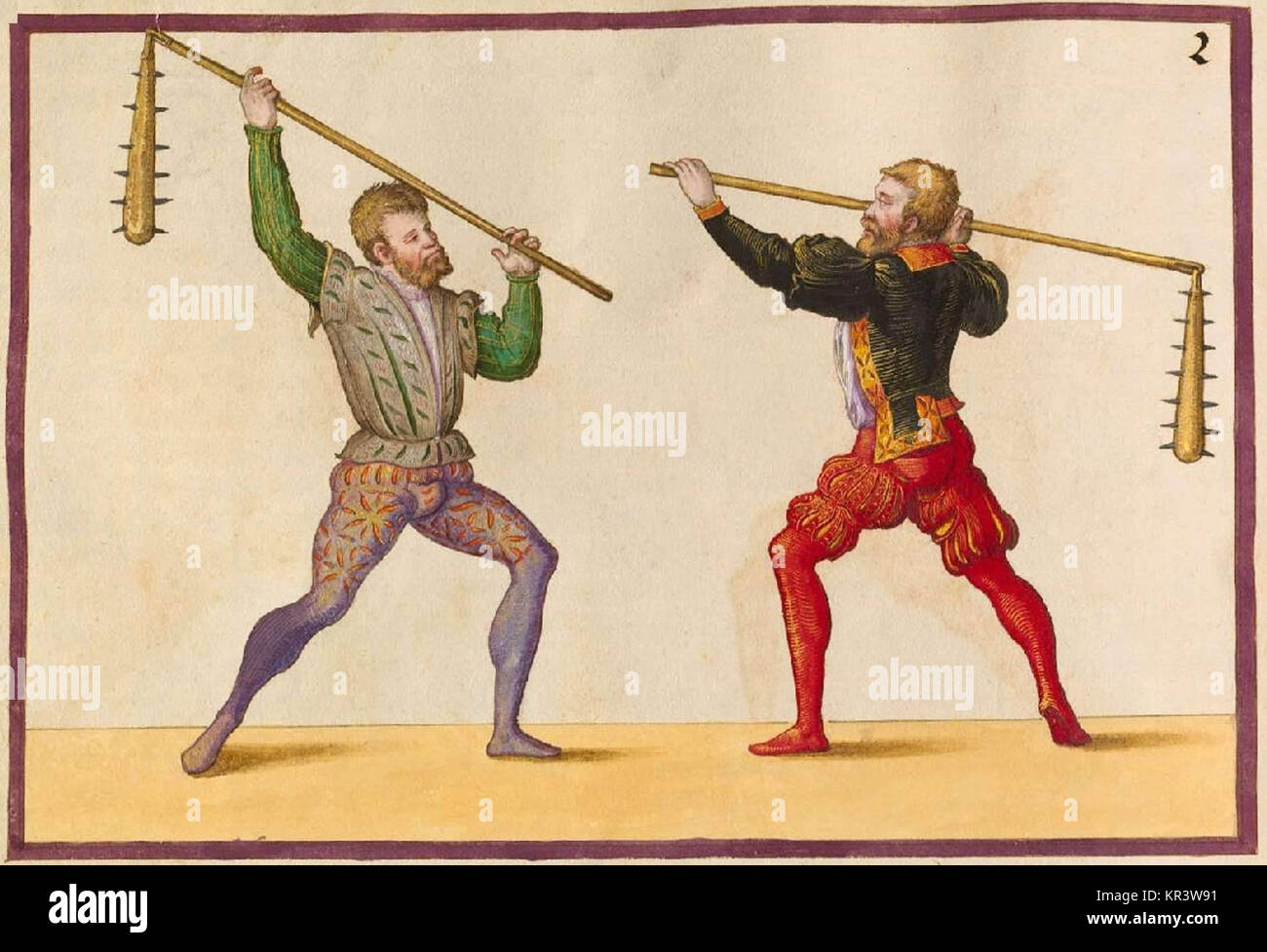
However, a combat treaty written by German Augsburg patrician Paulus Hector Mair (1517-1579), allegedly named De Arte Atlethica, describes in several illustrations combat with scythes, sickles and flails (which were most likely an improvised weapon made out of a tool used to thresh the grain). Although historians and HEMA practitioners are currently divided on the matter, unsure if this is truly a surviving example of peasant fighting researched by the eccentric Mair or simply a product of his own, what is shown is not outside the realm of possibility, whereas it still should be taken with a pinch of salt.
What I would say that would not have been easily present are protections such as body armour and shields, being they quite expensive and most likely not accessible in a rural situation without visiting the next major trading or crafting hub.
I hope this answer helps your inquiry.