Flying aircraft carriers are a fairly common sight in science fiction and "nearly real-world" fiction, whether they're the "regular carrier but it flies" Helicarrier of the Marvel Cinematic Universe, the "Flying Wing" Aigaion of Ace Combat, or some other more exotic design. I feel like a real-world flying carrier would be a boondoggle, but I'm curious whether any country took a crack at it or at least undertook a serious design phase.
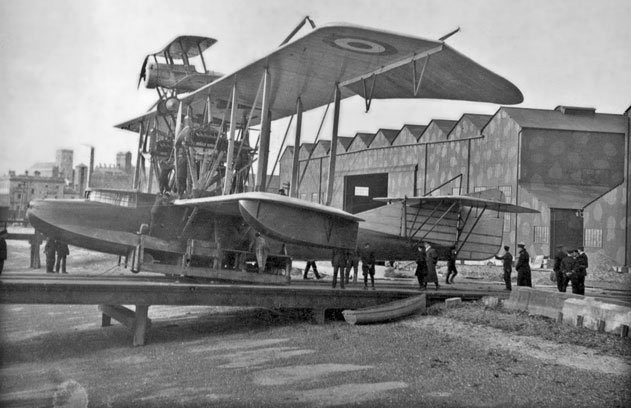
"Flying Aircraft Carrier" did exists, but in other form than Helicarrier. In 1920s and 1930s some militaries were experimenting with "parasite plane" idea ie plane being carried and air launched by a larger carrier aircraft or mother ship to support the primary mission of the carrier. The carrier craft may or may not be able to later recover the parasite during flight. Great Britain create an experimental "parasite plane carrier" back in 1916. In May 1916 a Bristol Scout flown by Flt. Lt. M. J. Day was mounted above the top wing of a Porte Baby flying boat flown by Sqn. Ldr John Cyril Porte, and was successfully released at a height of 1000 ft (300 m). Porte Baby with attached Bristol Scout plane photo.
Later during Great War, both Great Britain and Germany had a further experiments with "parasite plane" concept. But instead of small plane mounted on bigger plane they experiment with mixing zeppelins which offer long range but their combat possibillities were low (after bomb runs on Great Britain where german Zeppelins drop bombs on London Great Britain create a basic anti-aircraft system which was deadly for Zeppelins) with much more combat worthy but short-range planes. In 1918 british Royal Navy outfit one of their zeppelins HM 23r with plane mounts on zeppelin belly. First an unmanned, then a manned, Sopwith Camel were launched successfully in July 1918. In November 1918, the experiment was successfully completed with two other manned Camels. In same year US Navy done their own experiment, US Navy C1 blimp lifted a US Army Curtiss JN-4 aircraft to 2,500 feet (762 meters) over Fort Tilden, New York, and at that height released it for a free flight back to base.
But only "real" flying aircraft carriers based on Zeppelin was built for US Navy in 1931, USS Macon and USS Akron
USS Macon and USS Akron offer 11 000 km range and carry 5 Curtiss F9C Sparrowhawk parasite planes each. As USA was almost world helium producer monopolist USS Macon and USS Akron was filled with helium (so compared to infamous Hindenburg they weren't flying gas lighter). As for 1930s it was awesome results as such flying aircraft carrier could spent days in skies on sea patrols or being able to undertake long range recon missions. Unfortunately USS Macon and USS Akron were destroyed in flying accidents.
USS Akron crashed at the coast of New Jersey in 4 April 1933 killing 73 people with only 3 survivors. Most casualties had been caused by drowning and hypothermia, since the crew had not been issued life jackets, and there had not been time to deploy the single life raft.
USS Macon had longer career, but also crashed in 12 February 1935 but near coast of California. Fortunately for crew, it was only two dead thanks to introducing life jackets and warm water. But it was an end of zeppelin flying aircraft carrier idea. Zeppelins in this role while being great at long-range sea patrols, they were riddled with problems construction was easy to damage and expensive to repair as parts were made out of then rare and expensive duraluminium and custom made, their "parasite" planes were too small to be a real threat to new generation fighters and does not offer much field for improvement due to weight and size limits which their mother ship could carry and finally disaster prone with high chance of death for the crew.
But during WWII there was another idea called a "composite plane" ie bigger plane carry a smaller plane to improve smaller plane combat range. There was only two countries which try this in combat, USSR and Japan. USSR create "Zveno" Mothership. Pretty much BT-3 strategic bomber carrying up to 5 parasite planes into combat in 1930s, in 1938 they worked to make BT-3 to carry up to 8 planes with air refueling known as "Aviamatka" (Flying Mother), but never achieve this results. Zveno mothership was also used in combat, in 1941 Zveno motherships carried attacks on romanian oil industry and docks and attacks on bridges in Ukraine. While Zveno was a relatively success with around 30 combat missions BT-3 strategic bomber and their parasite planes was already too outdated with terrible losses among Red Air Forces in 1941 Zveno program was shut down in early 1942.
Japan were able to get the Yokosuka MXY7 Ohka kamikaze rocket plane into active service in 1945, typically using the Mitsubishi G4M bomber class to carry them within range. However, their effectiveness proved minimal in part because Allied air naval defense took advantage of the weight of the parasitical aircraft payload slowing the carrying bombers, making them vulnerable to interception before the rocket plane could launch.
Last attemp to create a "flying aircraft carrier" was once again USA. In 1950s USA launch Project FICON an project where USAF strategic bombers could carry one or two jet fighters to protect bombers from enemy fighters which evolve into Lockheed Lockheed CL-1201 nuclear powered flying aircraft carrier concept in late 1950s and 1960s, but due to failure nuclear-powered strategic bomber project CL-1201 never leave drawing room. Flying aircraft carrier concept goes back in early 1970s by Boeing In the early 1970s, Boeing conducted a study under a contract from the USAF for an airborne aircraft carrier for up to 10 Boeing Model 985-121 "microfighters", with the ability to launch, retrieve, re-arm, and refuel the microfighters so USAF would always have at least small numbers of combat planes ready to rapid deployment across the globe but once again project never leave conceptual stage. Right now USA once again goes back to "Flying aircraft carrier" idea known as "Gremlins". DARPA is tinkering with using big cargo plane like C-130 "Hercules" to carry drone fleet and deploy them in combat zone, still it's rather a proof of concept, but it's weird like a idea from 1916 can still find it's place in modern airforce