It was a major landmark in London for many decades so it seems strange that after the fire no one tried to rebuild. Why was that?
THE CRYSTAL PALACE (1851-1936)
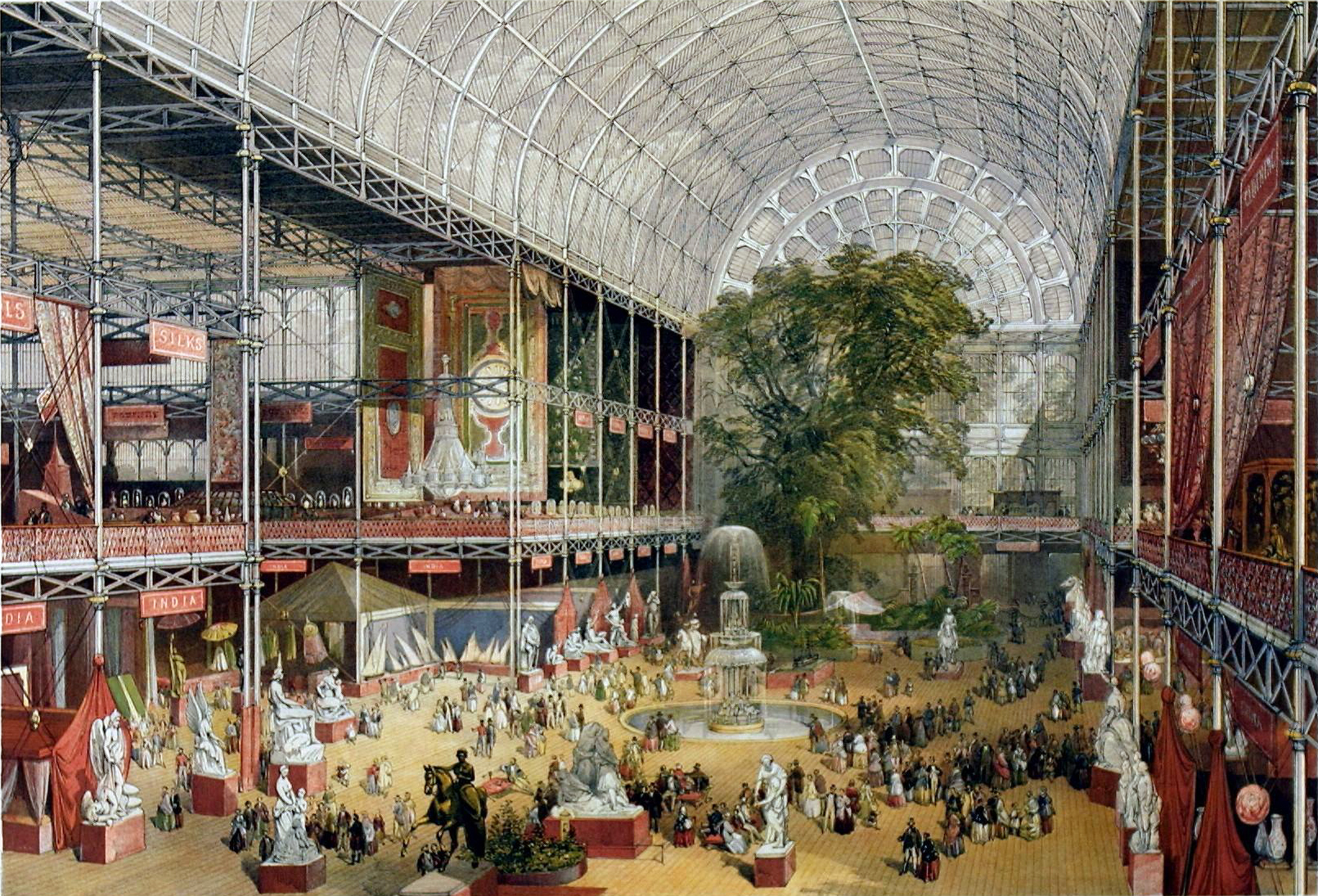
The Crystal Palace was, according to the architect Le Corbusier: "a monument of nineteenth-century architecture.”[1] Designed by Joseph Paxton and opened by Queen Victoria, the building was constructed in London’s Hyde Park for the 1851 Great Exhibition of the Works of Industry of All Nations. Paxton was a gardener for the sixth Duke of Devonshire and had designed a number of innovative greenhouses built of glass and structural iron at the Duke’s Chatsworth estate. He managed to neatly solve a problem that had confounded the exhibition planners for months: how to preserve the mature elm trees on the chosen site in Hyde Park?
Paxton’s ingenious solution was to create an elongated structure with a 64-foot high central nave and 108-foot crossing transept recalling a medieval cathedral. By using prefabricated elements, including nearly one million square feet of sheet glass, construction was able to be completed in less than six months. Within the 18 acres of enclosed space, Britain, its colonies, and countries from around the globe presented 100,000 specimens, products and inventions, all for the purpose of promoting peace and goodwill. Over the six-month course of the exhibition, six million visitors passed through its gates.[2]
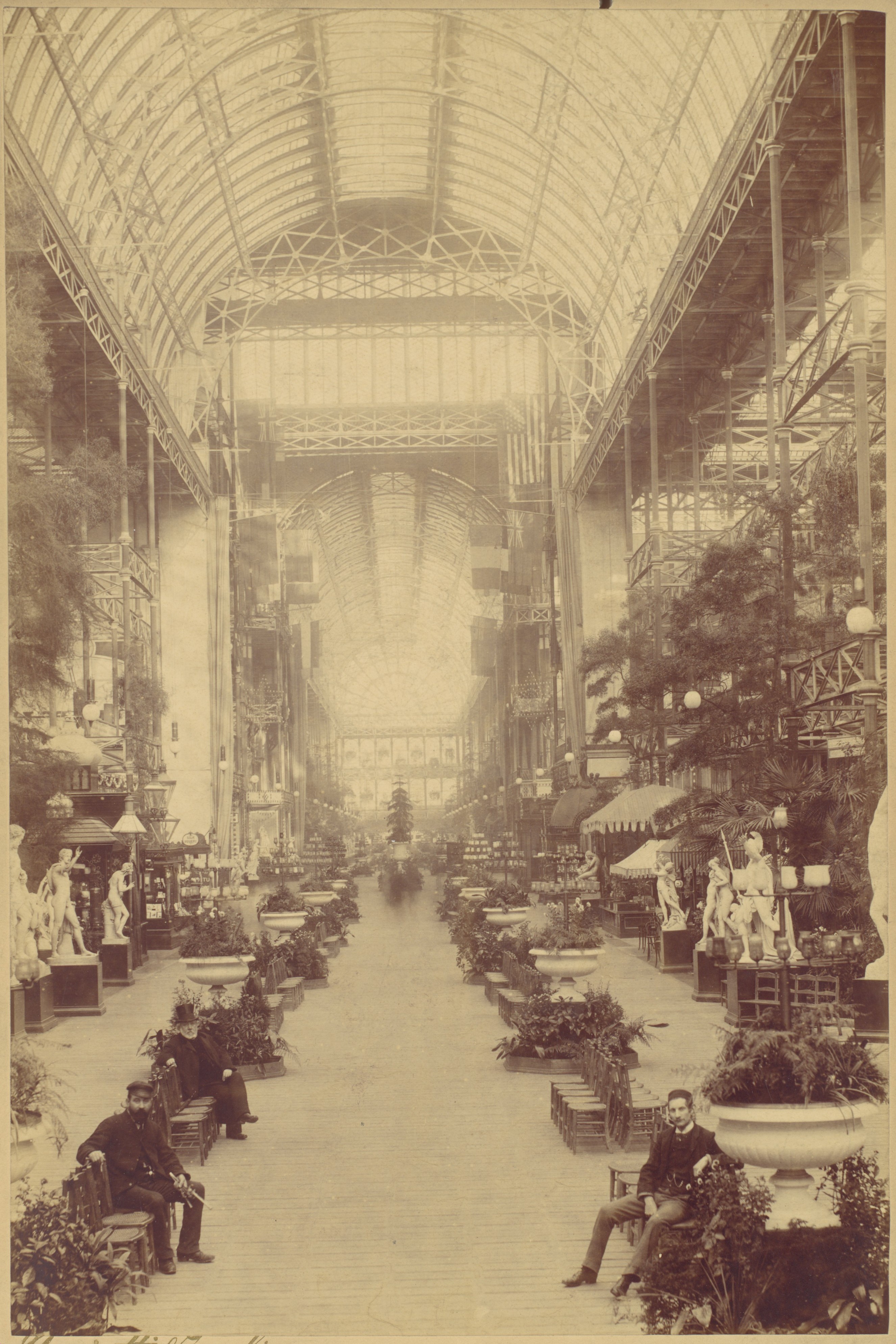
The Crystal Palace was an architecture of superlatives, and Paxton sought to preserve it. After his first proposal to leave the building on site and convert it into a winter garden was rejected, he raised a half-million pounds to remove it to a site on Sydenham Hill on the outskirts of the capital and construct an early form of amusement park. Connected to the center city by a specially built railway, the rebuilt and expanded Crystal Palace welcomed millions of visitors in the following decades. They came to view its elaborate fountains, statues of prehistoric, “antediluvian monsters”—or dinosaurs—tropical plant conservatory, aquarium, and plaster-cast courts covering a range of historical periods and themes. Concerts of classical music and elaborate fireworks displays drew paying guests day and night.
But the Crystal Palace always struggled to make a profit. Debt from the move and preparation of the grounds weighed upon the operators. General wear-and-tear combined with the damage caused by inclement weather and a couple major fires required constant maintenance and extensive repairs. Visitors demanded novel attractions, which necessitated continual reinvestment in the building and its landscape. Though the installation of a massive pipe organ and a series of large-scale Handel concerts kept the enterprise afloat into the 1900s, the financial situation was precarious. Not even the 1911 Festival of Empire could save the company operating the Crystal Palace from collapse.
In the end, the sale of the building and park to the nation was arranged by the Earl of Plymouth. The Crystal Palace became a naval training center during the Great War and the site of the first Imperial War Museum soon after. In the 1920s, the structure and surrounding park were stabilized and restored, but it was clear that the Golden Age of the Crystal Palace had passed. The wireless radio and the cinema had filled some of the demand for live concerts and events that had sustained the building.[3]
The end for the Crystal Palace came on the night of November 30, 1936. As half a million spectators watched, 89 fire engines and 381 firefighters battled the blaze throughout the night, but to no avail. The Crystal Palace was completely destroyed, save for two water towers and some lumps of melted glass. The event was recorded and featured in newsreels seen around the world.
WHY NOT REBUILD?
The answer is mostly pragmatic, given the political and economic conditions, but also ideological.
In 1936, the United Kingdom was still suffering the effects of the Great Slump—the worldwide downturn better known to Americans as the Great Depression. The Jarrow March in October of that year is representative of the popular discontent with the dire economic conditions suffered by many in the country. Politically, the country was in the throes of the Year of the Three Kings. The fire that destroyed the Crystal Palace came just ten days before Edward VIII signed the Instrument of Abdication and was viewed, like the sinking of the Titanic, as the end of an era. Uncertainty dominated the remaining years of the decade, while destruction and deprivation consumed the 1940s. After war came, the former site of the Crystal Palace was used as a landfill for 385,000 tons of rubble left by the Blitz.
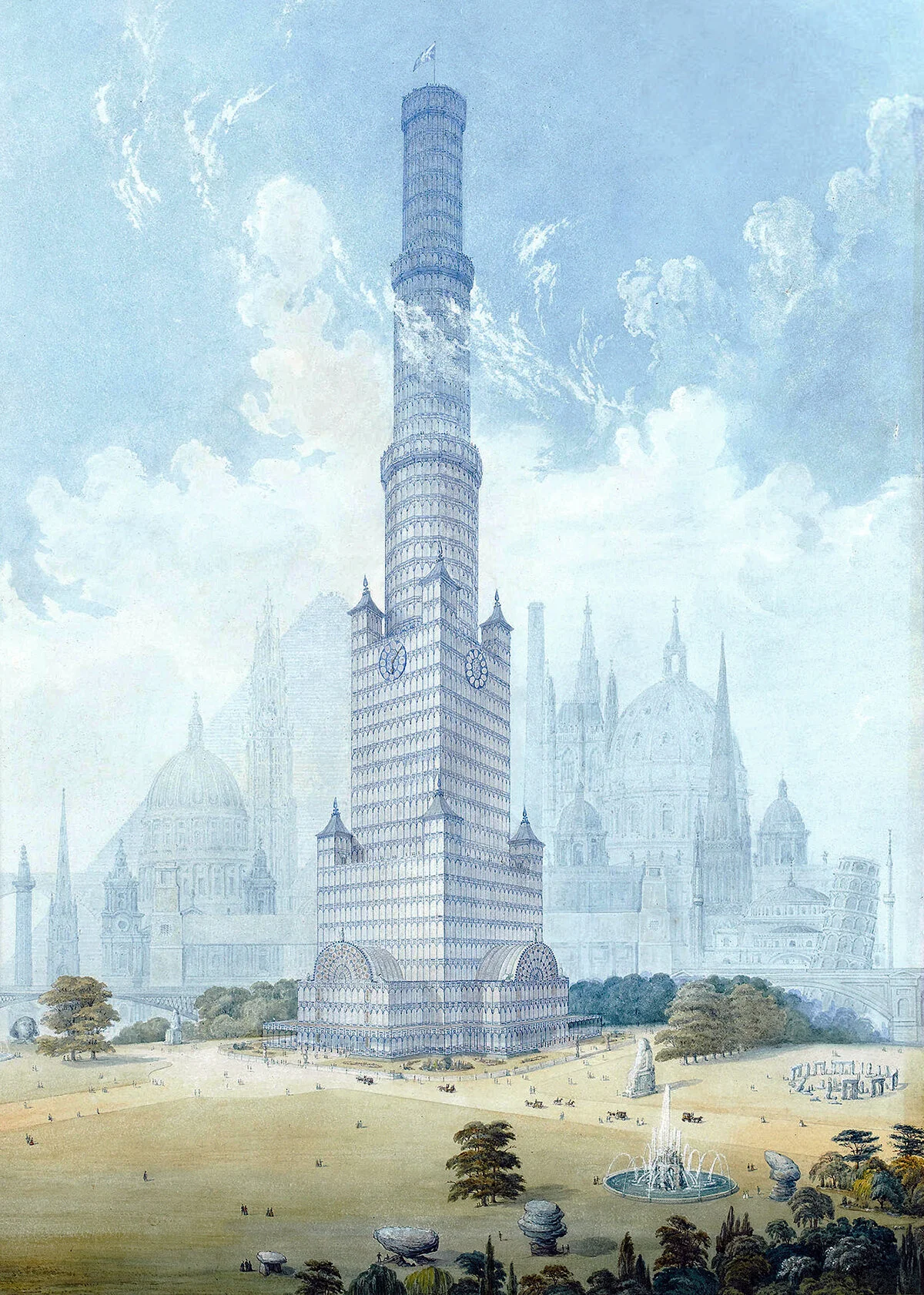
The Crystal Palace had inspired numerous imitations, including one in New York (1853-1858), and visionary projects, like the architect Charles Burton’s 1852 proposal for a 1000-foot Crystal Tower in London. But by 1936, the world of architecture had moved on, as Ralph Lieberman makes clear in his thorough historical examination of the shifting attitudes of architects and critics toward the Crystal Palace.[4] It was acknowledged as a paragon of the revolutionary nineteenth-century synthesis of materials and technology and as a needed antidote to endless parochial debates over history and style. Simultaneously, the building was viewed as a relic of the Victorian age, with few lessons to offer modern architects on the predominating concern of the relationship between form and function.
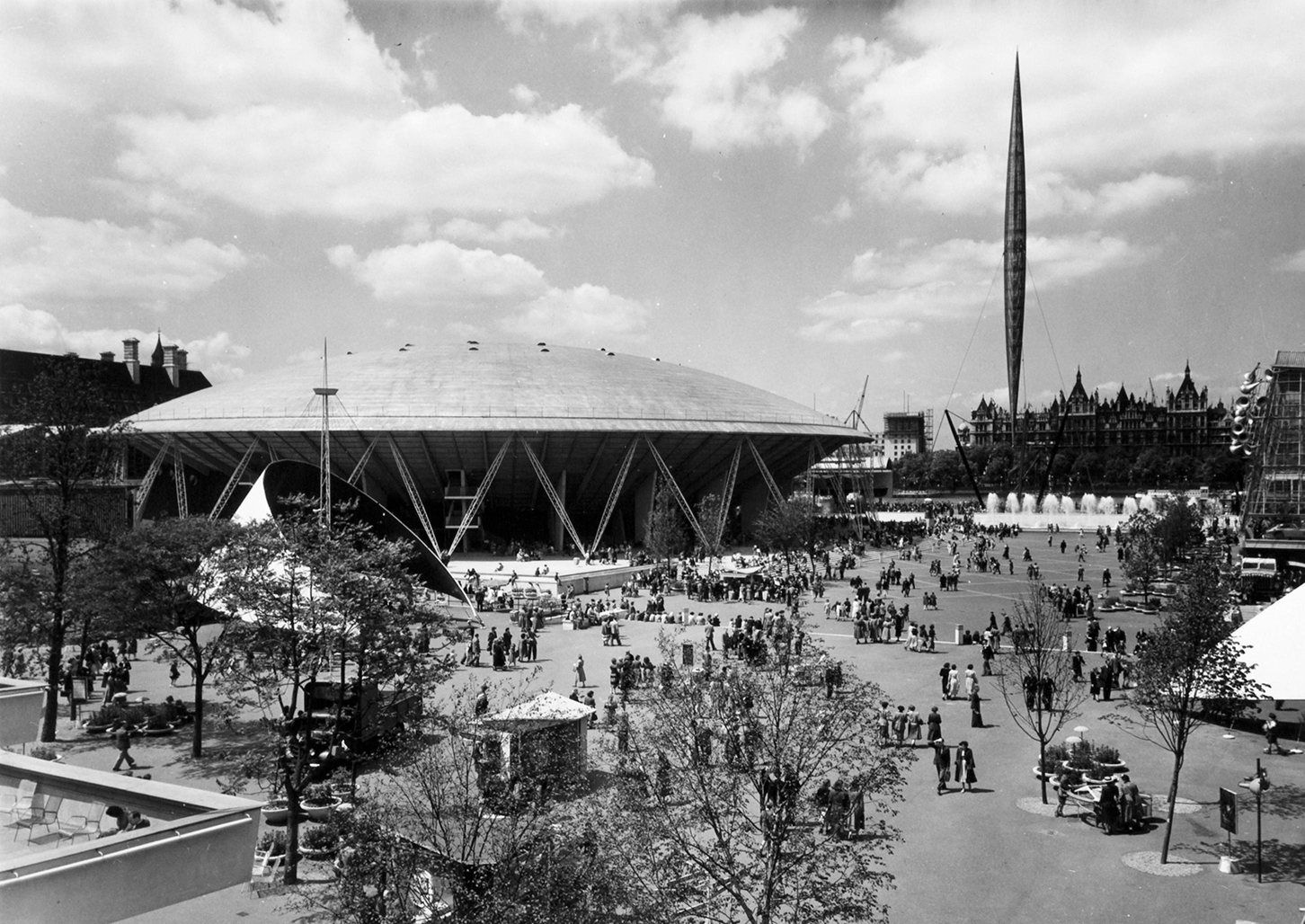
Nowhere is this balanced appraisal more evident than at the event planned to mark the centenary of the Great Exhibition and to display the country’s postwar recovery: the Festival of Britain. The facilities constructed on the south bank of the Thames for this 1951 event showcased the new styles that would come to dominate British public architecture in the mid-20th century. The iron and glass of Joseph Paxton’s Crystal Palace was supplanted by the reinforced concrete of Leslie Martin’s Festival Hall and the aluminum of Ralph Tubbs’ Dome of Discovery.
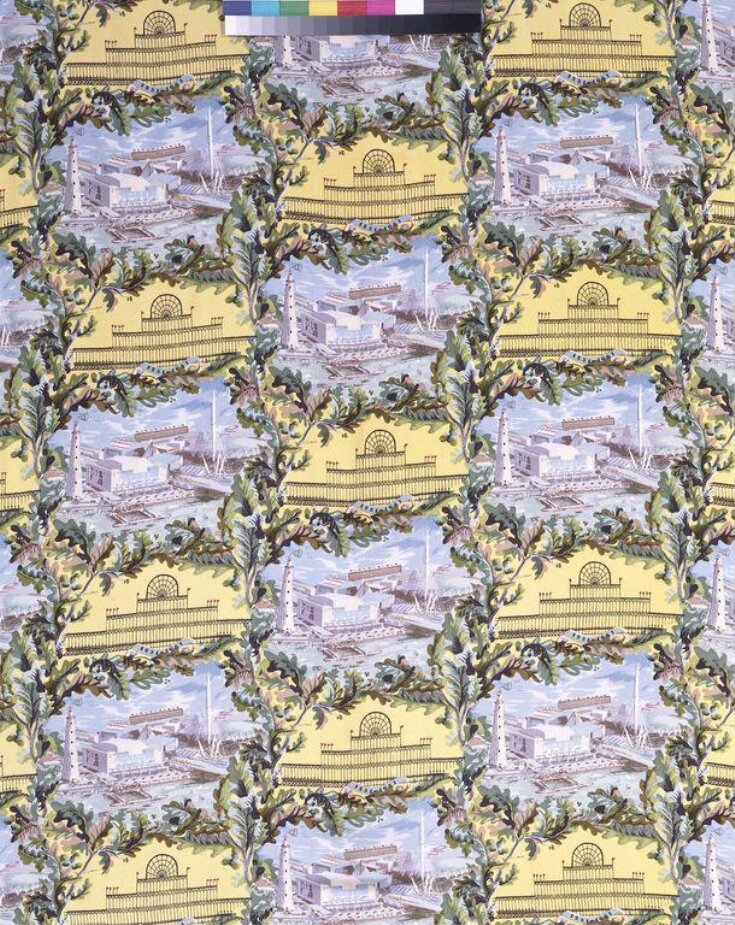
Yet despite these forward-looking designs, the Crystal Palace was not forgotten. According to the historian James Boaden, images of the lost building, like an architectural revenant, haunted the Festival site as miniature replicas and on decorative screens.[5] The textile designer David Barker even created a commemorative fabric, in which renderings of both the 1851 and 1951 buildings mingle harmoniously within a matrix of oak leaves, a fitting symbol to mark a century of endurance and progress.
Sources
[1] Philip Morton Shand, “The Crystal Palace as Structure and Precedent," Architectural Review lxxxi (1937): 65-72.
[2] Patrick Beaver. The Crystal Palace: A Portrait of Victorian Enterprise. London: Hugh Evelyn Limited, 1970.
[3] Jan Piggott. Palace of the People: the Crystal Palace at Sydenham 1854-1936. Madison: University of Wisconsin Press, 2004.
[4] Ralph Lieberman. "The Crystal Palace: A Late Twentieth Century View of its Changing Place in Architectural History and Criticism." AA Files 07 (1986): 46-58.
[5] James Boaden, “Peculiar Pleasure in the Ruined Crystal Palace,” in Kate Nichols, and Sarah Victoria Turner., eds. After 1851 : The Material and Visual Cultures of the Crystal Palace at Sydenham. Manchester: Manchester University Press, 2017.