It seems to me, from my understanding, that European castles began to emerge around 1,000 years ago, and even before then (Ancient Rome, Ancient Greece) the architecture was complex and grand. The Americas during that time did not look like this at all. I know the Inca Empire was beautiful and the Aztecs built wonderful pyramids and temples and water systems, but the design was completely different and more rustic (lack of a better word) than European. Is it due to what the land had to offer? Was the European continent more bountiful in building supplies? I feel like Europe advanced much more quickly than the Americas, and I'm wondering why that is. However, I know China and the Ottoman Empire advanced more quickly architecturally, and everything else in between, than Europe, correct? I suppose I'm just wondering why all of that is. Like, why did Europe look the way it did in 1350 (minus the plague) and the Americas looked the way it did in 1350, is basically what I'm going for. I hope I'm making sense!
(I’m on mobile so please forgive me but) Edit: this sounds like I’m saying one is better than the other and I’m not at all. Native Americans built beautiful intricate systems and even apartment complexes and such, but it looks “less advanced” aesthetically than the European countries, like buildings made from sticks and mud and other things like that, ya know? It looks like by 750 AD not much advancement was made, but in Europe there majorly was. Just would like to know why that is.
1/2
I think that your question says more about modern interpretations of aesthetics and attitudes about architectural achievements than it does about the actual relative "architectural advancement" of the Americas and Europe. I also believe that your question is based on a few assumptions and shortcuts that are not actually true to the history of the Americas. So I'll begin with a few sentences to frame this discussion.
When you're talking about the Ancient Americas, you're talking about a big area, and a long timeframe of agriculture, urbanization, government, and other aspects that people usually mean when they use words like "civilization." The Americas combined cover nearly forty-three million square miles of land. Agricultural, urbanized societies with monumental architecture have been present in some parts of the Americas since at least 3100 BC.^(1) You mentioned the Inca and Aztec - but they were simply some of the last independent Amerindian states that European encountered, and given their 14th-16th century timespan, they weren't even really "ancient" societies. "Ancient" American urbanized societies included groups such as the Nazca, Moche, Maya, Zapotec, Olmec, Chavin, and Norte Chico. There were hundreds of other settled peoples and groups that existed between the first agricultural communities in the Americas and European colonization. So, as a first note, it doesn't really make sense to talk about the Ancient Americas as a single architectural tradition, or even any single type of thing.
Now, I'm going to use some of your sentence to structure what I write. I hope that's ok.
even before then (Ancient Rome, Ancient Greece) the architecture was complex and grand. The Americas during that time did not look like this at all.
This is at best an opinion based on your personal idea of what "complex" and "grand" looked like. In many modern places, architectural "complexity" is determined by specific Eurasian architectural traditions and developments, such as the use of "true" arches. Since keystone arches had at best extremely limited use in the Americas, any architectural values that rest upon that feature are going to consider American architecture less developed. But that's an extremely relative position; it's like saying that string quartets are more "complex" and "grand" than rock music because rock music usually doesn't use cellos or violins.
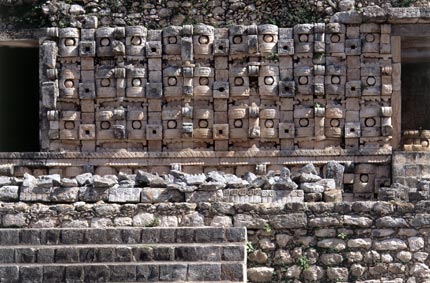
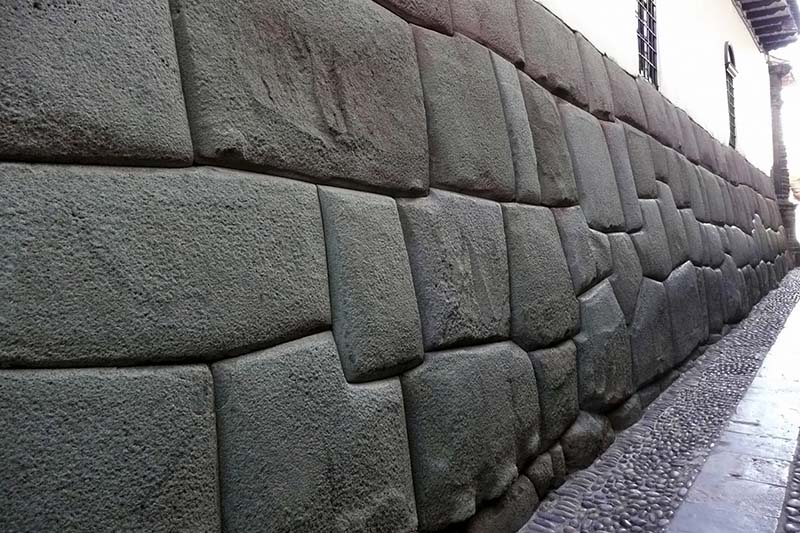
And I'm not exactly sure what makes historical Amerindian architecture not "grand" and "complex," aside from personal opinion. The Great Pyramid of Cholula is still the largest pyramid on Earth by volume; it's basically a manmade mountain. The Southwestern site of Pueblo Bonito is centered on a massive structure. El Mirador's El Tigre Complex seems pretty grand. These Mesoamerican structures are about as complex as walls can get. Look at Cusco's walls, or the stonework of Puma Punku which is so precise that lots of people today believe it must have been built by aliens, or with lost technology. Tenochtitlan, the Aztec capital, has been compared to Venice on a giant lake. It featured aqueducts and even a dike that had "a length of approximately 16 km, a height of 8 m and a width of 3.5 m."^(2)
the design was completely different and more rustic
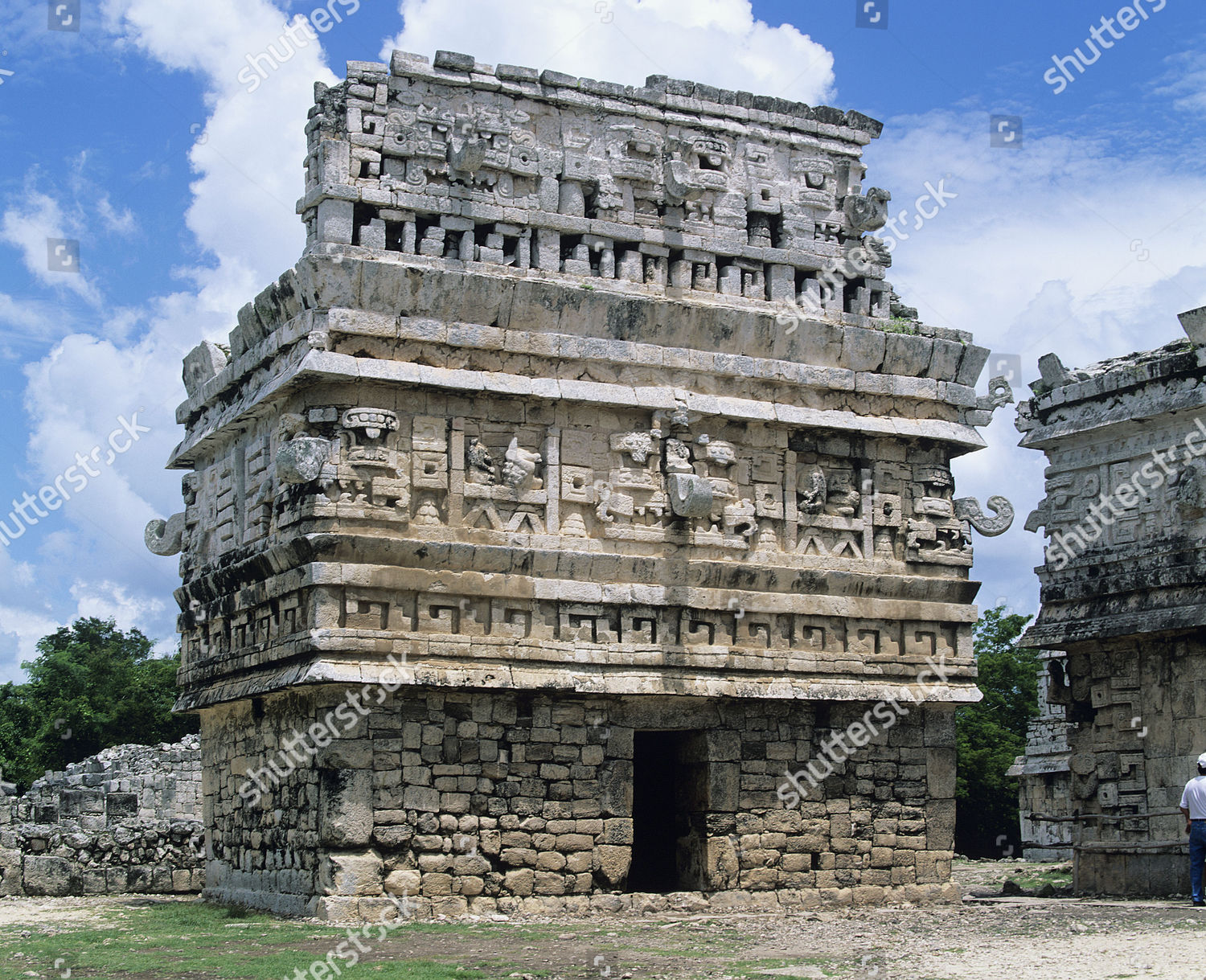
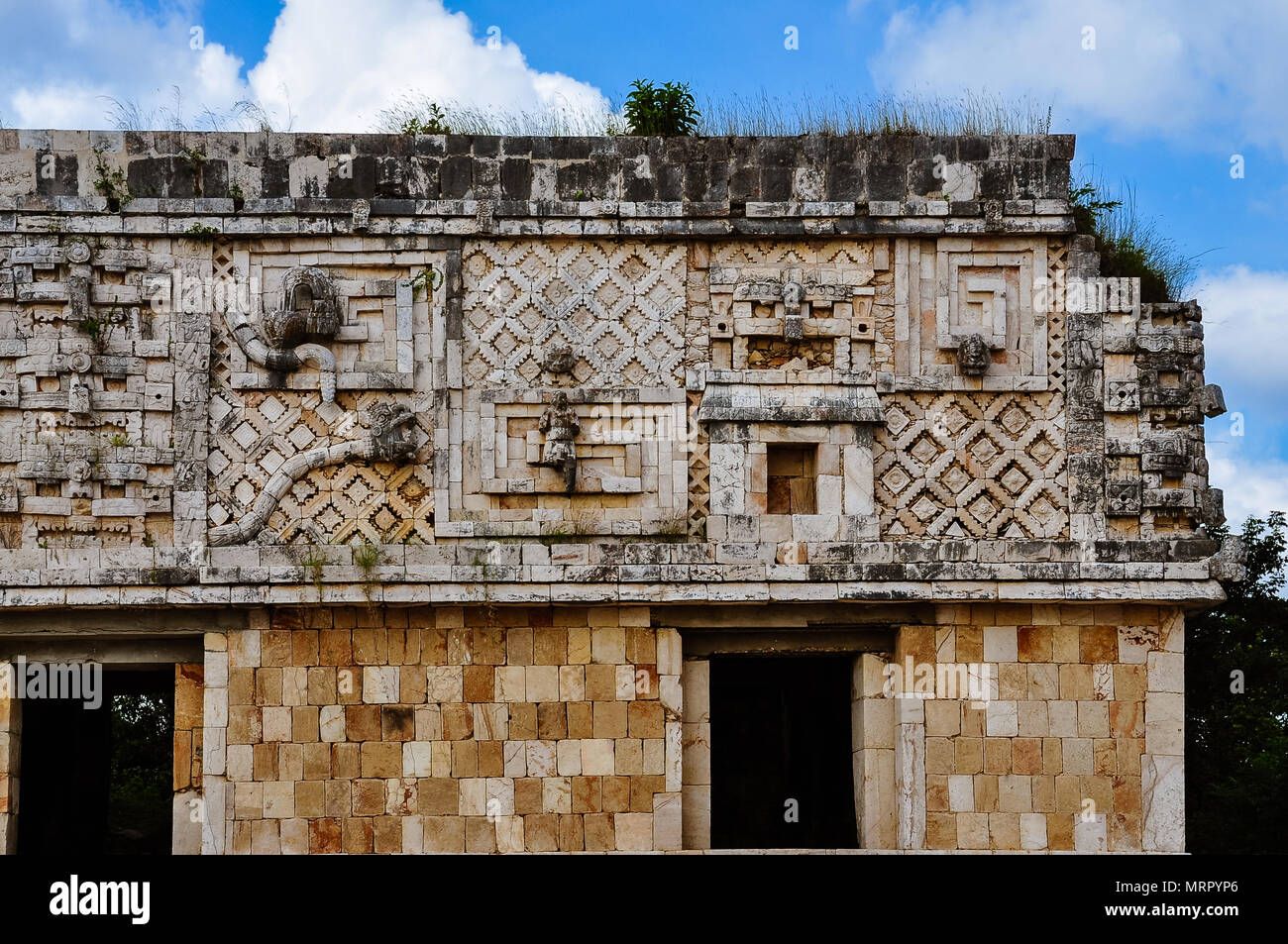
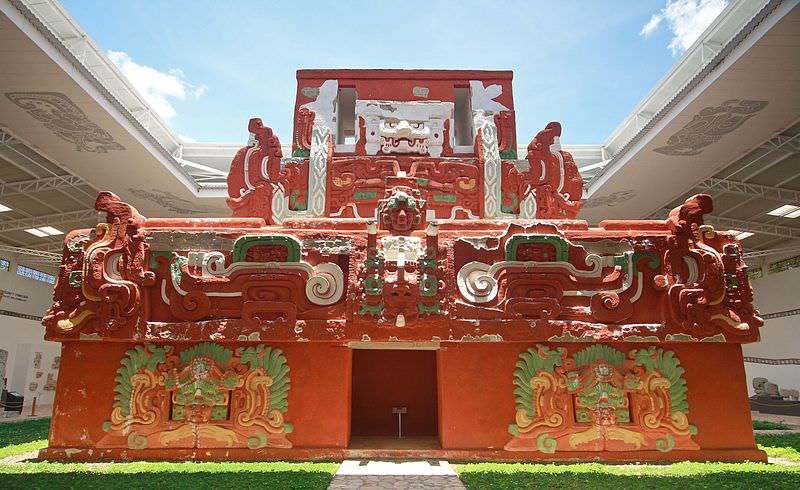
Architecture is usually "completely different" when it comes from different cultures and histories. "More rustic" is again a judgement that says more about our modern culture's views of architecture than anything else. It also encourages me to bring up the fact that many Amerindian structures have lost their external features, which were made of more perishable materials. Maya cities and temples didn't look like this; they would have been covered in plaster and paint. That plaster was often used to create complex designs and figures on the outsides of buildings - check out the beautiful stucco figures that were recently discovered on the outside of buildings in the ancient Maya city of Holmul. Here is a modern reconstruction of what a Maya building in Copan once looked like; it would be hard to argue that this structure was not "complex."
I'd also note that the archaeological record is imperfect. This is especially true when it comes to the history of the Americas, where the traces of entire peoples were destroyed by European colonialism, both intentionally and unintentionally. For example, let's return to the idea of the arch, which is in the popular narrative considered absent from Amerindian architecture. But archaeological excavations at some sites have recently uncovered architectural remains that "quite certainly must have been a dome using the true arch principle."^(3)
buildings made from sticks and mud and other things like that,
Most of the image links I've been providing are of stone buildings. I can't think of a general structure construction material that was present in Europe in the 1300s that wasn't present at the same time in the Americas - do you have something in mind? In fact, in the 1300s, plenty of European and Asian building were made from "sticks and mud." Plaster, adobe, wattle and daub, stone, thatch, logs - those were what Eurasian buildings were made of, and they were also what American ones were built from.
Hi there! You’ve asked a question along the lines of ‘why didn’t I learn about X’. We’re happy to let this question stand, but there are a variety of reasons why you may find it hard to get a good answer to this question on /r/AskHistorians.
Firstly, school curricula and how they are taught vary strongly between different countries and even even different states. Additionally, how they are taught is often influenced by teachers having to compromise on how much time they can spend on any given topic. More information on your location and level of education might be helpful to answer this question.
Secondly, we have noticed that these questions are often phrased to be about people's individual experience but what they are really about is why a certain event is more prominent in popular narratives of history than others.
Instead of asking "Why haven't I learned about event ...", consider asking "What importance do scholars assign to event ... in the context of such and such history?" The latter question is often closer to what to what people actually want to know and is more likely to get a good answer from an expert. If you intend to ask the 'What importance do scholars assign to event X' question instead, let us know and we'll remove this question.
Thank you!
Just to add to Bem-ti-vi's post, I've written about architecture in the Americas with a focus on mega-architecture. When talking about comparing Eurasia to the Americas, often the terms 'civilization' and 'advanced' are used, but to push against these words I've written about the problems of the word 'civilization' in the Americas.