Two examples I can think right now are William 'the Conqueror' and Richard III, which in almost every paintings are described having dark hair and eyes, but then later, it was scientifically proven that they had light hair and eyes. Is it some kind of epoch-specific symbology?
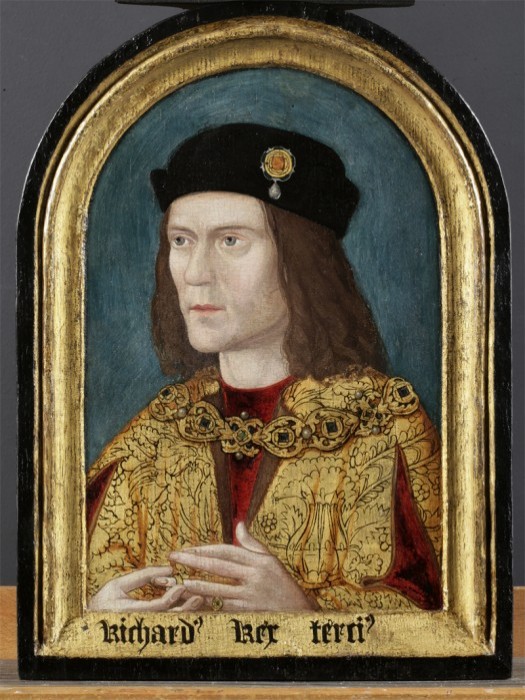
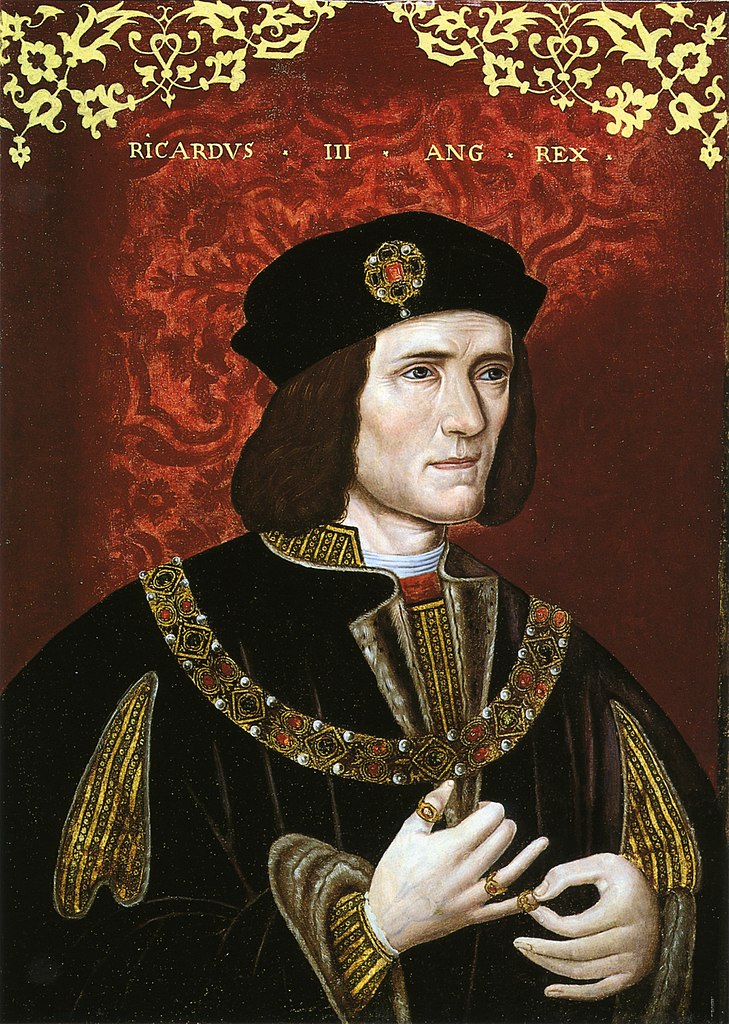
Richard III appears with blue eyes in every portrait, with different shades of blue. In the oldest portrait known (ca. 1520) he has very light blue eyes. The other famous portrait, from the late 16th century shows the monarch with blue-gray eyes, so in that regard both portraits are accurate in depicting the king with clear eyes.
As for the hair, notice that the earliest portrait shows the king with light brown hair, which would not be incorrect. Blonde hair tends to darken with the passage of time, and there are plenty of examples in that regard, even from royal portraits.
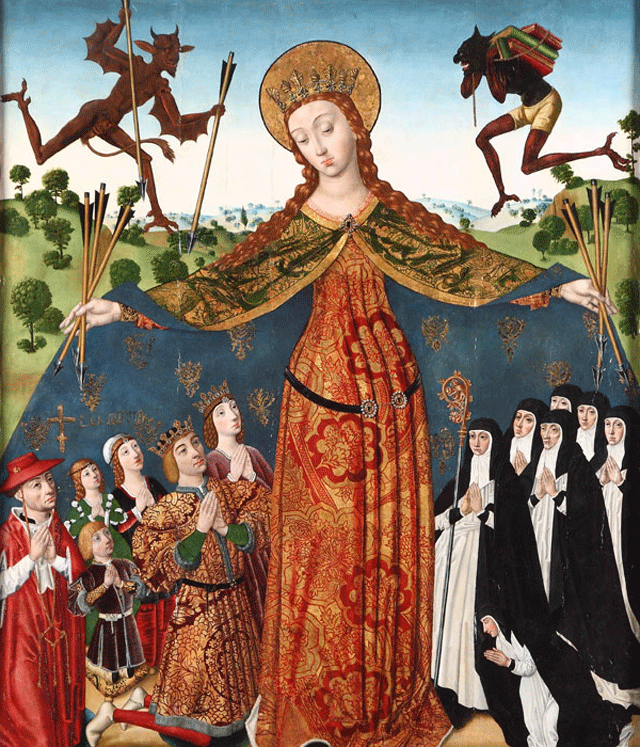
Queen Isabel the Catholic was blonde, with more or less golden hair when she was young, as shown in the painting The virgin of the fly. However, with time her hair became darker. This painting from Diego de la Cruz from 1486 shows her hair with a light brown tone, not dissimilar to the one depicted in Richard III's oldest portrait. In a later portrait from circa 1490 you can see Isabel's hair in an even darker brown colour.
Juan José de Austria, one of the uncountable bastards sired by Philip IV, was strawberry blond when he was a boy. In his later years, his hair had darkened a lot to the point of being nearly black, as shown on this other portrait.
So, Richard III being depicted as having brown hair may not be incorrect, despite the genetic analysis indicating he carried the genes of light hair. As for William the Conqueror, I cannot speak on the matter.