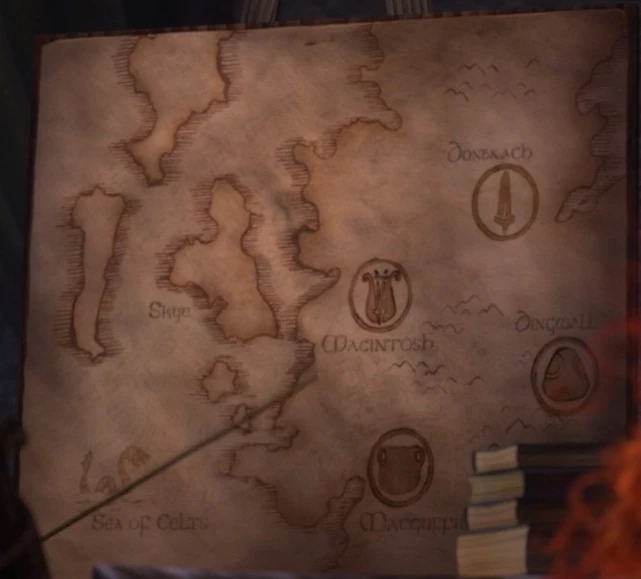
Brave takes place in a fictionalized version of 10th century Scotland. This was confirmed at the D23 Expo in 2011 where several staff from the film disclosed the 10th century date. However, the director Mark Andrews has said that they looked at the 9th to 12th centuries for inspiration. (Sourced here, though the interview in the bibliography has an incorrect link.) I'll be focusing on whether Brave is accurate for the 10th century while pointing out places where the earlier and later influences are apparent.
Our main sources for Scottish hair and dress during this time period are depictions in monumental stone sculpture. Almost all of these depictions are of men. These stones are almost never securely dated but date to roughly the 8th through 11th centuries. Because of the paucity of sources for early medieval Scotland, it's common to use Irish analogues to attempt to fill out the picture of how people might have dressed and styled themselves. Ireland has a lot of medieval texts that survive from his period, so I will also make reference to this material where relevant.
WOMEN
Merida
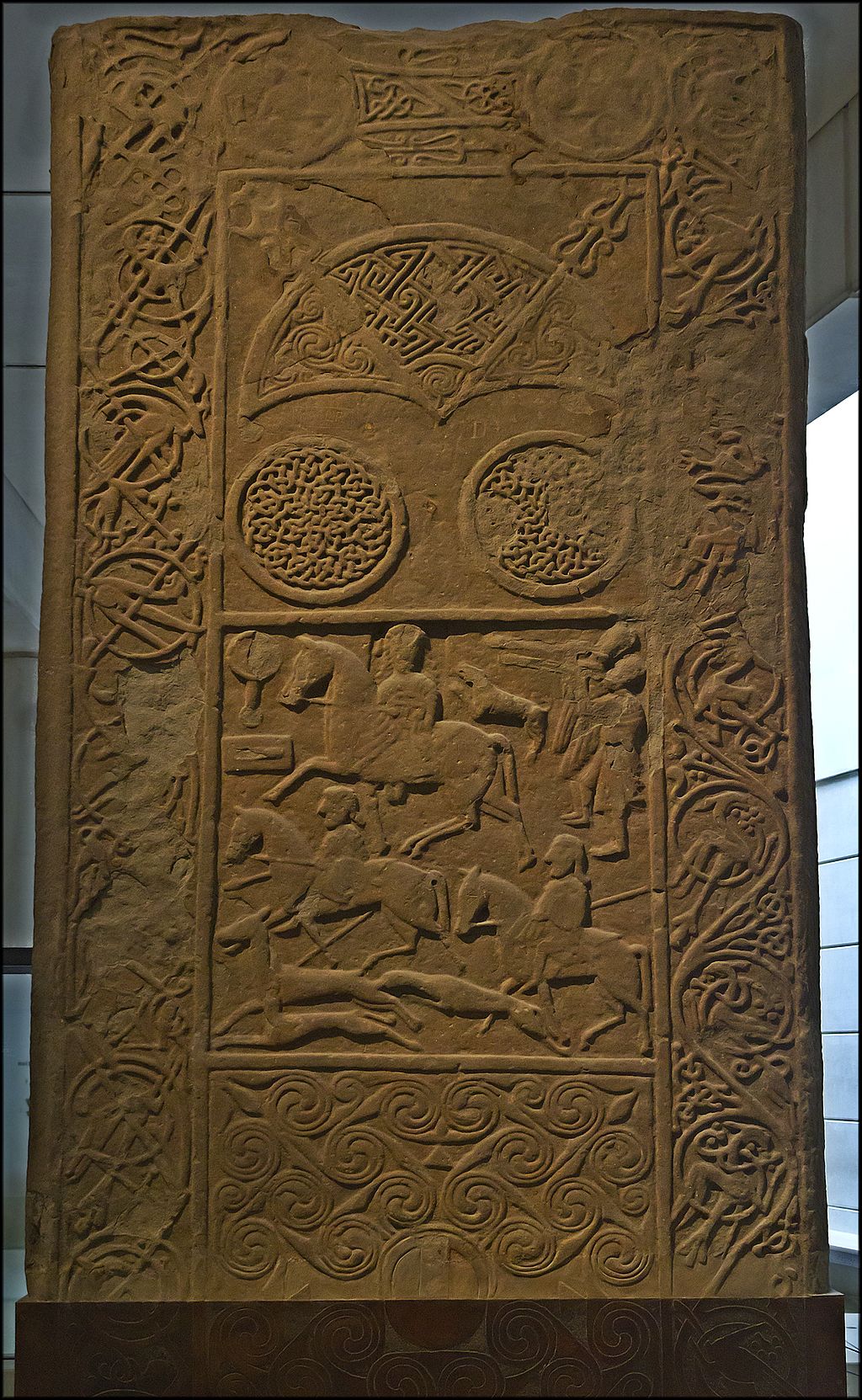
Merida's hair is probably very accurate. It reminds me of the long wavy hair depicted on the Hilton of Cadboll rider. This rider is one of our only unambiguous depictions of a woman from the Pictish period in Scotland. The 10th century saw the creation of the Kingdom of Alba through the merging of the Pictish kingdom of Pictavia with the Gaelic kingdom of Dál Riata. Although the distinctive "Pictishness" of eastern Scotland would start to give way to a Gaelicizing influence from Dál Riata during this period, the 10th century is in the early part of the transition so it's reasonable to look for Pictish sources to corroborate Merida's haircut. DunBroch, the fictional kingdom in Brave, appears to be set in northeastern Scotland in an area roughly analagous with Fortriu, the original Pictish heartland. Hilton of Cadboll is very near the location of "DunBroch".
We don't know anything about the age or marital status of the Hilton of Cadboll rider. However, in this period Scotland had long been a Christian nation, and so it was probably customary for married Pictish women to cover their hair as it was in most parts of Christian Europe. That Merida's hair is uncovered therefore seems appropriate for her age. (Though she should probably be riding sidesaddle!)
Adult Women
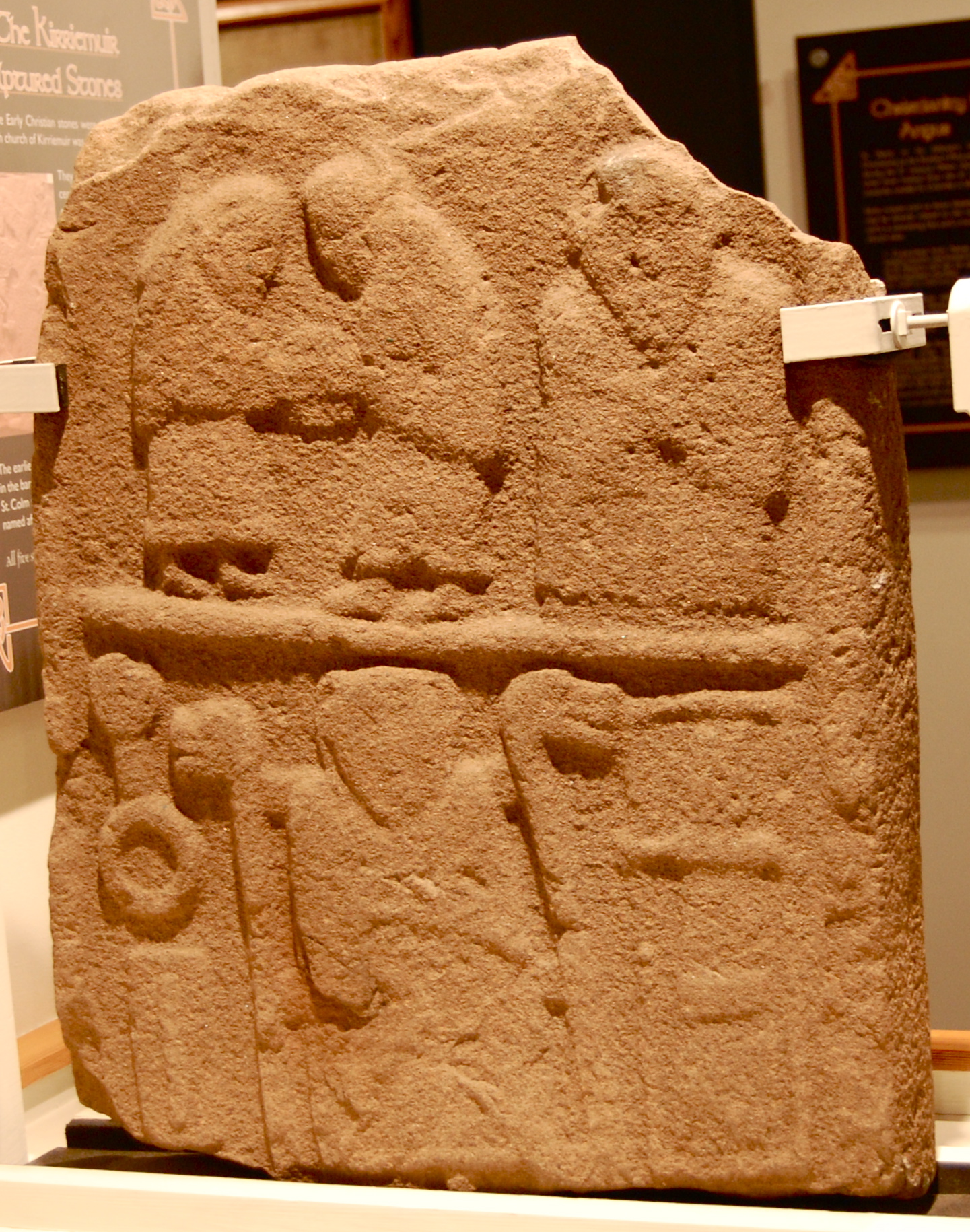
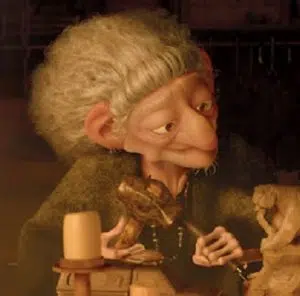
The main adult women depicted in Brave are Queen Elinor, Maudie, and the Witch. All three have quite different haircuts. Queen Elinor and the Witch both have their hair long and uncovered by veils. While I mentioned above that it was often the Christian custom for older women to cover their hair, especially if married, that may not have been a universal rule in 10th century Scotland. It's been suggested that the figure depicted on the bottom half of Kirriemuir 1 is a woman enthroned next to a loom. This woman, if it is a woman, appears to have her hair uncovered. This is probably the closest we could get to something like what the Witch is wearing as a hairstyle. The Witch does seem to have some sort of ahistorical perm, but if she is using hidden pins to hold her hairstyle together, then those at least are historically attested.
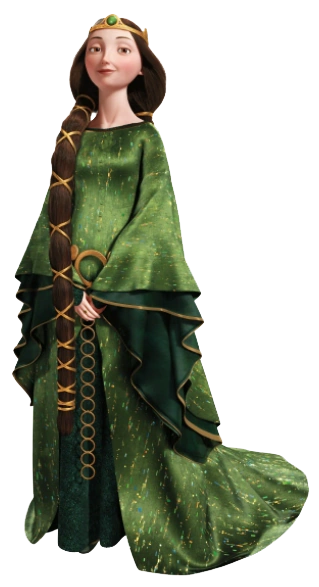
Elinor has her hair twisted into two long plaits which have golden ribbons braided into them. 10th century Scottish women may well have braided their hair. However, Queen Elinor's hair is inspired by a later medieval style. A lot of 19th century medieval fashion plates show hair like what Elinor is wearing. This style appears to have been popular in the 12th century, but I've never seen it in any depiction of either a Scottish or Irish woman from the 10th century. The hairstyle seems to have been popularized by the Anglo-Norman elite in England and Scotland. So while you might expect to see a 12th century queen wearing it, you wouldn't have seen it in 10th century Scotland. To the creators' credit, however, this style is frequently used in modern art to depict early medieval Scottish queens like the 11th century Saint Margaret of Scotland. By the way, there are no crowns known for queens in 10th century Scotland, so I don't think that part is accurate. Even kings are not normally shown wearing crowns.
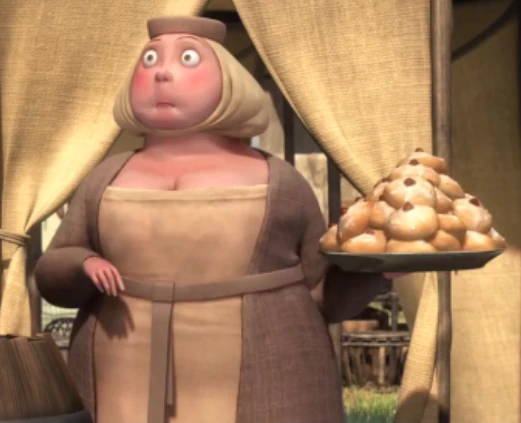
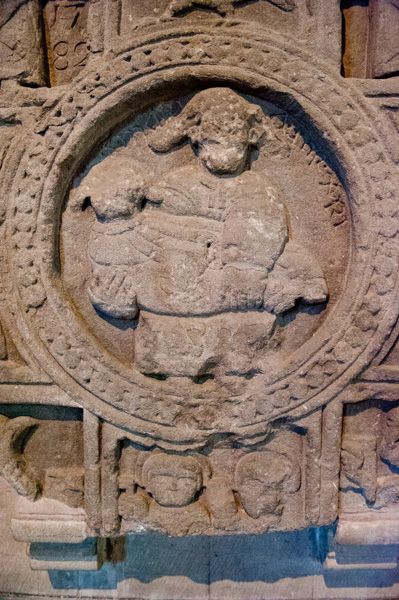
Maudie's hairstyle is the least historically accurate to the 10th century. She is wearing what I believe are a barbette and fillet, a style that came into fashion for medieval European women in the 13th century. This is a pretty unambiguous anachronism. But there is one early medieval Scottish hairstyle which could be something like what Maudie wears. It appears on a few different stones but it's not clear whether it's a headdress or an odd way of wearing the hair up. You can see it on the Virgin Mary in Brechin and on Monifieth 2. So some women did wear their hair up in odd ways, even though Maudie's hairstyle is clearly inspired by a later medieval model.
(1/3)