Please Be Aware: We expect everyone to read the rules and guidelines of this thread. Mods will remove questions which we deem to be too involved for the theme in place here. We will remove answers which don't include a source. These removals will be without notice. Please follow the rules.
Some questions people have just don't require depth. This thread is a recurring feature intended to provide a space for those simple, straight forward questions that are otherwise unsuited for the format of the subreddit.
Here are the ground rules:
Popular appeal aside (I get why people still love this mystery), what made the FBI spend so many resources and manpower on DB Cooper – or any effort at all? 200k then / ~1.+mil now, a lot, sure, but not 200 soldier sweep and a submarine level of importance.
Shortly after the spring thaw in early 1972, teams of FBI agents aided by some 200 Army soldiers from Fort Lewis, along with Air Force personnel, National Guardsmen, and civilian volunteers, conducted another thorough ground search of Clark and Cowlitz counties for eighteen days in March, and then an additional eighteen days in April.[69] Electronic Explorations Company, a marine salvage firm, used a submarine to search the 200-foot (61 m) depths of Lake Merwin. [70] Two local women stumbled upon a skeleton in an abandoned structure in Clark County; it was later identified as the remains of Barbara Ann Derry, a teenaged girl who had been abducted and murdered several weeks before.[71][72] Ultimately, the search and recovery operation—arguably the most extensive, and intensive, in U.S. history—uncovered no significant material evidence related to the hijacking.[73]
Surely the girl was worth more than the cash. Idk, I just find it odd. Nobody got hurt besides it wasn't that much money. Especially given all that was going on in the world. Cold War, height of organized crime and FBI efforts to counter, etc.
The codebreaking successes of Alan Turing and the Allies at Bletchley Park are well known, but were there parallel successes on the Axis side?
Does anyone have good recommendations for books (I am fine with academic articles etc. as well, having university access) covering late romantic and early modern/20th century classical music?
I am especially interested in the rise of folkish and nationalist themes in the classical music of this period, like we see in Grieg, Sibelius, Bartok and Dvorak. Both wider cultural history and history of the more "technical" aspects of the music is of interests.
I’m about halfway through reading Reynaert the Fox (Le Roman de Renart), and I feel as if I’m missing something.
The stories are a little cute, but they are so simplistic and seem to lack any further meaning. Many stories I’ve read from the Middle Ages seem to be either heroic, or have a Christian lesson to be learned, or are funny for the sake of it. Le Roman de Renart, though, doesn’t seem to have an obvious “goal”, as far as I can tell.
What am I missing? What’s the reason this was so popular and so many monks took it upon themselves to further the story?
Dynasties with a long unbroken father to son line?
I don't just mean a long male line that could have included cousins, uncles and what not but is there a strong candidate for a dynasty with the most impressive dynastic line that was passed exclusively from father to son for generations?
In what year was downtown DC restricted to civilian air traffic? i.e. when was the River Visual Approach required to land at DCA from north, versus a straight approach that would be crossing over the Mall?
My impression is this was well before 9/11, but all the search results are of course bogged down by a9/11 when restrictions were further increased as I understand.
When did the terms like "Frankish Empire" and "Carolingian Empire" first appear in historiography?
•••
I was in a discussion about the Holy Roman Empire and Charlemagne. The gentleman I was arguing with said that the Holy Roman Empire didn't exist during Charlemagne's time "only the Frankish empire"
Which I pointed out that Charlemagne was crowned Emperor of the Romans and it was just referred to as "the Empire" until Frederick Barbarossa and Frederick II used the term "Holy Roman Empire" as a mirror to the Holy Roman Church and that the "Frankish Empire" isn't a historic term. But I don't know when it first appears, my guess is the 19th century, it's always the 19th century.
So like Hieronymus Wolf making up the term Byzantine Empire 100 years after the fall of Constantinople to cement the western position that the greeks weren't the Romans, What's the origins of "Frankish empire or Carolingian Empire" and is it used to separate Charlemagne or Karl de grosse from the later super german Holy Roman Empire and keep him in the more French focused historiography?
I was watching a thing on the battle of midway, and the speaker said that afterwards, the japanese scuttled their carriers, and noted a number of lives lost for each one...e.g. "The Soryu sank at 19:13 and lost 711 men." am I to understand that they shot torpedoes at their own ships and sunk them with their sailors on board?? Or is that number the number that had previously died in the bombings?
In one case he noted that the sailors bailed onto a different ship, but in other cases, he did not note that, and it sounded like he was saying that they all died with the scuttling...surely not, right?
He specifically mentioned the case of an admiral or something choosing to go down with his ship, but i would have thought the men would be bailed out.
It was in this video: https://youtu.be/BXjydKPcX60?t=1397
Is this just a miscommunication or did they really kill their own guys?
Are there any cultures outside of the Egyptians that buried their dead with physical objects on them or in their graves?
I have a couple stray 9/11 questions that I didn't think of in time for the excellent Megathread.
When did the Spanish monarchs first add Spain to their titles? (As in, not just Castille and Aragon separately).
Meta:can’t we have an unanswered flair that is removed automatically by a bot when someone posts an answer?
I’m tired of clicking on posts with two comments to find one is the automod and another that doesn’t exist.
Searching by flair would also make answers much easier
What is the first form of representative democracy where the representation lay in regions and not in classes? In all ancient democracies the senate is more or less elected by those living in the capital city (Rome, Carthage, Athens, etc), and people divided into cohorts based on their wealth (e.g. Rome). What was the first instance of democracy that we know of that divided its electors based on cities / regions / states, as the majority of the world does today?
I would love to find a list where it lists some recipes chronologically. Like for example from the 1900s, 1800s, 1700s, as far in the past as it can.
We have preserved books that are even more than 2000 years old, so I would be confident that we also have had some old books over the years describing recipes of that period. I couldn't find much myself, at most until 1900.
Is there a book or an article containing a summary of the existing historiographical debate about the Great Divergence, by which I mean the debate about why Europe became the dominant economic and political power of the globe while other regions did not? I am aware of Kenneth Pomeranz of course as well as Prasannan Parthasarathi, but I was wondering if anyone had summarized all the relevant literature in one place.
Can anyone identify the buildings drawn in panel 5?
Looks like:
Thanks.
I was watching an episode of the show Murdoch Mysteries, which is set in Toronto in the late 1890's - early 1900's.
In the episode (S. 2, E. 8), the characters referred to a Prussian agent and the country of Prussia. With Germany having united, albeit under Prussia leadership, 20 or so years previously, how likely is it that people would continue to refer to the individual German states and nationalities as opposed to the united Germany? And if they did, when did this go out of style?
Was any neutral, non-Allied shipping allowed through the Suez Canal during World War II?
Hi, I was wondering if anybody is able to help me find a citation for the origins (either known or assumed) of the phrase "Africa begins at the Pyrenees"?
I'm currently writing a PhD research proposal on European preconceptions of Spanish culture and music (for a musicology PhD rather than a history PhD) and I'm struggling to find any academic text which explains the origins (known or assumed) of the French phrase which I can use as a citation for the proposal (I've found plenty discussions on forums and other websites which I couldn't realistically cite, some claiming the phrase has Spanish origin instead of French). The phrase is used repeatedly in academic papers but often in the context of a related topic area (such as perceptions of the practices of bullfighting by non-Spanish Europeans etc.), if anybody is able to point me towards a paper, thesis or book which delves into the phrase and its origins I would be incredibly grateful.
Do we know the earliest instance of people cheering when a glass is accidentally smashed (in a pub)?
How many Germans settled in Norway during the Hanseatic period?
Where and when was the "20 years" guideline for historians established?
I'm looking for a book on codes and ciphers that might have been used in Italy during the Renaissance.
During the period where the Brits controlled Bhutan's foreign affairs, was it considered a princely state and part of the British Raj?
How big a surprise was the end of Lend Lease to the UK and when did that surprise come? I've seen it referred to as a "surprise end" several times when talking about post-war economy of the UK. I understand that the law for it to end when the war ended was only a few months old? But it was created specifically for the war, so it seems logical to me that at least some must have always thought it would end as soon as the war ended - or that just hindsight coloring my view? Or did the US previously give indication it would last longer? Or was it that they knew it would end, but the war ended more quickly than they thought?
This is an image of a Space Marine. It's a science-fiction warrior, but his armor is based on medieval plate armor. Note that on his left shoulder, there is a plate with a skull on it. What do you call that thing? I looked up medieval armor and I think that thingy was used on jousting armor. It's supposed to take the impact of the opponent's lance.
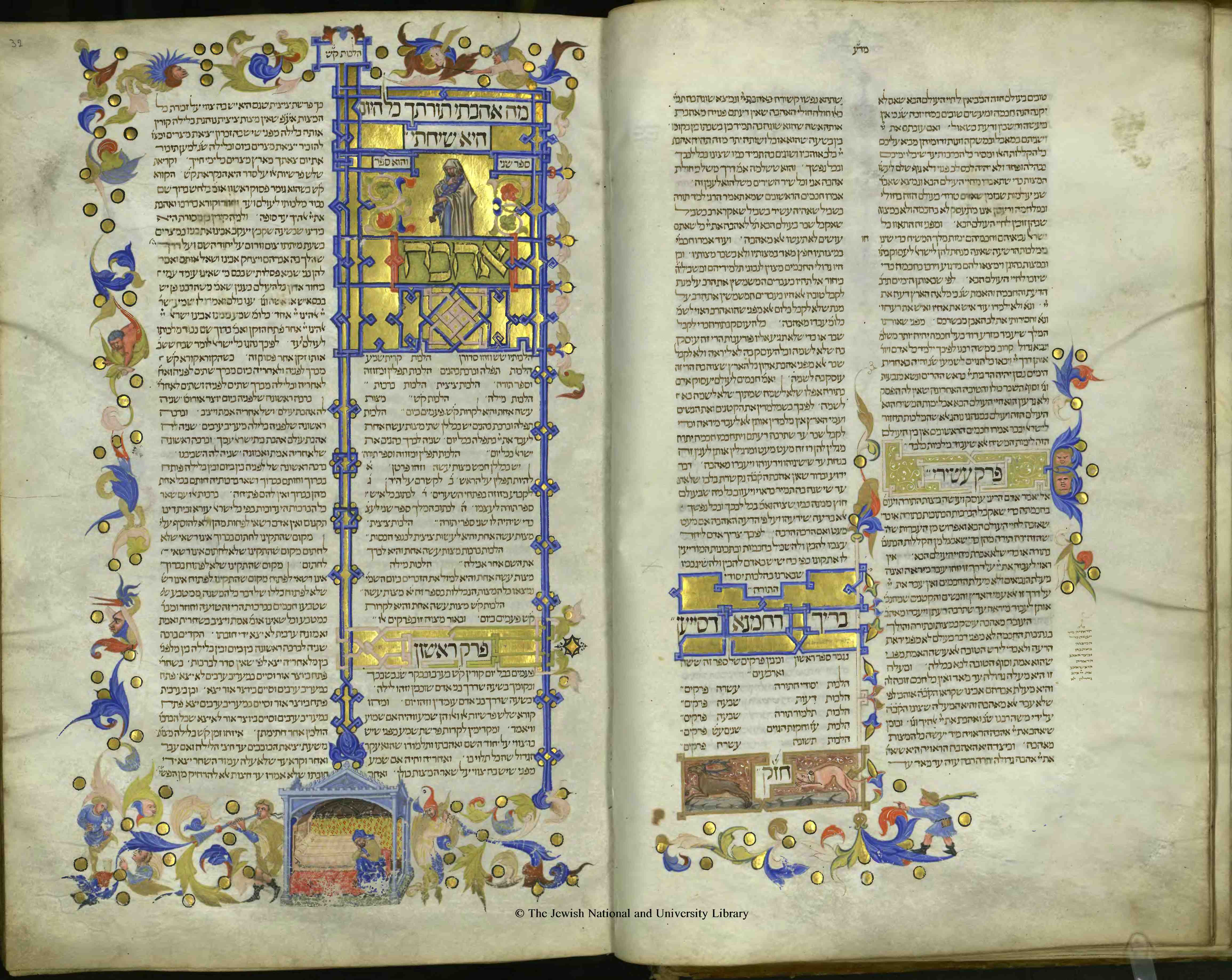
Do we have any illuminated Muslim manuscripts from Christian Spain? There are a couple of Jewish ones like the Sarajevo Hagaddah and this Mishneh Torah which don't look different from any Christian European manuscript and it made me curious if Muslims under Christian rule were similarly "Europeanized".
Can anyone help me identify influential women in history with big noses?
I know Dio Cassius referenced Cleopatria in His History of Rome. I’m seeing a post-doc who hates her nose and would love to make like a citation index of historical references if influential women with big noses or who were just generally unconventional as a gift.
I learned in school that Thomas Jefferson had a black half-brother. Did he own his brother, or was he free?
Is there an area on our planet that has never been conquered, stolen, etc.?
Who was the first person to enter Hitler's bunker after his suicide?
Was Barnabas McHenry b. 1715 a close relative of James McHenry?
Where did the Royal Navy move the naval base to after the earthquake from Port Royal, Jamaica in 1692?
Is it Syngman Rhee, Rhee Syngman or Rhee Syng-man?
I just bought a matryoshka doll and I'm not sure who everyone in it is.
Yeltsin - Gorbachev - ??? - Putin? - ??
I've looked for Ledi perestroika but I can't find any figure that is referred to in this way. If anyone knows that'd be helpful!
Does anybody have any links to good videos/books on WW1 logistics?
What historical figures developed a powerful life coming from being slave/poor?
Did Columbus sell children as sex slaves?
So I watched three videos concerning Columbus, the first is a Ted Ed video, the second a Knowing Better, the third a Bad Empanada. Ted Ed tells its viewers that Columbus is bad even for his own time by saying he sells children as young as nine as sex slaves. Knowing Better disputes this, saying that the text where he mentions children as sex slaves is when he says he is heartbroken that people are accusing him of it and that he is complaining that the colonists are doing it, not him. Bad Empanada counters this, saying that the full text indicates that he is referring to child sex slaves as an economical reference, as part of the economy going on in the colony, not complaining about it. He also points out Columbus on numerous occasions kidnapped women and give one as gifts to a friend of his who then raped her. From the text, it is clear that Columbus and his colleagues are not taking women and keeping them so they can do house chores, but these could be adult women. But I am unable to find a text to tell that he indeed sell children as sex slaves, he just mentions it in an economical term and in my opinion, is rather neutral about it, not repulsed by it but not confirming that he himself did it (because of course he would, if he did it that is). Since he is the only authority the natives and colonists answer in the New World, he may or not let child sex slave be present in his colony. But what do you think? Is there any other texts that mention child sex slaves or accusation thrown against Columbus?
Was Jochebed a real person?
Is there a commonly used historical term or phrase similar to “according to Greek mythology” or “according to Egyptian mythology” for Biblical stories?
Context: I am thinking about the historical accuracy of the phrase, “According to the Hebrew account, I am the mother of Moses.”
15th-17th Cent English Bureaucracy
I’m trying to figure out if I’m missing an arm of the British Bureaucracy between 15th-17th century. The committees and wings of government that dealt with administration, etc.
House of Lords, House of Commons, Lords Privy Council, Exchequer, Chancery, and the Courts.
I know I’m missing something(s) but not sure what it is.
ALSO: If anyone has a good book recommendation to dive deeper into this topic I’m all ears.
What are the most common misconceptions about 'the Wild West' era?
When were spyglasses and telescopes first used in war, particularly on land? By the mid-late 18th century I think they were pretty common, but would e.g. Gustavus Adolphus have had one?
I take a strong interest in modern German history, especially party politics and elections from the German Empire to the present. A few years I came across a cartoon propaganda piece from the right-liberal Deutsche Volkspartei (DVP or German People's Party in English) that depicted out of control Socialists ("Sozis"), Communists, Nazis, and reactionary monarchists (probably referring to DNVP) each rampantly attacking cherished institutions (the Socialist was attacking a church for instance and Hitler is depicted wielding a swastika hammer) in fourdifferent squares. At the bottom a finger is pointing towards a sleepy looking man in a night cap and urging him to vote for the DVP. The cartoon's style, depictions, and themes are strikingly similar to this poster. I found that I think it may be by the same artist and electioncampaign, but otherwise clearly distinct in content. I think I found it pretty quickly through Google search then but its hard to find it again now.
Was there a sort of ancient ecclesiastical Robert's Rules of Order followed at the Ecumenical Councils (like Nicea and Chalcedon)? Do we have detailed "minutes" of those meetings, vote counts, descriptions of the procedure?
Hello, brief question about infantry flags in the Napoleonic wars,
I've been lately using 3d software to design Napoleonic block units (2mm scale if you're wondering) and wasn't sure how frequently a flag-bearer should be added to a unit. I've done a bit of research and found that (generally) there was one flag to one infantry battalion (not in terms of a unit-specific design, just the country's flag) I'm not sure if the source was correct.
Are there any examples of powerful matriarchal societies throughout history? A quick google search has given me a bunch of small kingdoms and villages of no particular significance.
I was wondering if there are some examples of matriarchal kingdoms or empires where during the time they were matriarchies they greatly expanded their borders, shook the world or in case that they were already immensely powerful underwent vast internal improvements.
What is the estimated population of every single nation in 600 AD?