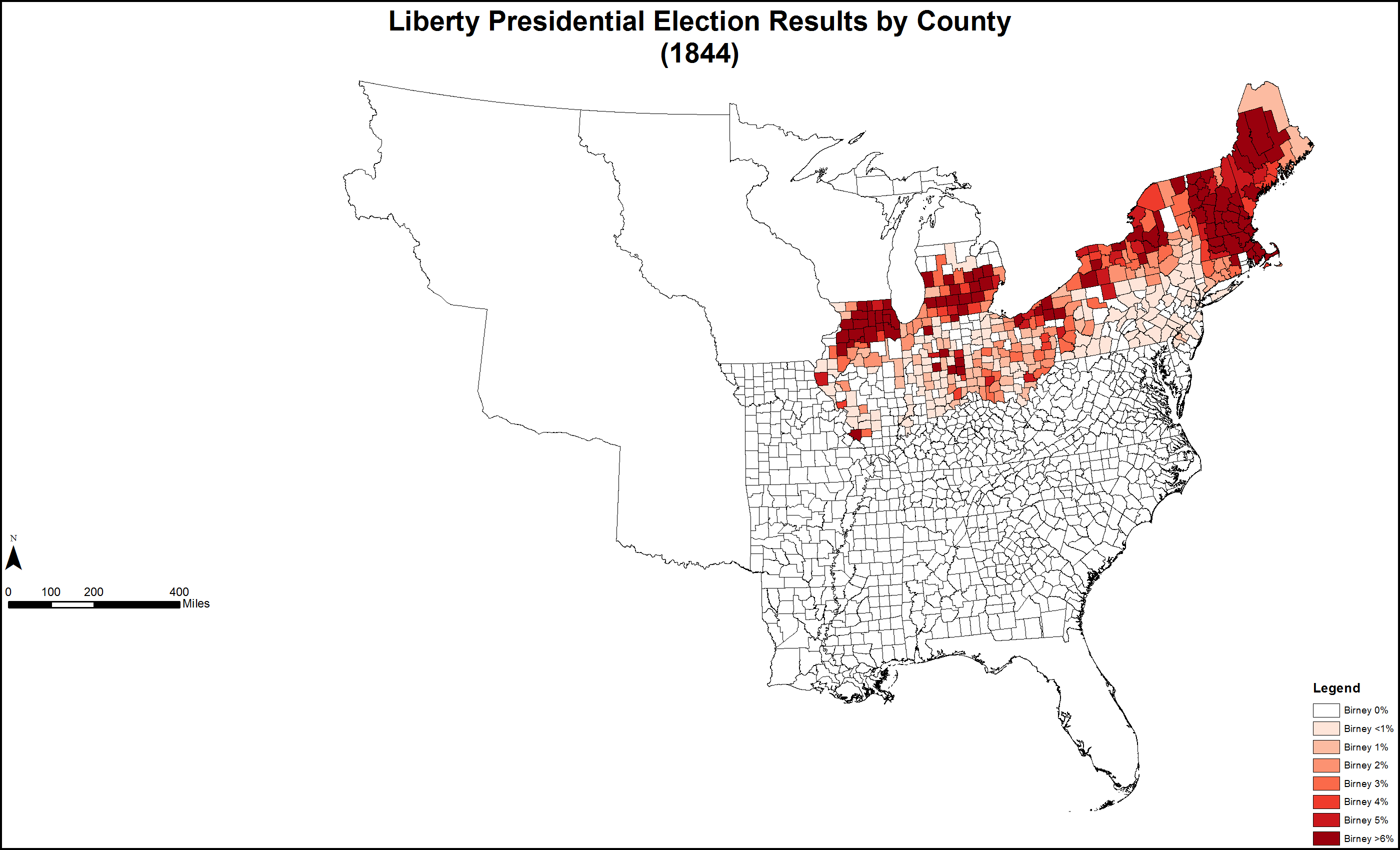
I recently read Howe's What Hath God Wrought and was struck by the amazing cultural dynamism of this region c. 1815 - 1848. It produced so many inventors, innovators, reformers, writers, and zealots while largely maintaining a coherence within a greater nation. I am curious if there are any works which focus on the culture (institutional, religious, educational, political, and literary) of this region (New England + those areas settled by New Englanders, which I believe this map of Liberty Party voters in 1844 does a good job of approximating). I find the early period (c. 1620 - 1820) interesting, and I find it later subsumption into the general US culture (c. 1877 - present?) interesting too, but I really find the Golden Age of Yankee democracy, expansion, and "improvement" (in Howe's phrase) utterly fascinating. This is the period where they formed thousands of self-organized groups to fight slavery, to spread the gospel, and to make heaven on earth, even as many also had a deeply contradictory relationship in their treatment of Catholic immigration and capitalist industrialization. I know these dates are completely arbitrary, but I figure including them is better than not.
There are a couple of books which I already have read and enjoyed which cover aspects of this period:
The aspects I am most interested in are:
Thank you for anyone with any recommendations
I don't know whether historians generally recommend Democracy in America anymore, but I recently re-read it for the first time since high school and I was surprised at how interesting De Tocqueville's observations are, particularly if you treat it with the caution you would any other primary source. De Tocqueville spends a lot of time on the distinctive cultural and religious aspects of New England that he believed contributed to the success of the US as a republic in contrast to other republics founded soon after in France and South America, part of his thesis being that democracy preceded independence in that local governments preceded that national government in those British colonies. He does talk a bit about how Anglo-Americans were eager to form a voluntary organization for anything and everything! He bemoans the total lack of literature in the U.S., which was certainly not true even in 1831 when he was visiting the country. He also contrasts the Northeast and the South on the practice of slavery and how it affected their cultures and economies to the benefit of the New England states. Might be worth a look if it's been awhile.