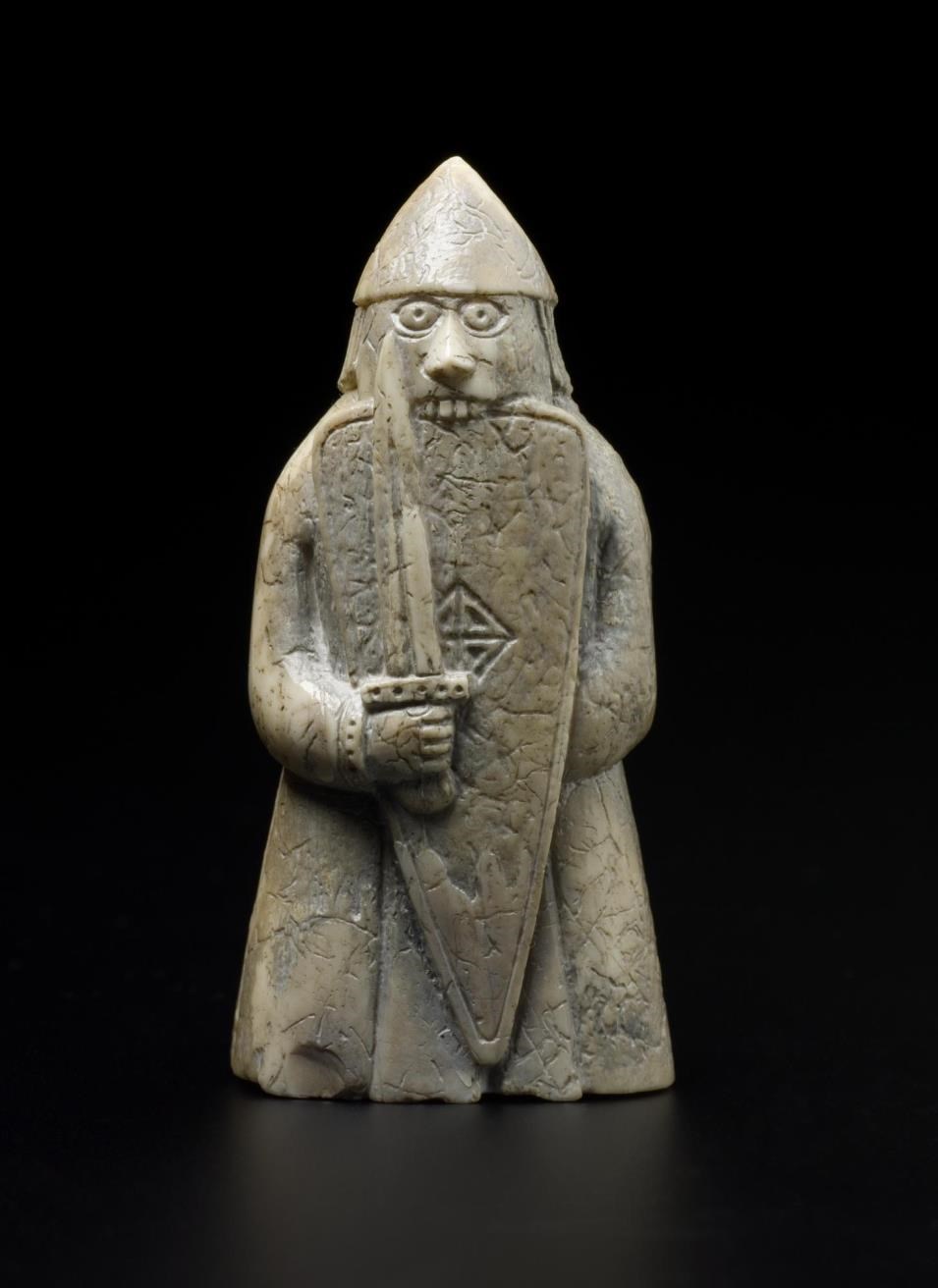
Viking Berserkers are always depicted as barely controllable blood crazed murder machines.
But is this really true? Were that really drug fueled killing machines or just extremely skilled and fearsome warriors?
Hello, sorry for the late response.
While scholars' opinions are certainly divided, I'd say the majority of today's, or even later medieval representations of the berserkers are imaginary, developed rather from the later possible misinterpretation of poetic graphic aesthetics, just as /u/mikedash summarized Frank's seminal article on the later development of the tradition on the notorious Blood-Eagle ritual in: What are the chances the Vikings actually used the "Blood Eagle"?
In short answer, there must have been warriors called berserkir in Old Norse in pre-Christian Scandinavia, and this is almost all the academic consensus of the topic on this matter (Cf. Price 2020: 326).
+++
The almost only ' (relatively) reliable' written evidence of the berserker from pre-Christian period is the following stanzas of Skaldic Poem Haraldskvæði, customarily attributed to Poet (Skald) Þorbjǫrn hornklofi (Early 10th century)(linked to the official site of the critical edition of the poem. Translation of the cited stanza below is taken from this official site, not by mine:
- ‘They [the ships] were loaded with men and white shields, western spears and Frankish swords. Berserks bellowed; battle was under way for them; wolf-skins [berserks] howled and brandished iron spears.’ (Stanza 8)
- ‘I want to ask you about the equipment of berserks, taster of the corpse-sea [BLOOD > RAVEN]: what provision is made for war-daring men, those who surge into battle?’’ (Stanza 20)
- 'They are called wolf-skins, who bear bloody shields in combat; they redden spears when they come to war; there [at Haraldr’s court] they are seated together. There, I believe, he, the sovereign wise in understanding, may entrust himself to men of courage alone, those who hew into a shield.’ (Stanza 21)
I don't want to discuss the possible dispute on the historicity of the poem as well as the post in depth here, but AFAIK they are the relatively least historically disputed source in some allegedly relevant sources on the deed of Harald Fairhair, a legendary monarch who unified Norway in later saga traditions - as I explained before in: Did Harald Fine/Fairhair actually exist?.
The usage of the word berserkir in other Old Norse poems is also actually quite limited, and none of them except for those in the cited stanzas belongs to the historical poems so that we don't know how the word or even the concept itself was popular in pre-Christian Scandinavia.
Famous component of the late tradition, ulfheðnar (wolf-skins), also already appear in the poem itself, but this is also its only certain usage in pre-Christian Scandinavia.
On the other hand, almost all of other famous description of berserkir come from 13th century or further later medieval Icelandic authors, including the most famous description:
'......his (Óðinn's) men went without mail and were as wild as dogs or wolves, biting their shields, being as strong as bears or bulls. They killed the people, but neither fire nor iron took effect on them. That is called berserk fury.' (Snorri Sturluson, Ynglinga saga, Chap. 6, in Heimskringla. The translation is taken from: [Finlay & Faulkes (trans.) 2011: 10]).
We don't know where Snorri Sturluson (author of Heimskringla) took some famous ideas of berserkers from other than Haraldskvæði. Oral traditions? It might certainly might be possible, but Frank's study on Blood Eagle suggests that some famous later images also can derived from the misunderstanding of the poetic language. 13th century Icelanders had already sometimes had difficulty in interpreting highly aesthetic - or somewhat obscure language in pre-Christian period, and took it almost literal at face value in some cases. This was primarily the historical-literal background of developing the cruelness of the alleged ritual of 'Blood-Eagle', she argues, and I wonder whether this model is also applicable to the later tradition of berserkir.
+++
There is also some room for the interpretation/ imagination in the cited stanzas.
To give an extreme example, did ravens really drink enemies' blood, or was it just an graphical imaginary of the fierce battle? The latter seems to be far more likely.
Anyway, all what I can read from the stanzas cited above is as following, I suppose:
As for the popular 'drug' use of berserkers, Price also comments that:
'There is no evidence whatsoever, in archaeology or text, for the berserkers' use of hallucinogens, entheogens, or any other form of mind-altering drug or chemical, including the consumption of fly agaric (Price 2020: 326).'
References:
+++
Price, Neil. Children of Ash and Elm: A History of the Vikings. New York: Basic Books, 2020.
(Edited): replaces some pronouns (they) in the text for the clarification's sake.
(Edited again): corrects the description of Lewis chessmen (really thank /u/itsallfolklore for point it out my mistake).