Hi! I'm not read enough on the specific topic to give a proper answer, but I want to provide a temporary one to give context. In my eyes, this is a question that would benefit more from this systematic context than it would from a specific history of persecutions during the Soviet era.
So: the reason the Old Believers might have received the short stick during the Soviet era, would be the same as the reason they got the very abbreviated one in the Russian Empire. It's their unyielding stubbornness, combined with strictly peaceful means of protest — and a somewhat legitimate claim to being a true church.
From the very beginning of the schism that gave birth to the Old Believers, they had a pretty reasonable ideological base — unlike most of the crazy cults and fringe churches out there. Their customs may seem quaint today, but initially they were basically the "holdouts" during a controversial church reform: one that was quite unpopular in some circles, and was just enough so that nothing really important changed, but people got persecuted for blessing themselves with the wrong number of digits. Extremely respected clerics and aristocrats took the "old" side during the schism. And the schism itself was extremely recent; the bans and killings took place in the enlightened 17th century — nothing like the ancient, forgotten, Council of Nicaea, or even the 1054 schism of two churches. No, this was raw.
Suffice it to say that one of the most popular pieces of Russian autobiographical prose (and the most modern-sounding, witty, and bold prose from the era, period) was the Life of Protopope Avvakum, written by a schismatic/Old Believer priest who described the tribulations he and his wife went through in their exile. His deadpan humor, disarming earnestness, and zen-like wisdom strikes the reader immediately even now. I cannot imagine how it hit people back in the day. They taught us that this was the precursor to all Russian literature, and the first to incorporate real colloquial language into prose.
So, basically what you're looking at are POLITICAL enemies (even though the Old Believers themselves had no political ambition). The schism itself was intensely political, and had a very ambitious patriarch at its core (Nikon). The initial name for Old Believers was even "schismatics" (раскольники; compare with Dostoyevsky's Raskolnikov); the word persisted later, both officially and unofficially. The first campaign to suppress them was a crucial, unavoidable move to uphold the authority of the central power in the state (which chose the religious reform that happened, and fought against the "upstarts" who insisted on going the other way). The state, and the Tsar, had to double down on their word. And thus, mere continued existence of Old Believers was subversive, no matter how lenient or urbane a ruler you were.
It's basically like tolerating a community that teaches its members that US doesn't exist, and only the Confederate states are real — but with added insult of also proclaiming their Christianity as the only real one (with good points!) — which was a big deal even in the 19th century.
But more than anything, the fact that Old Believers patiently bore the punishments meted out upon them, and obediently settled in the harshest and remotest places doled out to them — and against all odds, prospered in doing so, thanks to their immaculate work ethic! — made them even more dangerous. Because you as a ruler basically couldn't accuse them of anything other than not agreeing with you. They weren't firebrands, they weren't layabouts, they weren't saboteurs or drones. They were just that kind of especially hard-working, pious, nice, and traditional people who happened to have a different set of rites.
Moreover, if you pushed them enough, they tended to show they can walk the walk in addition to talking the talk, and simply BURNED THEMSELVES ALIVE to prove their point. (These collective self-immolations put a great impression on people across the empire, as you can imagine, and are often mentioned in Russian literature).
For a state, this is an untenable state of things, and a clear, abject PR failure. So at least from that viewpoint, the harsh treatment of Old Believers under any regime is, sadly, very logical.
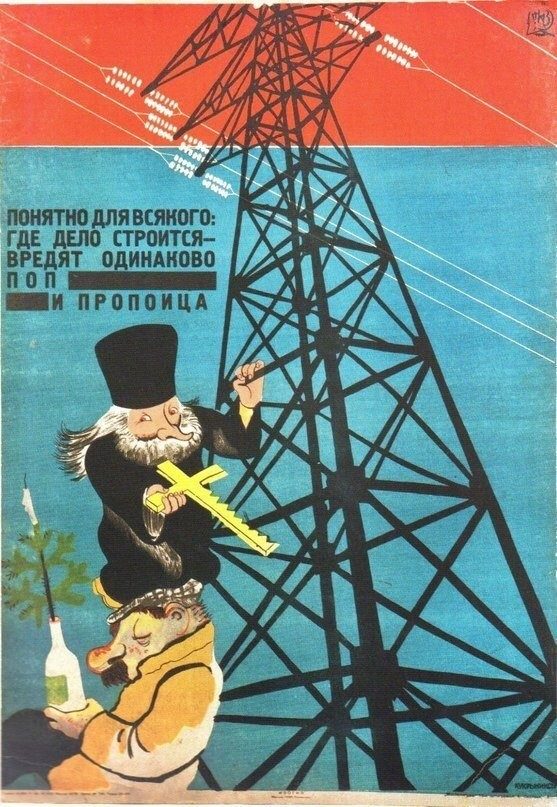
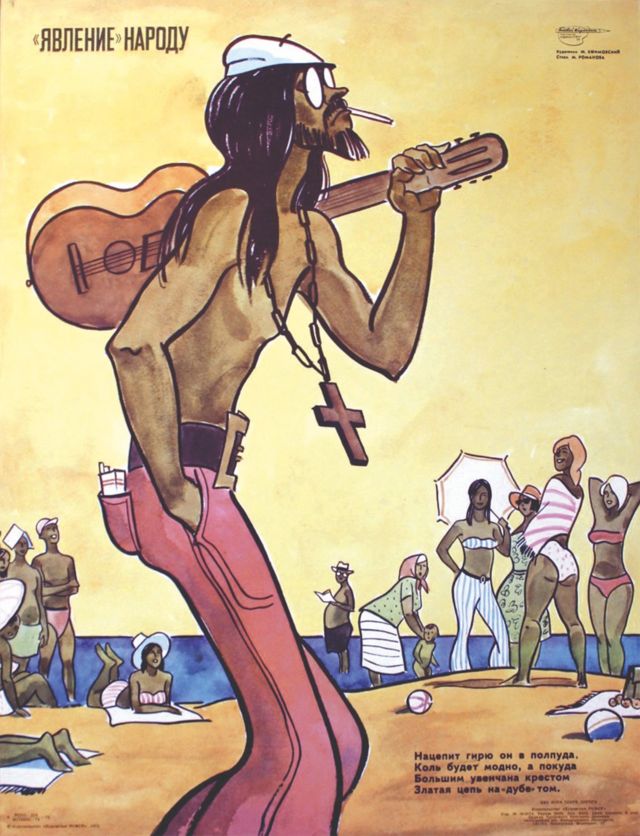
As for USSR era specifically, note that the official Orthodox Christian church eventually officially started to cooperate with the Soviet authorities. This symbolic subservience was very important for a country that was almost 100% Christian before the Revolution. The Soviet state let some clerics and church officials remain and openly be priests, and permitted them to serve masses and perform rites, as long as they were completely loyal, and could be pointed at, from time to time, as vestiges of the past, or silly fads for edgy youth. There was not enough of them by far to service the flock — they were tolerated as a concession to religiously minded amongst the intelligentsia, and to spiritual/philosophical thinkers.
Having a bunch of totally off-the-grid, genuine, independent Christians who (peacefully) don't acknowledge anything that the sold-out patriarchs say, and put any other farmers to shame with their labor ethic, would be doubly untenable for the Soviet authorities.