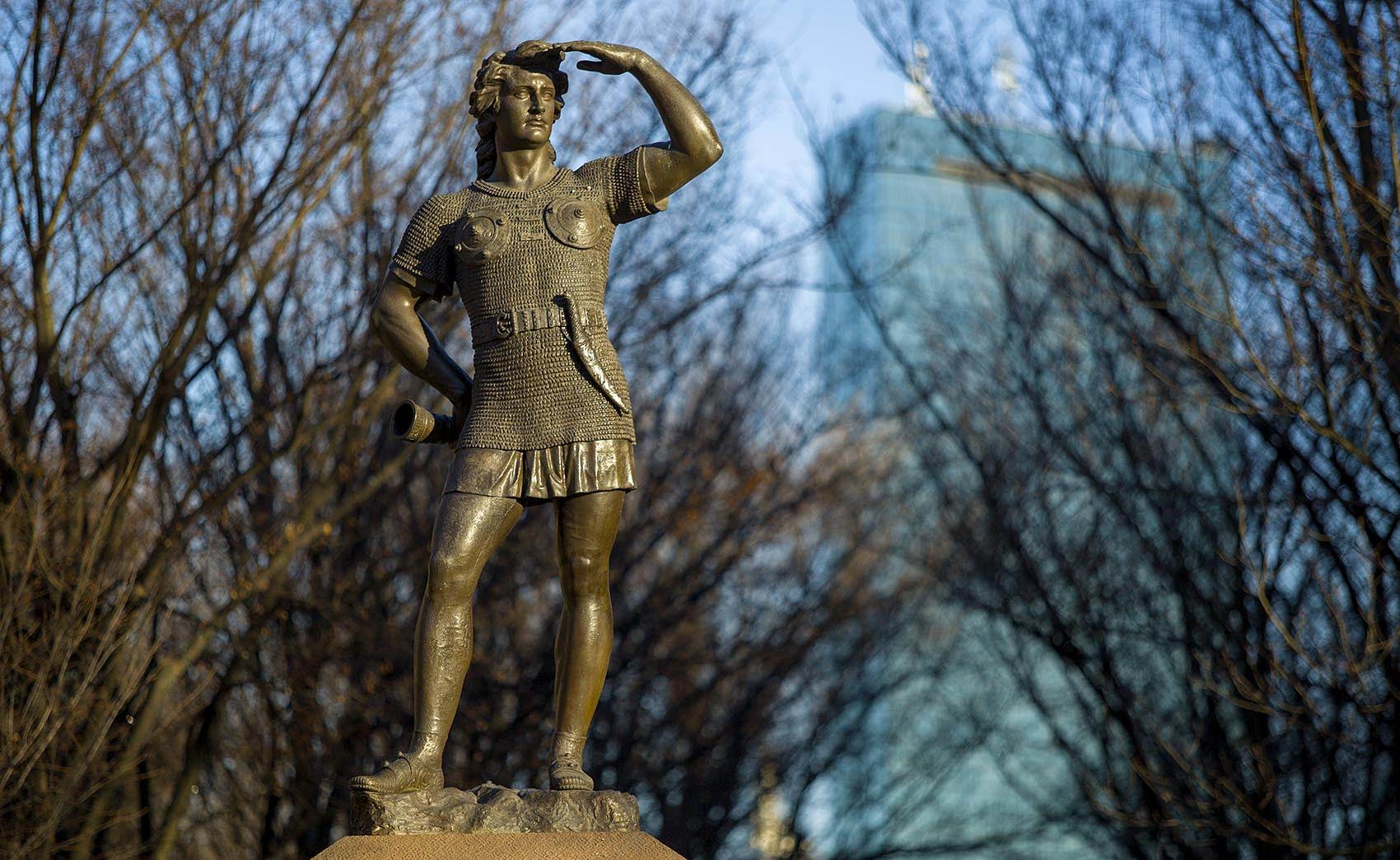
In the Boston area there are several monuments and/or memorial plaques dedicated to the Norse explorers who supposedly landed or made settlements in New England, from Norumbega Tower to the Leif Eriksson statue in downtown Boston to a commemorative plaque conveniently located right next to where Gerry's Landing would be a few hundred years later. Who put these monuments up? What were they trying to say politically? How did they convince themselves?
The story of these monuments, mostly in the Boston area, starts in 1841, when Danish philologist Carl Christian Rafn's Antiquitates Americanae - "American Antiquities" - is translated into English and published in the United States. There had been a fair amount of interest on both sides of the atlantic in Iceland, at least since Thomas Percy's 1763 translation Five Pieces of Runic Poetry (which, it must be said, were never, ever written using runes). Antiquitates Americanae sparked an enormous craze of interest in the Norse sagas, particularly the two texts relating to Vinland - Eíriks saga rauða and Grænlendinga saga. Special footnotes can and should be made to Eyrbyggja saga, which was used as evidence of Norse travel as far away as Mexico, but this openly absurd hypothesis never received the sort of acceptance as the Bostonian hypothesis, so we'll leave it as a footnote. As an additional footnote: while New England was the epicenter of the American fascination with Vinland, all across the Great Lakes and Upper Midwest there were (and are) deeply-rooted interests in "proving" Norse habitation, evidenced in forgeries like the Kensington Runestone. However, these have slightly different mechanisms and motivations (including a concerted effort by Scandinavian-Americans from Seattle to Ohio to be seen as "ideal immigrants") so I'll leave them aside in this answer.
It's also worth noting that all of these monuments were raised long before L'anse aux Meadows was discovered in 1960. While the site identified in ESR as Nýhöfn has not been discovered, it's generally accepted that L'anse aux Meadows is the site known as Leifsbúðir. But, none of that was known in 1860, and the mystery of it all sparked an absolute craze of trying to figure out where Leifr (or Thorfinnr Karlsefni) landed! And everyone got in on the craze. Henry Wadsworth Longfellow, who actually traveled to Copenhagen to learn Old Norse, wrote "The Skeleton in Armor" on the assumption that the Fall River skeleton was Viking (though consensus then, as now, is that the figure was probably Wampanoag).
The biggest push of the craze was to identify Norse sites: Newport Tower, in Rhode Island, was often held up in the period as a Norse site (spoilers: It's early modern and built by Dutch colonizers). But, there was a lot of activity in the Boston area, vaguely circumscribed by the New England Historical Society. The methodology here was a sort of superficial landscape archaeology - one reads the sagas, has a walkabout, and tries to identify evidence of the same landscape markers, then searches for old foundations, evidence of manmade irrigation or streets, and interprets those as Norse. This can be supported by evidence real or imagined, such as the Fall River skeleton or the Dighton Rock (a boulder with nonsensical markings on it. When an etching of the writing was sent to Carl Christian Rafn, he suggested that it was Futhark, but he never actually went to America to check it out himself).
Ebon Norton Horsfield, a Cambridge doctor and friend of Longfellow, is one of very many who led the charge. Financing excavations out of his own pocket, he is the one who both erected the statue of Leifr that still stands in Boston and, in 1887, discovered and 'restored' Norumbega tower, which he asserted on effectively no evidence was Viking. He was not alone, though - many theories emerged scattering Leif's landing site all over New England, often conveniently in the searcher's backyard! Most of these were met with skepticism from the New England Historical Society, but it continued apace.
Regrettably, a large part of this fascination is subconsciously kind of horrible. Even if we set aside the indigenous erasure instrumental to the methodology and Boston's Italian, Catholic population was rapidly expanding in the 19th century, as was the movement to recognize Columbus as the "discoverer" of North America. Without assigning explicit motivation upon Horsfield or any other individual (I lack access to Horsfield's letters to demonstrate intention), the interest in Leifr Eiriksson can therefore easily be read as a White Protestant backlash against Catholic immigration. It doesn't really matter that Leifr Eiriksson lived 500 years before Protestantism was a thing - Norway was Protestant in 1860 and therefore Norway had always been Protestant. It's not a coincidence that Leif Erikson day is the day before the-holiday-formerly-known-as-Columbus-Day, this is a result of regional lobbying by many of the same people as led the craze for Norse settlements. Unfortunately, this also ties the monuments to Norse settlement to anti-Catholic violence like the Ursuline Convent riots a half-century earlier.
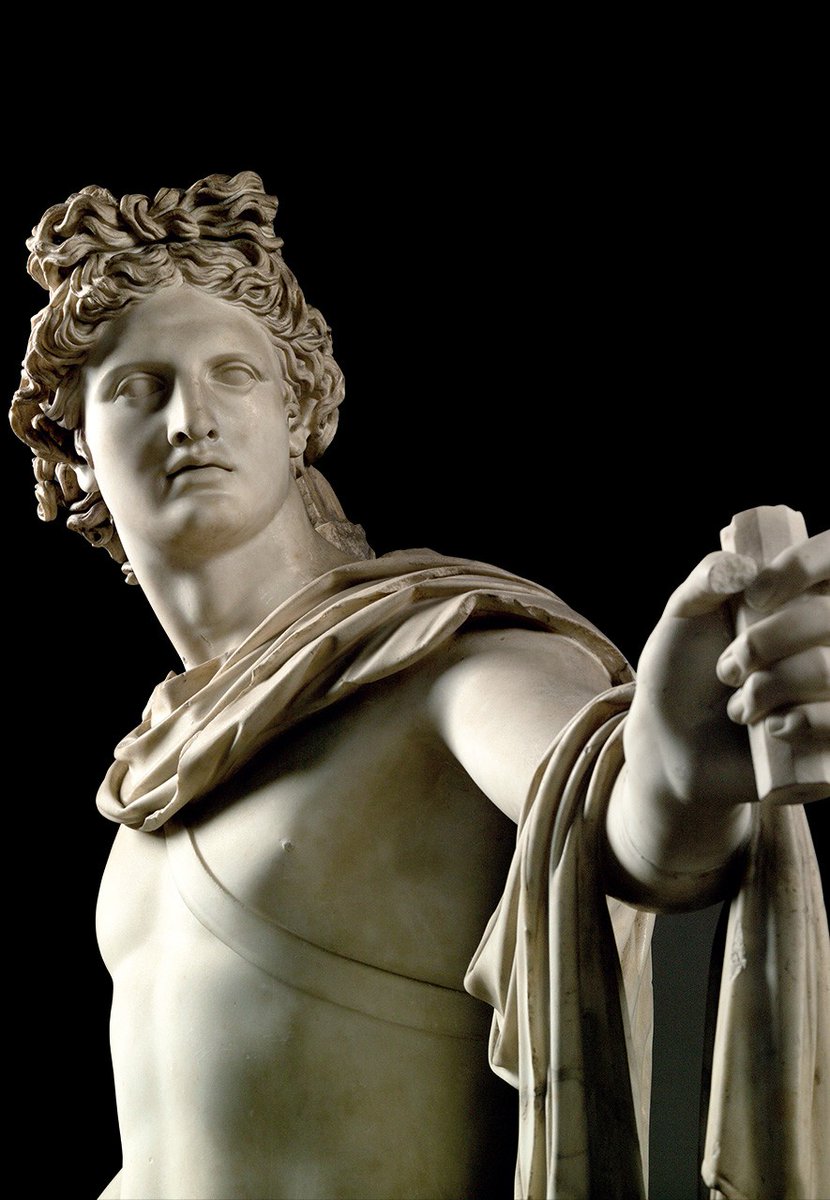
It's also something tied up in Race Science, and a belief in the innate superiority of "Nordic peoples." Ideas of phrenology, nose measurements, and other physiognomic markers indicating moral and intellectual prowess were thriving in the decades in which Norse enthusiasm was. Some of the texts in circulation include Lataver's Essays on Physiognomy (1789) and especially Charles White's An Account of the Regular Gradation of Man (1799). While these largely separate out European and non-European peoples, ideas were emerging of varying races in Europe that would be codified by William Ripley's The Races of Europe (1899). In this conception, Nordic peoples were the most moral and good (and Protestant), then the Alpine peoples of central Europe, and then the Mediterranean peoples were the most decadent (and Catholic). Special exception is made for Classical Greece and Rome, though, because "obviously" they're great and aspirational. Notice how, uh... similar Leif Eiriksson's face is to the Apollo Belvedere's. The Apollo Belvedere was used as the "ideal" White Face, and it's not by accident that the Boston statue copy-pastes it onto Leifr Eiriksson. The cultural milieu of really nasty pseudoscience that was in vogue in the time would have permitted nothing else.
It's, unfortunately, not a happy history. While it's possible and soothing to view Bostonian interest in Norse settlement as an amusing fad, the cultural memory proposed by these statues is one rooted in indigenous erasure, anti-Catholic sentiment, and racist pseudosciences that were entirely earnestly believed by the people who ran around seeing every old colonial foundation as evidence of a Great (read: short-lived) Permanent (read: seasonal) Protestant (read: technically Christian) Viking Settlement in New England.
As a post-script: the map included in the Sagas of Icelanders Penguin edition of ESR does identify Thorfinnr Karlsefni's attempted settlement of Hóp as near Long Island based on no external evidence other than the saga (which i must stress, is derived from an oral tradition in Greenland more than two centuries after the short-lived Norse expedition). So the New England tradition is quietly still alive, though it's generally agreed that, at the farthest, Norse sailors made it into what is now the Gulf of St. Lawrence.