Examples from Kunstformen der Natur:
Mysteriously, the weirdest creatures drawn by Haeckel seem to have no other images of them on the internet, whether under Haeckel's name or under any proposed synonyms. For example, the strange composition of orbs and tentacles in the bottom right of the above illustration of Arachnida is alleged by Haeckel to be Leiosoma palmicinctum, or under its modern name, Conoppia palmicinctum. I can't find any reputable images of it.
I wonder if he was on shrooms. That'd explain the kaleidoscopic symmetries and extra features on everything. I understand that kaleidoscopic symmetry is his style, and it caught on for entirely non-drug-related reasons, but you have to wonder how he came up with it, and why he decided to employ it in otherwise serious zoography.
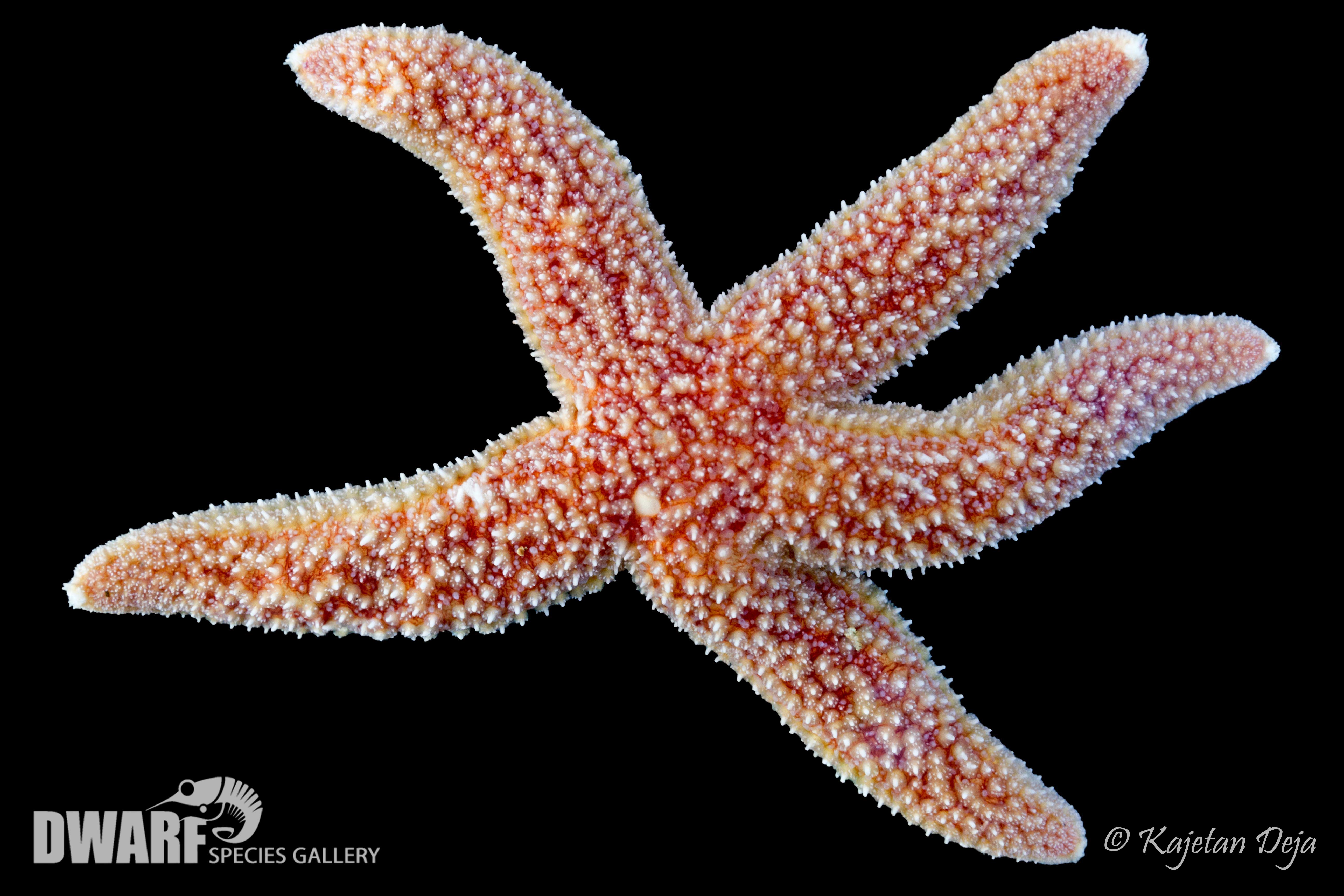
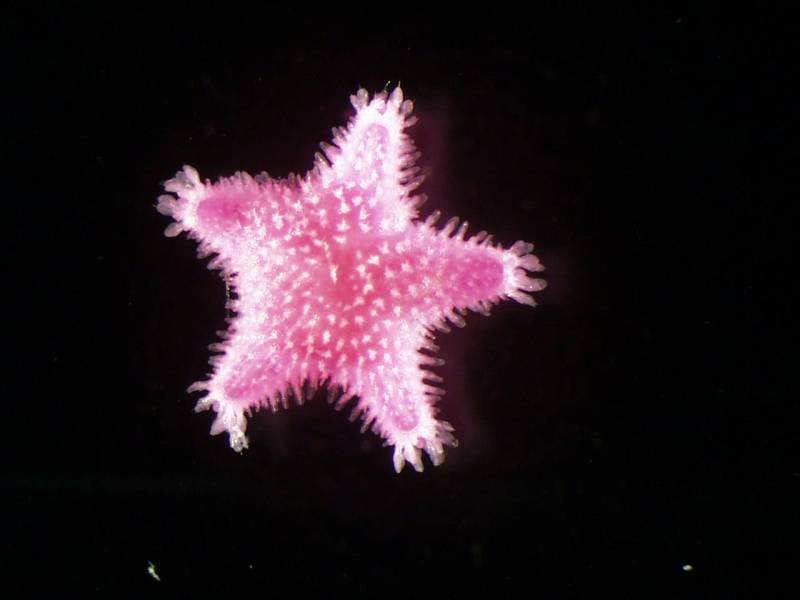
Haeckel's drawings aren't particularly fanciful, they are fairly accurate representations of the organisms being illustrated. Take, for example, your image of Asterias rubens. Haeckel is illustrating a developmental series from planktonic larvae to settled juvenile...no surprise given his well known interest in development. The actual depictions are similar to what these organisms look like.
The top pictures are of brachiolaria larvae with a rudiment. I wasn't able to find a good picture of the exact life stage, but this may be close enough. The central picture is a newly settled juvenile, similar to the one in this photo. The bottom images are of older juveniles, which have shorter legs compared to the adults. Here's a picture of a juvenile A. rubens for comparison. These drawings are, however, not at all to scale.
Your comparison image is of an adult, which looks quite different because the tube feet are proportionately much smaller and the limbs have different proportions.
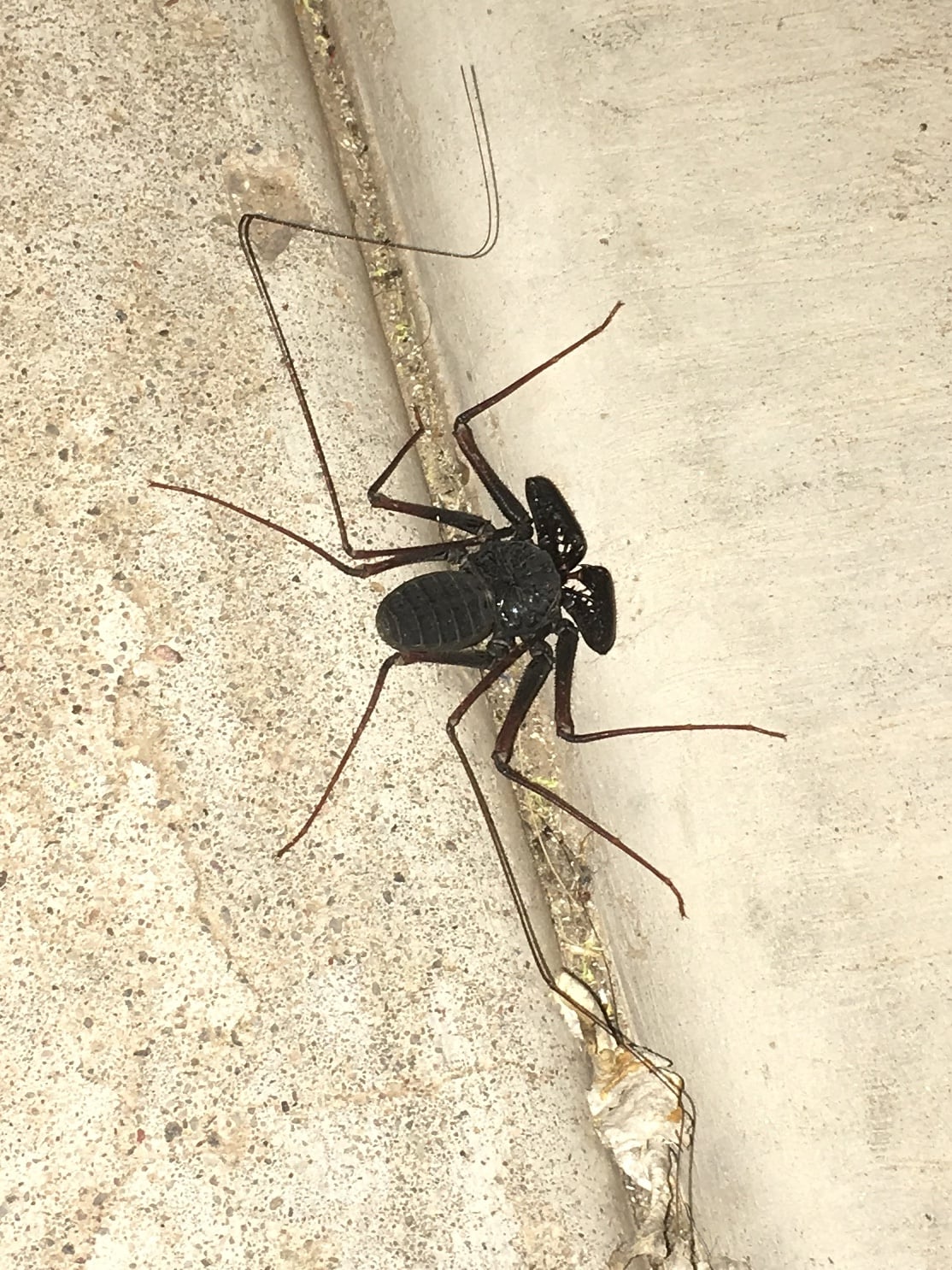
The arachnid drawings are also pretty accurate, although they are also wildly out of scale. I think you may be mistaking pedipalps and various protrusions and hairs for legs in some cases. For example, the central image #5 shows a whip scorpion, which as you can see here does appear to have five pairs of large appendages...it's just that the front appendages are very large pedipalps, as described in this page on whip scorpion anatomy.
Image #4 shows a mite (a larvae, I think) in the family Cephidae, which are indeed covered in platelike scalps (the "orbs) and surrounded by a fringe of hairs (the "tentacles"). It's probably not the same species, but here's a comparison image. This image also shows how the legs of a mite can easily be hidden under the body, as only two pairs are visible.