like to preface this by saying that i know very little about ancient egypt and nearly nothing about the great sphinx.
I read a very brief passage on the sphinx and learned the word itself is a greek term and that we arent sure what exactly it was actually originally called and it got me wondering. What is the earliest known reference to the sphinx in history or are there even any? Was it ever forgotten and rediscovered, did this happen more than oncw? Did it inspire any myths or legends from ancient history.
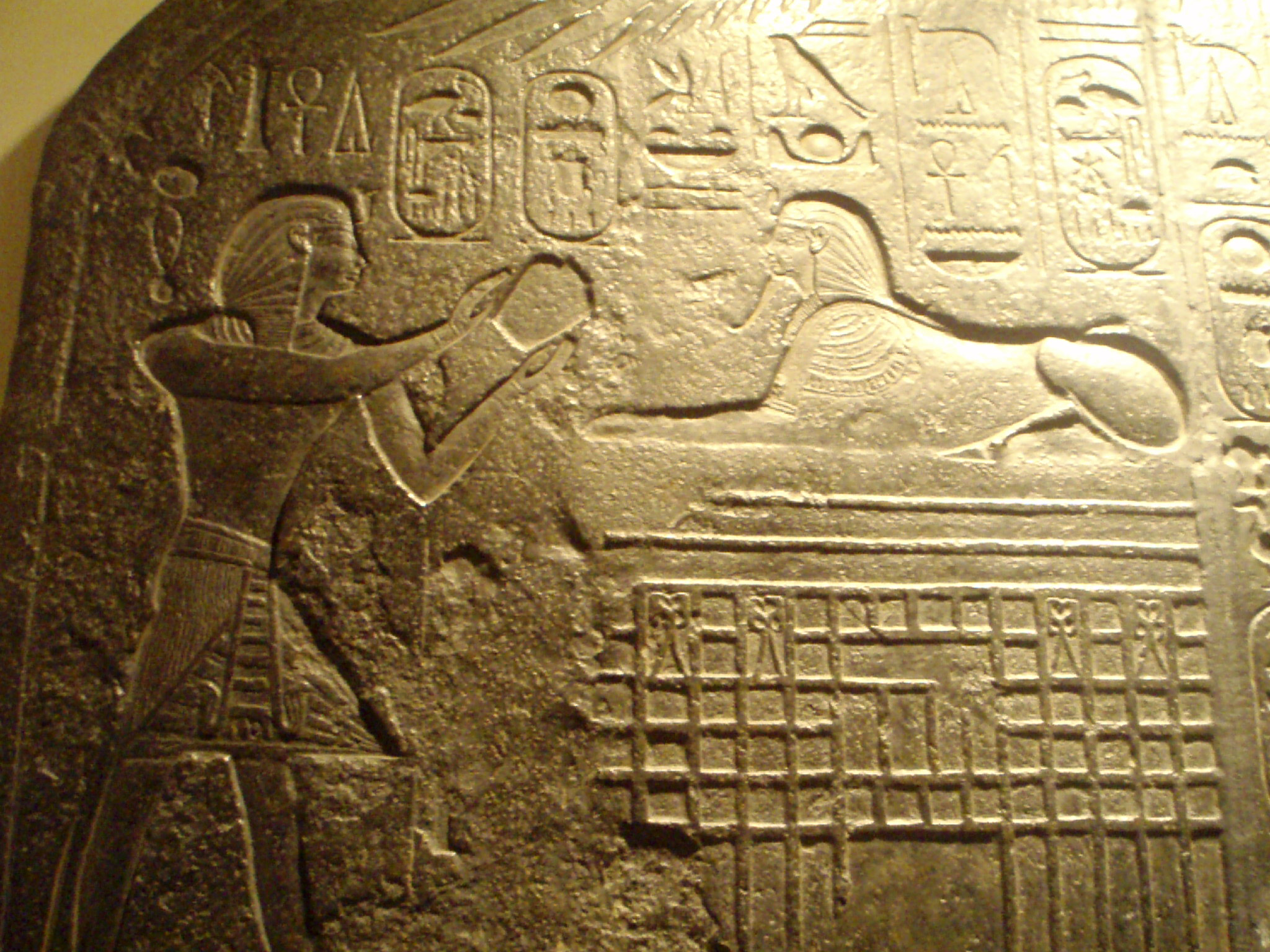
There are various representations of the Sphinx in New Kingdom art (edit: 'New Kingdom' means 16th to 11th centuries BCE), showing it as having a beard and a crown. These can't have been part of the original carving: the beard was detached -- fragments have been found -- and it is suspected that the large hole on top of the Sphinx's head is where the crown would have been attached.
The first textual description with any real detail is in Pliny the Elder's Natural history, 36.77, dating to the 1st century CE (and given here in a fresh translation):
In front [of the pyramids] is the Sphinx, which may be even more worth describing -- though the custom is to stay silent about it, venerating its holiness. They think king Harmais is buried inside, and they claim it seems to have been transported; but it is carved from the natural rock. The face of the creature, of red earth, is worshipped [the text is doubtful, or this sentence is rather telescoped]. The circumference of its head at the forehead is 102 feet, its length 243 feet, and its height from its belly to the peak of the asp on its head is 61.5 feet.
Traces of red pigment have been found on the Sphinx, corroborating Pliny's report of 'red earth' (rubrica). Pliny's reference to the 'asp' on the Sphinx's head refers to a feature of the crown, which was evidently still present in Pliny's time. New Kingdom depictions, such as this one on the Dream Stele provide some corroboration for a decorative crown, though it's reported that different New Kingdom depictions have different details.
If Pliny is reporting Roman feet, the measurements work out to 30.2 m for the head, 71.9 m for the length, and 18.2 m for the height; these are a bit low, so it may be that the measurements were in Attic or Ptolemaic feet. Then, though, the figures would be a little high; then again ancient measurements are often a bit wonky (though they had extremely good precision when it came to building new buildings).
The name 'Harmais' is Pliny's version of Harmachis, the hellenised version of Hor-em-akhet, a divinity with whom the Sphinx was identified in the New Kingdom period.
Here by the way are some reconstructions by Mark Lehner showing the headdress, crown, and beard: profile, and frontal.