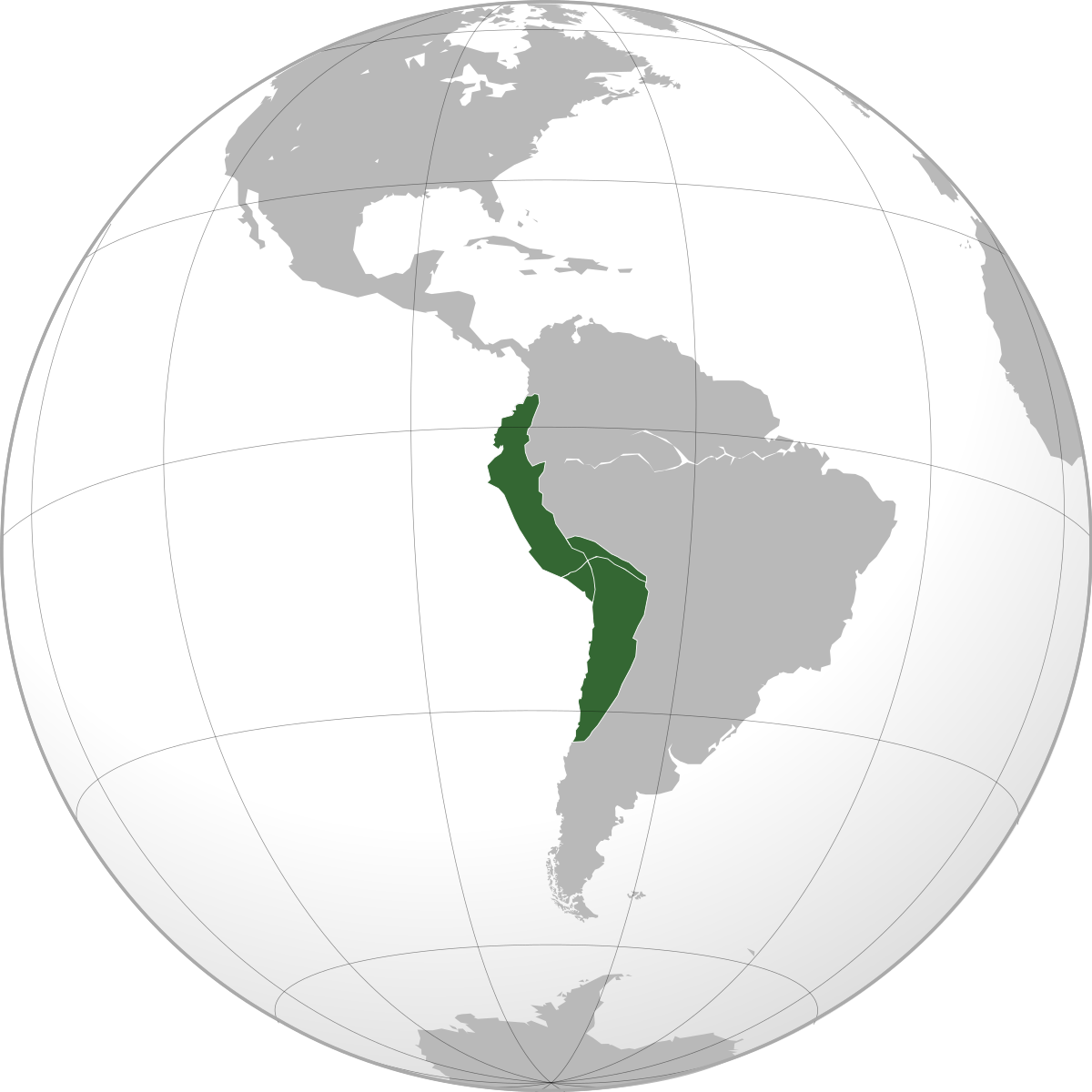
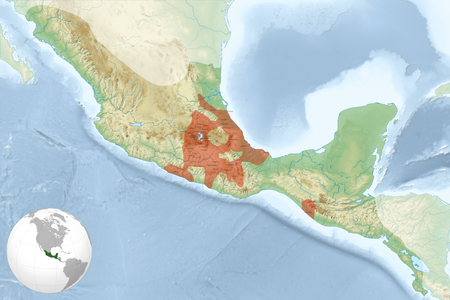
Was there something special about the 15th century that led this to happen, or was it coincidence?
Although the Aztec and Inca might be the two most famous Pre-Columbian American states, they were not the two largest (well, one of them shouldn't be concluded in that category).
The Inca Empire was far and away the largest state known to have existed in the Americas prior to European arrival. However, it was preceded by millennia of urbanized Andean societies, some of which gained control over more land than the Aztec Empire did. Perhaps most importantly, the Wari and Tiwanaku states were larger than the Aztec Triple Alliance.^(1, 2) These Andean polities thrived before 1100 AD.
There is an element of accumulation that is relevant to your question - generally (and with important caveats), one might say that the presence of larger populations, cities, and interregional connections increases the odds of the future presence of those things. Thus a larger empire is more likely to exist after smaller ones have been established, and the size of empires in general will increase over time. Here's a relevant paper. So while outliers certainly exist and it's important not to think that the human experience is inevitably linear in a certain direction, it makes sense that larger states would generally exist towards the end of any sufficiently long time period.
As a sidenote, in the interest of increasing awareness about large Pre-Hispanic states other than the Inca and Aztec Big Two, I'll just include quick Wikipedia links to the League of Mayapan, Purepecha state, and Chimor. They are only the tip of the iceberg when it comes to studying Pre-Hispanic Amerindian societies and history.
^(1)It's important to note that our ability to determine the exact borders of Pre-Hispanic states is in most cases extremely limited. Even maps of the most well-studied states are debated over; take a look at these two maps of the Aztec Empire
^(2)In another example of how limited our information is, it's not exactly clear what Pre-Hispanic societies such as the Tiwanaku or Teotihuacan should be called. Were they empires, or did they simply wield intense cultural influence over foreign areas? The latter has been historically touted as a massive state, and yet this view has fallen out of favor. Is it right for me to say that Tiwanaku "controlled" more land than the Aztecs? I'd say that's probably correct, but not certain. It does seem clear that the Wari were a larger state in the formal sense than the Aztec, though.