I've been fascinated over the entire Teutoburg Forest saga and it has made me research every detail in order to learn more [and perhaps do other stuff with this information] about this specific historical event. I've been noticing that more people at least play into the meme that he was truly incompetent but, was it really true? Or was he truly just a victim of a deception that was seen so badly it made him look like a fool?
Was he truly an oppresive governer in Syria? Is there any sort of info of his other governships? As far as i know there isn't any info on Africa and part of Germania. But how could have he been greedy if he was within Augustus's inner circle? There's a lot to unpack but, i mostly wish to know about the main question in particular regarding his 'incopetence' because to be put in Germania means he should have at least done well by even Augustus's eyes. Showing off power was probably just the Roman way and maybe he was truly a scapegoat.
Also new on Reddit here but if i need schooling go ahead lol.
1 Answers 2020-08-21
1 Answers 2020-08-21
How were they only outnumbered 2-1 despite the population difference between them and their opponents? How did they have the element of surprise when tensions were running high and Egypt intentionally acted in a way the Israelis stated would cause war?
I've seen "poor planning" and "good leadership" but no further in depth explanations than that.
1 Answers 2020-08-21
Why do the Lion class battleships seem to carry so little for a 40,000 tons design ? 3x3 16"/45, 16x5.25" ,several Pom Pom and Oerlikon. Meanwhile, the South Dakota, a 35,000 tons design manage to carry 3x3 16"/45, 20x5"/38, Bofors and Oerlikon. What do the Lion offer over the South Dakota ?
Thank in advance
1 Answers 2020-08-21
I’m really interested in the time period and I’m currently reading The Glorious Cause by Robert Middlekauf and though it’s part of the Oxford US History Series, I’m honestly kind of underwhelmed. Does anyone have any recommendations for other general histories of the American Revolution, starting from the end of the French and Indian War (to evaluate causes of the war) and going through to the end of the war? Both single and multi-volume histories are fine.
Thanks!
1 Answers 2020-08-21
Today:
You know the drill: this is the thread for all your history-related outpourings that are not necessarily questions. Minor questions that you feel don't need or merit their own threads are welcome too. Discovered a great new book, documentary, article or blog? Has your Ph.D. application been successful? Have you made an archaeological discovery in your back yard? Did you find an anecdote about the Doge of Venice telling a joke to Michel Foucault? Tell us all about it.
As usual, moderation in this thread will be relatively non-existent -- jokes, anecdotes and light-hearted banter are welcome.
6 Answers 2020-08-21
Hello historians of Reddit, I was just wondering why is there so much Prussian-style tradition in Chile, what's its origin? Thanks in advance
1 Answers 2020-08-21
Afaik, communism isn’t compatible with nationalism, and I would imagine that it would be discouraged if not made completely illegal in countries like Hungary, Bulgaria and especially East Germany?
1 Answers 2020-08-21
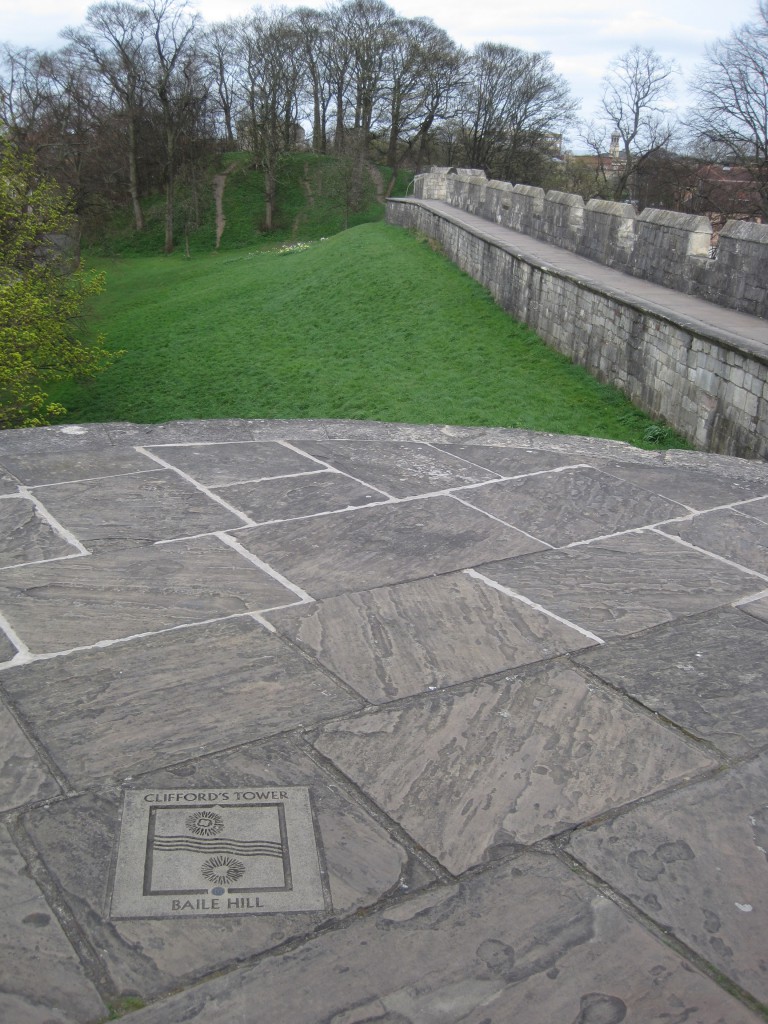
I live in York, where there are some very nice medieval walls. However, these walls have a few features that seem very strange to my intuition:
Are there any known reasons for these features? Are they common elsewhere, or is there something unusual about the situation in York that lead to them being built like this?
1 Answers 2020-08-21
I recently read James H. Sweet’s 2011 book, Domingos Álvares, African Healing, and the Intellectual History of the Atlantic World, and he described the expansionist kingdom of Dahomey, led by King Agaja, as enslaving many Gbe-speaking people from the ‘Mina coast’ region and selling them to Europeans. In particular, he explained how and why it seems likely that Agaja strategically sold off spiritual leaders and gifted healers in order to increase his power and quash dissent, thus leading to a strong presence of healing traditions in Brazil, for example.
I am aware of fairly large numbers of enslaved Yoruba arriving in the Americas, especially in Cuba, Brazil, Trinidad...What situations on the continent led to the enslavement of Yoruba people? Also, is there any similar evidence besides the continued presence of Yoruba religiosity in the Americas that many Yoruba healers/spiritual leaders were enslaved for political reasons?
Thank you.
1 Answers 2020-08-21
1 Answers 2020-08-21
2 Answers 2020-08-21
Everyone with even a passing interest in modern history has undoubtedly seen a photograph of the muddy trenches and cratered no man's land of the western and eastern fronts during ww1.
We're are talking about a system of trenches and bunkers that in the West stretched from the North Sea to the Mediterranean and in the East from the Baltic to the Black Sea. And even if not all of it consisted the kind of muddy moonscape we see in pictures from the war, that sort of devastation certainly covered hundreds if not thousands square kilometres.
Yet I was struck when watching a documentary about ww1 that I've never seen or read anything about how the land was restored and the towns and villages rebuilt. Every source about the aftermath of the war just talk about political, economical or even military changes the war brought about. Not about how the actual physical scar in the land was repaired.
There must have been millions of tons of construction material to remove from the trenches, along with who knows how many kilometres of barb-wire, kilometres roads, railroad and bridges to construct to reconnect the two sides of the fronts. All of it covered in mines and unexploded munitions, including poisonous gas-shells. Not to mention the horrific task of recovering all the thousand of dead and lost soldiers.
(As I'm writing and contemplating the enormity of the ww1 trench system, I can't help wondering if it would have been visible from space? )
So how was it done? Was the task organized and if so how? Who did the work? What did it cost and how long did it take?
1 Answers 2020-08-21
1 Answers 2020-08-21
I have read in several places how KGB kept track of each typewriter in the USSR. A sample page was typed on each typewriter and handed to the KGB for storage. Later on this page would be referenced in order to track down the origin of a certain suspicious document.
My guess is there must have been hundreds of thousands of these typewriters across USSR.
I was wondering how did the KGB perform the mammoth task of comparing a certain document with these sample pages? Did they use any tricks, how did they organize their work etc...
Sources:
https://en.wikipedia.org/wiki/Typewriter#Forensic_examination https://www.cia.gov/library/center-for-the-study-of-intelligence/csi-publications/csi-studies/studies/fall_winter_2001/article05.html (Section "Nightmare for the KGB: The Advent of Photocopy Machines ")
1 Answers 2020-08-21
I recently stumbled upon The Great War, a youtube-channel by american historian Indiana Neidell, who does a comprehensive week-by-week break down of the First World War. I really enjoy it but since my area of expertise lies somewhat further in the past, I wondered if there are some professionals with regards to that era who have watched it and might want to share their opinion about accuracy, presentation and research.
1 Answers 2020-08-21
Having trouble finding an answer to this. I know that the oldest English translation of the Bible is the Tyndale Bible, written in the 1500's. What was commonly read in the late 1600's? Specifically in New England during that period.
1 Answers 2020-08-21
Sorry if I’ve worded my question poorly. I was just thinking if this tax exists and was meant to be some kind of “mercy” who were the unlucky ones that weren’t given the option to pay the tax? Were there more than just the three Abrahamic religions that were a big factor at the time?
1 Answers 2020-08-21
I might be speaking as a myopic American, but it seems to me that if I mentioned the sword Durendal or the wizard Malagigi in most English-speaking circles, I'd just get blank stares. Why are these two names so much less recognizable than King Arthur's Excalibur and Merlin?
Is there a reason why the Carolingian cycle was popular in France and Italy, but seemingly didn't have (or maintain) popularity in the English-speaking world?
1 Answers 2020-08-21
The confederacy is well known for their use of six shooters that you didn’t need to pack down after each shot, so I’m wondering why they didn’t use this technology for rifles? I felt it would be a lot more useful than the advanced flint lock rifles they used.
1 Answers 2020-08-21
Every time a layman asks a question about history (especially on this sub), the historian's answer usually starts with something like "well, actually this matter is a lot more complicated than that, you have some huge misconceptions, you're forgetting the historical context", etc.
My question is, why the layman is so uninformed?
Aren't historians the ones teaching us these things? Aren't they writing the history books used in schools? Aren't they teachers at public and private schools? Aren't they the ones deciding what gets taught in the school curriculum? Do historians have any responsability in this whatsoever?
4 Answers 2020-08-21
Did they even have a say in the matter? And if so, was becoming an independent nation a possibility?
1 Answers 2020-08-21
I'm currently reading Thucydides' History of the Peloponnesian War, and despite nearing the end of the book, this question now popped into my head. In an age before the printing press or even the codex form of books, how would ancient peoples, particularly in Ancient Greece and Ancient Rome go about publishing their works? More than that, how would they distribute those books?
In Thucydides' case, one thing that really stands out to me is that the book ends mid sentence in 411 BC, following the Athenian victory at Cynossema. This is despite the fact that Thucydides stated that he would cover the Peloponnesian War in its entirety while the war itself lasted until 404 BC. However, Xenophon, in his Hellenika, starts literally right where Thucydides left off. So that alone tells me that Thucydides's work would have been in distribution in some form, such that Xenophon would have known where it ended and where to pick up from (granted, there are some assumptions being made here).
So yeah, to summarize, how would Ancient Greek and Roman writers publish their works and then distribute them to the wider population?
1 Answers 2020-08-21
I'm of partial Indian descent and while reading into Indian history I inevitably came across the history of the Aryan invasions and how that works into the culture and politics of India today. I've also seen the use of the swastika as a religious symbol when visiting India. While the history of India is an interesting (and sometimes contentious) subject on its own; I'm curious about how these aspects became such integral parts of Nazi ideology?
1 Answers 2020-08-21