My understanding is that the leader of the army sacking Rome is not called Brennus in Polybius, who to my knowledge is the earliest source mentioning the Gallic sack, so from that (somewhat flimsy ground, I know) I assume there's reasonable grounds for a bit of mythmaking having happened in the intervening time before Livy.
1 Answers 2019-05-05
So i am watching this ww2 documentary and i am still not sure why Japan did it.
1 Answers 2019-05-05
I volunteered to teach a class on Heron of Alexandria (aka Mechanikos).
The oldest copy of one of his books is from the 16th century and it’s housed at Oxford. He sounds like a prime candidate for people attributing something to a bygone age to make it sound cooler. None of his machines still exist. He writes about optics and steam and vacuums, and from my college classes I associate those topics with 16th century research. At least the Archimedes screw definitely existed in ancient times, but that's not attributed to Heron of Alexandria. His works were popular and shared around, and yet weren't rediscovered until 16th-18th centuries. His Latin is written simply and clearly, and he doesn't ramble on like everyone else in the ancient world.
The Temple to Artemis at Ephesus was already five centuries old when Heron’s automatic door system was (maybe) added to it? Just a History Channel documentary says so. Websites about the temple don’t say so. At least, none of the ones that I've found so far. And it sounds like builders would have had to dig into the marshy ground under the temple to install Heron's device for the doors - maybe not impossible, but really hard to do?
I'm not an expert on the ancient world. People have made references to the aeolipile not being used to create a steam engine because there was a lot of slave labor, and attributed a quote about that to "the emperor." Something like, "Why should we use steam power when we have all of these slaves?" Which emperor? Or is it just a meme and not a quote at all? Besides, it still would have made sense to use the aeolipile and slavery too.
I'm continuing to look for information so please don't just do a quick Google search and post me a link to it, or point me to the History Channel documentary because I've already seen it. I just thought I'd ask the experts here and see if I got any response.
1 Answers 2019-05-05
The field of general overviews of the Crusades seems to be dominated by the work of Thomas Asbridge. He's written 2 of the most popular books one can find on them, with a particular emphasis on the First and Third Crusades.
With that in mind, I do want to make sure I'm getting a diversity of opinion and not simply taking the work of one man as gospel (although I'm in no way doubting his expertise). What other writings give general histories of the Crusade's that may provide a different perspective or general conclusion? I want to emphasise this isn't some dogwhistle because I know his work is disliked in certain political circles, I really do just want other reading recommendations.
2 Answers 2019-05-05
My impression was that the Magna Carta had stripped the royals of there power and they were nothing more really that figure heads with the ability to resolve parliament. Further to this who owns the money?
1 Answers 2019-05-05
I am graduate student in Turkey and I want to research History of Italy especially in medieval times. So where should I start to learn about their history. What could you suggest to me? I can read in English and Italian.
1 Answers 2019-05-05
I'm reading Peter Heather's The Restoration of Rome and he argues this idea, put forward by Proculus who advised Justin on legal matters, is clearly 'nonsense' as the basis of gaining the throne wasn't simple hereditary principle but support of key groups in Constantinople and the Empire. This argument then leads him to say the refusal to adopt Chosroes must be seen as a deliberate diplomatic insult, which has serious implications for his overall understanding of Justinian (e.g. that he can't have planned to reconquer the West early as he instead chose to deliberately court war with Persia.
But it seems to me that Heather's argument addresses only the most extreme reading of the warning. Obviously just being adopted wouldn't mean Chosroes would actually have automatically ascended to the purple and the Empire would have just accepted a Persian ruler. But surely it would have given Chosroes (or his father on his behalf, or his heirs after him) the perfect casus belli whenever they wanted to invade - 'I am in fact the rightful heir as the son of the last Emperor, the so called Emperor is a usurper' etc. After all many would-be emperors based their claim at least partially on more dubious claims of link to a previous emperor. Am I missing something here?
1 Answers 2019-05-05
The votes are in!
For the month of April, /u/thefourthmaninaboat sailed his way to the Flair's Choice Award for their response to "Was there espionage involved in naval arms races of the 19th/early 20th centuries?"
For the User's Choice Award, /u/SteveGladstone posted with minutes to spare from the end of the month, which perhaps helped keep their response to "I just read that recent excavations of the earliest royal tombs in Japan suggest strongly that the country's ancient imperial family may originally have been Korean, and that the Japanese government has strongly discouraged further research on the sites. What is the extent of the evidence uncovered?" fresh in the voter's minds.
/u/SteveGladstone being (currently) a non-flair, no Dark Horse Award is granted this month.
For the 'Greatest Question of the Month', /u/Vladith showed off that 'Interesting Inquirer' is a well earned flair, with "Has the rise of medieval fantasy fiction had any effect on the way historians understand or talk about the real medieval past?" being the question to most pique the interest of the mod team, as well as earning a nice response from /u/colebrand.
Finally, the Excellence in Flairdom Award for April 2019 goes to our quiet champion, /u/Commustar! You're probably familiar with their top-notch answers to sub-Saharan African history questions--ones that range the centuries and breadth of the continent. We also want to recognize Commustar's dedication to building and maintaining a core of Africanist flairs and non-flaired regulars. Commustar is an excellent direct recruiter on one hand, and makes sure the mod team doesn't overlook anyone by accident on the other. Cheers and thanks to /u/Commustar!
So as always, a big congratulations to the winners, and a big thanks to everyone who contributed to the subreddit in the past month! Also a reminder, if you want to nominate answers for the monthly awards, the best way to do so is to submit your favorite posts every week to the Sunday Digest!
For a list of past winners, check them out here!
5 Answers 2019-05-05
Today:
Welcome to this week's instalment of /r/AskHistorians' Sunday Digest (formerly the Day of Reflection). Nobody can read all the questions and answers that are posted here, so in this thread we invite you to share anything you'd like to highlight from the last week - an interesting discussion, an informative answer, an insightful question that was overlooked, or anything else.
2 Answers 2019-05-05
If you were an Australian tank crewman in ww2, what tanks would you be most likely to crew?
1 Answers 2019-05-05
I hope my question will not be considered stupid but it's definitely very random. There are some history podcasts concerning "the origins of middle finger", so I thought my question is worth asking here. It's more anthropolological though.
I was reading some articles on "history of obesity" and started to wonder whether people in the past suffered from diseases we call "civilization diseases" or related. I know epidemics were very common (illnesses such as syphilis, Black Death, tuberculosis etc.), but I haven't stumbled on any information whether people in the passed suffered from obesity, acne or other hormonal issues, depression (yeah apart from XIX century of course) or other mental illnesses such as bipolar or PTSD, allergies, diabetes. I am very interested in this kind of unnecessary knowledge so if anyone can answer that, I'd be grateful!
1 Answers 2019-05-05
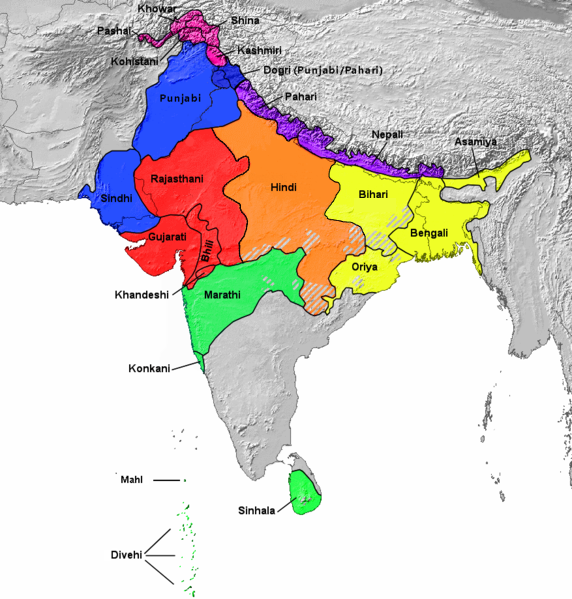
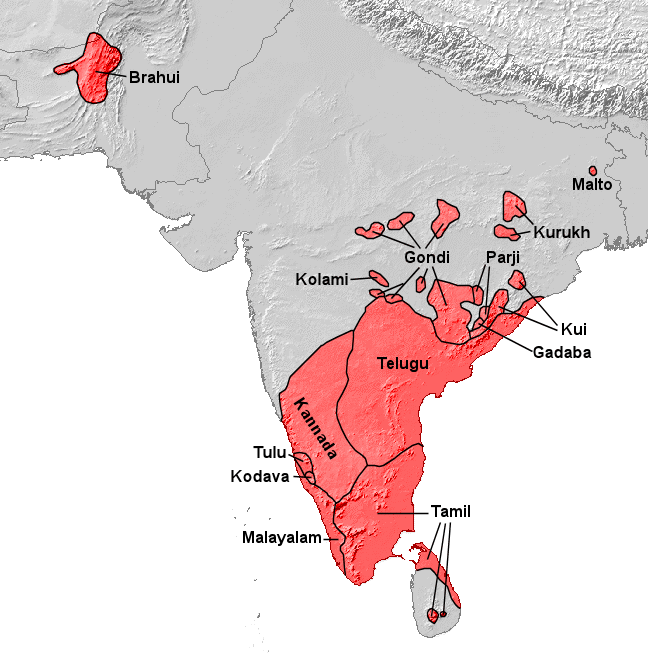
Looking at a map of Language groups in India, the Indo-Aryan languages are mostly in the North/Center, while the Dravidian Languages are mostly in the South/Center. Sinhala seems to be one of the exceptions though, an Indo-Aryan language spoken at Southern most tip of the subcontinent. Was there some sort of mass migration or conquest of Sri Lanka by Indo-Aryan speakers that bypassed the other Dravidian speaking areas?
1 Answers 2019-05-05
1 Answers 2019-05-05
[deleted]
1 Answers 2019-05-05
I imagine border disputes were quite common, but in instances where they weren't actively disputed, was it just natural landmarks and borders like rivers and things? I wouldn't think their cartography skills are anywhere close to what we have today, so how did they manage the all the counts and barons and dukes?
1 Answers 2019-05-05
Mostly like ancient routes, settlement , water routes etc in the Roman era. Persians. PDFs would be fine if you know any
Thanks.
1 Answers 2019-05-05
I've read his Commentary on the Gallic War and it struck me as highly interesting that Caesar would truthfully recall (or place) arguments about fighting for liberty into the mouths of the Gauls -- while he is actively conquering, enslaving and killing nearly a million of them.
In essence, to my mind, Caesar is knowingly portraying himself as Darth Vader. The question is why? Is it perhaps as simple as differences in the morality? Would the average Roman citizen, for whom I heard his Commentaries were aimed at, cheered upon hearing the Gauls failed to maintain their liberty?
1 Answers 2019-05-05
I've heard many times that during the Greco-Turkish war, king Constantine of Greece had thoughts about annexing Constantinople and crowning himself Emperor there, was this true?
I've also heard there was a saying, going like "Constantine built the city, Constantine lost the city and Constantine will reclaim the city", regaridng Constantinople, was it a widespread saying?
1 Answers 2019-05-05
Yo,
I've been reading about 19th century peasant life in Spain recently and it seems, well, kinda terrible, filled with grinding poverty, unchecked violence from the powerful and the spectre of famine, so...
My question is: Why was there no wave of immigration from Spain to the US comparable in size to those from Ireland or Italy, whose peasentry were also putting up with all that?
Or was there? In which case where is the Deep Dish Chicago Style Pepperoni Paella?
Thanks in advance
1 Answers 2019-05-05
If Poland has been invaded by Germany AND the Soviet Union in September 1939, then why have France and the UK declared war on Germany only and not USSR?
1 Answers 2019-05-05
Hi ,I want learn more about the Irish war of independence but I want to read a neutral book witch is critical of both sides,all help is appreciated
1 Answers 2019-05-05
I am reading about the reliefs of the tribute bearers to King Darius I at Persepolis. Basically, they are a bunch of carvings of different peoples from around the empire such as Elamites and Lydians paying their tributes to the Achaemenid Persians. One of the texts I read suggests that that facts that they are all wearing different clothing and had different hairstyles is important because it shows that the Persians let the people they subjugated retain their cultural identity.
As a result of this, I was wondering wether or not previous Mesopotamia ruling empires like the Assyrians or Babylonians forced everyone to wear the same style of clothing as they themselves did.
For reference: The reliefs themselves http://www.zoroastrian.org.uk/vohuman/SlideShow/Tribute%20Bearers%20of%20Persepolis/Tribute%20Bearers%20of%20Persepolis.htm
Note: This is not the site wear I got the information from, it is just the only one I could find that lays out a bunch of the reliefs on the same page.
Thank you!
1 Answers 2019-05-05
One of my professors today was saying that during the renaissance they didn’t call it the renaissance, the name came later. So did they have a name for their art? Will the art that’s produced today under the name of “modern art”, will it eventually be given a new name as something else becomes “modern art”?
2 Answers 2019-05-05
More Questions:
What is known about the diseases the natives had to fight before Colonization? What were the symptoms?
Were they at all comparable to something like a cold or the flue?
Did any of the diseases native to the americas, say an "NA small pox 2.0", spread to Europe, other parts of the world or still exists?
1 Answers 2019-05-05