I've always wondered if the Allies assumed that these were military complexes before they understood what it actually was.
1 Answers 2018-10-19
1 Answers 2018-10-19
Today:
You know the drill: this is the thread for all your history-related outpourings that are not necessarily questions. Minor questions that you feel don't need or merit their own threads are welcome too. Discovered a great new book, documentary, article or blog? Has your Ph.D. application been successful? Have you made an archaeological discovery in your back yard? Did you find an anecdote about the Doge of Venice telling a joke to Michel Foucault? Tell us all about it.
As usual, moderation in this thread will be relatively non-existent -- jokes, anecdotes and light-hearted banter are welcome.
9 Answers 2018-10-19
1 Answers 2018-10-19
Is there any consensus on when the book came to the west? Was it brought by Marco Polo, was it brought by europeans from east asian colonies, or was it brought in some other way?
1 Answers 2018-10-19
History usually looks fondly and favors civil rights activists from the past, MLK Jr., Malcom X, Jesse Owens among many other figures. Some great figures in our history.
I was thinking about how divided America is about social justice and some current figures, like Colin Kaepernick as well as other themes of police brutality and the injustices that still persist today. I am curious if people, I suppose specifically whites, felt adversely about other movements in the past for people fighting for diversity, equity, and inclusion.
What was the consensus among white people and their feelings about these figures at the time of the US civil rights movement?
1 Answers 2018-10-19
1 Answers 2018-10-19
1 Answers 2018-10-19
I'm interested in medieval period, but since WW2 and 20th century is what actually pushed me in history i would like to get more information about it. My interest are:
a) Books about this period written by historians, I would prefer recent but some older that are still considered to be important is also welcome — and I would love some books that go "wider" than just telling about events, for example dealing with questions like "Why did Hitler come to power?", or something like that
b) Books written during that period, by people living in that period. Something like "Tigers in the mud" by Otto Carius, first-person view on that period — and it would be great if there is someone that is actual historian and have some kind of memoirs from that period (if there are cases like that)
And I'm especially interested to know more about year 1918/1919/1920 in Eastern Europe, whole "Red Army — White Army — free Baltic states movement — Freikorps etc." war in that area, fight for monarchism, for republic, and for free-states of ex-Russian Empire (with special interest in Polish-Soviet war/Estonian-Soviet war... I always admired Polish and Estonian defense against red army).
2 Answers 2018-10-19
I was reading up on PTSD and was curious as to how far back we can trace to the first story or written information about the disorder. Did it have different names or was it just unnamed till recently? Thanks
1 Answers 2018-10-19
I'm reading the Belisarius series by David Drake and Eric Flint.
Early on the lack of stirrups in Europe in the period is mentioned. There is also a mention of a piece of Roman history.
"The ancient battle of Lake Ticinus was a staple of Roman army lore. Fought during the Second Punic War, it had started as a pure cavalry battle and ended as a pure infantry fight. Every single man on both sides, according to legend, had fallen off his horse before the fray was finished."
Two things to ask.
I've found a Battle of Ticinus in the Second Punic War but it was fought by a river not a lake, did the authors merge it with Battle of Lake Trasimene in the same war? Or was there another battle with this name?
For either battle, and just in Roman history in general, was there ever such an engagement, with the entire cavalry being dismounted (excluding times where the cavalry dismount before battle)
1 Answers 2018-10-19
1 Answers 2018-10-19
In one day, he saw the destruction of his capital, of a large part of his country, and of most of the buildings and environments he grew up and lived in. Almost everything in his life and routine suddenly disappeared. In a few hours, thousands of people he surely knew and was close to died horribly.
What was the extent of his psychological wounds after 1755, and how did they affect his ability to rule the Empire? It's hard to believe that the trauma of stone buildings was the only scar he carried with him that affected his behavior.
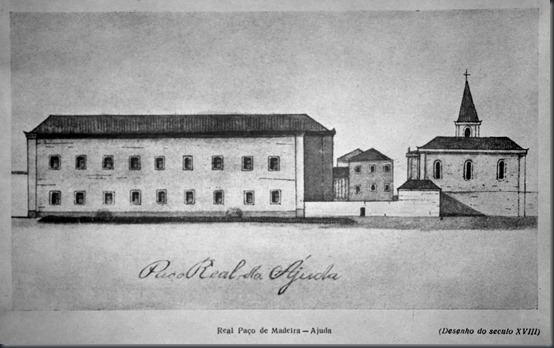
Edit: I've been thinking that the weirdness of his trauma of stone buildings might not be understood by people from some countries. To be clear, in Portugal the vast majority of buildings were built with stone, from the palaces and cathedrals to the homes of peasants. To avoid living in a stone palace, he had to build one made of wood, such a weird thing for the Portuguese that they called it the "Royal Shack" (Real Barraca). It burned down a few years after he died.
Imaginary modern depiction, that shows how the Portuguese view the idea of a Royal palace made of wood as something a bit weird: http://4.bp.blogspot.com/-a_6qzOXgS40/TywtJBqBPpI/AAAAAAAAByU/sQ5kOGrmwYM/s1600/a%2Breal%2Bbarraca.jpg
Contemporary depiction of what it actually looked like (you can hardly notice it's made of wood): http://lh3.googleusercontent.com/-Juu_aTYVDz8/VdWT9Q5TIcI/AAAAAAABm2w/ErDv9OOeqUs/Pao-em-Madeira_thumb2.jpg?imgmax=800
1 Answers 2018-10-19
1 Answers 2018-10-19
[deleted]
1 Answers 2018-10-19
How much evidence do we really have and how believable is it?
1 Answers 2018-10-19
For instance did someone in Africa or South East Asia know that a war in Europe was going on and vice versa
Edit: medieval ages
1 Answers 2018-10-19
1 Answers 2018-10-19
Did the first few Popes reign during the time of the Roman Empire? How did they interact? And did the historical Jesus overlap with the RE and how did they interact?
1 Answers 2018-10-19
Specifically, I am curious about what was being taught to students that would go on to become major players - as adults - in the events that led to World War 1.
1 Answers 2018-10-19
[deleted]
1 Answers 2018-10-19
The emperor is portrayed as a wise, just ruler who offers Mulan, implying that he doesn't care about gender. But the plot is kicked off because his army demands every family send a soldier, forcing Mulan to take her disabled father's place. Then she has to hide her gender out of fear of execution. These policies are enforced by what seems to be the emperor's right-hand man, Chi-Fu, but he's the only one who's portrayed as a jackass for them.
Wikipedia tells me the film takes place during the Han dynasty, though I'm not sure how much that narrows it down. I'm mostly just curious if the government in the film's time period had the emperor as the sole or dominant power or if he was simply the head and the actual laws were passed by others.
1 Answers 2018-10-19