I know about the Celtic influence in the north, and the Moorish influence in the south, but I am so curious about what the Inquisition tried to make go away. Did some traditions and stories make it through?
1 Answers 2018-02-05
Hi Historians!
A friend and I are curious about this siege engine, as we want to write about it in one of our bigger reports! We are generally lacking solid source material for it though, and thought that coming here might help us a little.
Our focus is on the medieval counterweight trebuchet.
I hope you can help us a little with it!
Thanks, Oliwarrior123
1 Answers 2018-02-05
I'm doing a paper on the effect of the HMS Dreadnought, and how it effected the designs of naval vessels. I was hoping that there might be a site or book that would have schematics, or even just pictures and drawings of the HMS Dreadnought, some of the pre-dreadnought ships, and the later designs.
Any help is greatly appreciated.
1 Answers 2018-02-05
1 Answers 2018-02-05
One of the several large claims made in The Dictator's Handbook is that, when it comes to winning wars, more democratic governments tend to fight hard to win, while more autocratic ones tend to be quicker to sue for peace; this is because democratic governments have more supporters, and therefore a war effort costs each of them less individually, while the key supporters of an autocratic government have to pay a lot more individually to fight a difficult war.
I find the argument reasonable enough, but I'm interested in what historians think about it.
1 Answers 2018-02-05
I was reading about Pike and shot tactics on Wikipedia and noticed near the end of the article that a plan, backed by Robert E. Lee, was put in place by the CSA to form 20 regiments of pikemen to be incorporated into their armies. However, even though the likes were produced the plan was never implemented. Is this even true? If so, why would they decide to adopt an otherwise obsolete military tactic and then what caused them to abandon their plans?
2 Answers 2018-02-05
1 Answers 2018-02-05
This has been asked on r/askhistorians before but without any answers.
Solzhenitsyn's account here https://mannerofspeaking.org/2010/05/12/some-chilling-public-speaking-history/
Edit: In case the above website become inaccessible, Solzhenitsyn's account can also be found in this link
2 Answers 2018-02-05
The river neither starts there (Minnesota) nor ends there (Louisiana), nor does it seem to even have the longest border with the river (looks like Illinois does?), so why is that particular state named after the river? I'm assuming just because of some kind of timing issue, but I could not find a real answer anywhere.
1 Answers 2018-02-05
1 Answers 2018-02-05
To clarify, military tactics didnt just change from Napoleonic and Franco-prussian wars to modern or Second World War tactics so obviously the troops of the time had to experiment. What were THOSE tactics like?
For example, in the final battle of the Isonzo River, German soldiers were applying the changing tactics along with the Austrians to defeat the Italians that were heavily entrenched in the mountains. What did they do? Were they applying small unit tactics that are used today?
1 Answers 2018-02-05
What were their works? And how were their ticket sales and patronage support compared to Shakespeare? Did Shakespeare mention his rivals? What would their relationship have been like?
Christopher Marlowe maybe? Would Marlowe have been a serious competitor to Shakespeare?
1 Answers 2018-02-05
Hey /r/AskHistorians,
So much talk I see of the Roman Republic is heavily focused around the city Rome itself, or macro level topics...but how did the other cities of Italy fit in? How were the local administration set up? Could they send representatives to the Senate? Were they all considered "Roman", or just tributaries? Did they have a voice in government at the macro level or just power within their own city? What was the difference between cities and colonies founded by Romans and cities that were absorbed? Were they all in the same boat politically or did the Roman cities have a larger voice in the Republic?
I know the ramifications of the Social War gave all Italians (who didn't rebel) full Roman rights, but did that lead to any changes in how the larger Roman government functioned? Did members of other cities gain the ability to get involved in things like the Senate?
For those extra generous, as you get out of Italy itself; how did the colonies fit into the picture? Did the Roman settlers who went there still retain a voice back in Rome or did leaving the homeland remove them from the political structure?
1 Answers 2018-02-05
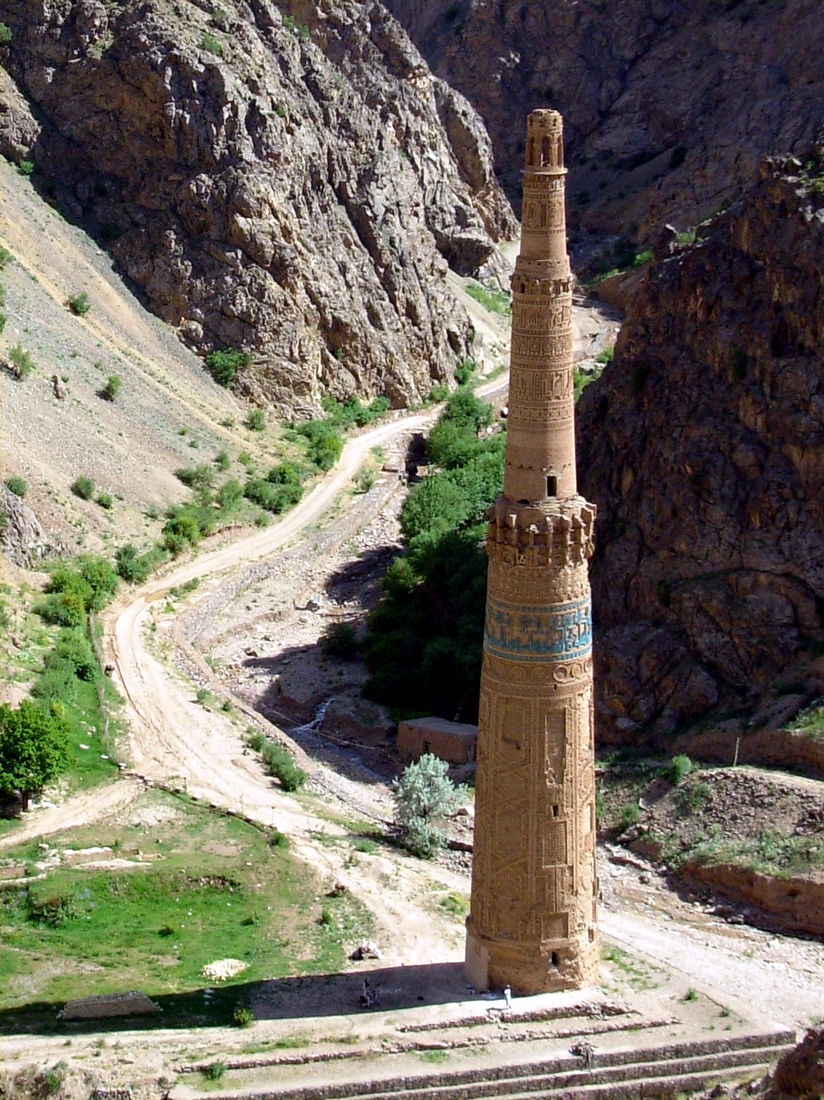
https://upload.wikimedia.org/wikipedia/commons/7/74/Minaret_of_jam_2009_ghor.jpg
I understand there may not be much information because of the long-standing situation in Afghanistan making it hard for archaeologists to work there and the state to protect the area from looters. Is there any recent news about the site itself, any current work that may be currently underway?
1 Answers 2018-02-05
In other words, it would benefit the British to promote Absolutism in Europe since Democracy allowed a superior social order, so to speak, and Britain wanted to have a monopoly on it in the Old World. How accurate, if at all, is that?
1 Answers 2018-02-05
If the question is too vague then more specifically I’m interested in 11th-14th century England, but figured most of Northern and Western Europe would be the same, and was thinking of a lower class working person who lived a stereotypical life of never venturing too far from their own village/town. As I understand it, lower class people such as the Crusaders or Merchants would have come across other races and religions, but what about those who never left their home areas?
1 Answers 2018-02-05
In an episode of the second season, the monk-turned-Viking Athelstan is captured by the Saxons, and crucified for his apostasy in a manner clearly meant to evoke Jesus, complete with a crown of thorns (he gets saved by King Ecbert). Did Christians ever use crucifixion as a punishment for apostates, or was this an invention of the show?
1 Answers 2018-02-05
For a history someone who is outside of this part of Europe all of these are very confusing to me. I need help with understanding but broad strokes are enough for me(at least for now).
1 Answers 2018-02-05
I'm working on tattoo ideas and one in particular to represent the punic wars. All my tattoos represent stories, the punic wars being one of my favorites to tell. The problem is, I have no ideas on what to do for it. I thought of using the classic spqr tattoo or a roman standard. I've even thought of using a roman legions name and symbol but I know so little about legions and the nuances of the Roman armies that I have no where to start. I can't even find roman legions that fought in the punic wars. Any information, especially if I'm going about it all wrong, would be greatly appreciated. For all I know standards were not even used during this time.
Thanks for your time.
1 Answers 2018-02-05
1 Answers 2018-02-05
First of all, if the premise that Napoleon was a unique military leader is debatable, I would love to hear that discussion. I have a "pop" level knowledge of Napoleon and the time period.
Did Napoleon have better technology than his opponents? Did he have a unique way of seeing a battlefield or something? I've always heard he used artillery in a new way, but what does that mean? What did he do?
1 Answers 2018-02-05
For the loss of 494 dead and 1225 wounded the British succeeded in capturing more than a 130000 Italians during this operation, in spite of being outnumbered and on the offense. While I'm aware that the British had superior armor and mobility I'm a little surprised at how easily they dominated the Italians especially considering how for example Japanese soldiers in places like Iwo Jima fought till the end and inflicted tremendous casualties on Allied troops. Was there any particular reason why Italian troops fought so poorly, inflicted such few casualties and surrendered in droves?
1 Answers 2018-02-05
The AskHistorians Podcast is a project that highlights the users and answers that have helped make /r/AskHistorians one of the largest history discussion forums on the internet. You can subscribe to us via iTunes, Stitcher, or RSS, and now on YouTube and Google Play. You can also catch the latest episodes on SoundCloud. If there is another index you'd like the cast listed on, let me know!
This Episode:
In today's episode we hear from u/Sowser about resistance and rebellion in the British Caribbean. Using Jamaica as a case study, we talk about the different uprisings which shaped Jamaican history, both before and after the abolition of slavery. (81 minutes)
Questions? Comments?
If you want more specific recommendations for sources or have any follow-up questions, feel free to ask them here! Also feel free to leave any feedback on the format and so on.
If you like the podcast, please rate and review us on iTunes.
Thanks all!
Previous episode and discussion.
Next Episode: u/AnnalsPornographie is back!
Want to support the Podcast? Help keep history interesting through the AskHistorians Patreon.
2 Answers 2018-02-05