1 Answers 2017-11-01
[deleted]
1 Answers 2017-11-01
What made italian city-states decide to band together to make one nation?
Who were the key people and how did it begin?
Also, how did some city-states cope with the idea of working together with their once bitter enemies?
2 Answers 2017-11-01
[deleted]
1 Answers 2017-11-01
I'm wondering how the colossal amount of information that comes down the pipeline will affect the future of historical study. In the past (esp preindustrial era), only certain pieces of information made it to the present day to be studied. With 3 billion people that are connected to the internet, all making their mark with varying degrees of credibility and quality, will future historians even be capable of sifting through the firehose flow of information? Or will it be easier to find the gems? How do you know what is real and what isn't? Furthermore, what about the real possibility of the physicality of the information failing (e.g. through a server crash or routine data wipes or some freak solar flare incident)?
1 Answers 2017-11-01
Are there any statistics or anything likewise that would tell us which was the primary cause of injury and death during early modern battles? Whether it was the musket or the bayonet that caused more casualties?
1 Answers 2017-11-01
This morning, in response to John Kelly's recent statement about the causes of the Civil War (and how he thinks it isn't slavery), Ta-Nehisi Coates published a rather cheekily titled article: Five Books to Make You Less Stupid About the Civil War. The books are:
I was wondering what the academic community thinks of this list. You can see all the reasons that Coates' lays out for these choices in the article itself, but it is worth saying that he specifically notes:
In making this list I’ve tried to think very hard about readability, and to offer books you might actually complete. There are a number of books that I dearly love and have found indispensable that are not on this list. (Du Bois’s Black Reconstruction in America immediately comes to mind.) I mean no slight to any of those volumes. But this is about being less stupid. We’ll get to those other ones when we talk about how to be smart.
3 Answers 2017-11-01
4 Answers 2017-11-01
Until very recently, sleep has been a big stumbling block in Psychology. There didn't seem to be a compelling reason to sleep besides "We get sleepy". (That still holds mostly true, though it seems that sleep also helps with homeostasis in glia cells)
Did medieval doctors have any theories on the purpose of sleep? Were there any thoughts on how/how much one should sleep? Or simply why one should sleep?
1 Answers 2017-11-01
Have they enacted any policies that could be associated with socialism today like price controls, non-military public works, encouragement of unionization, labor laws with stuff like maternal leave, public healthcare, public education etc. Generally, what is the best case for "Nazis were socialists"?
1 Answers 2017-11-01
Why the notion of 'first professional army' in the world it is atributed to the romans when the macedonians under Phillip (father of Alexander) introduced full-time occupation in the military much earlier. The roman legionaries were more 'professional' than macedonian soldiers of Philip and Alexander's ?
1 Answers 2017-11-01
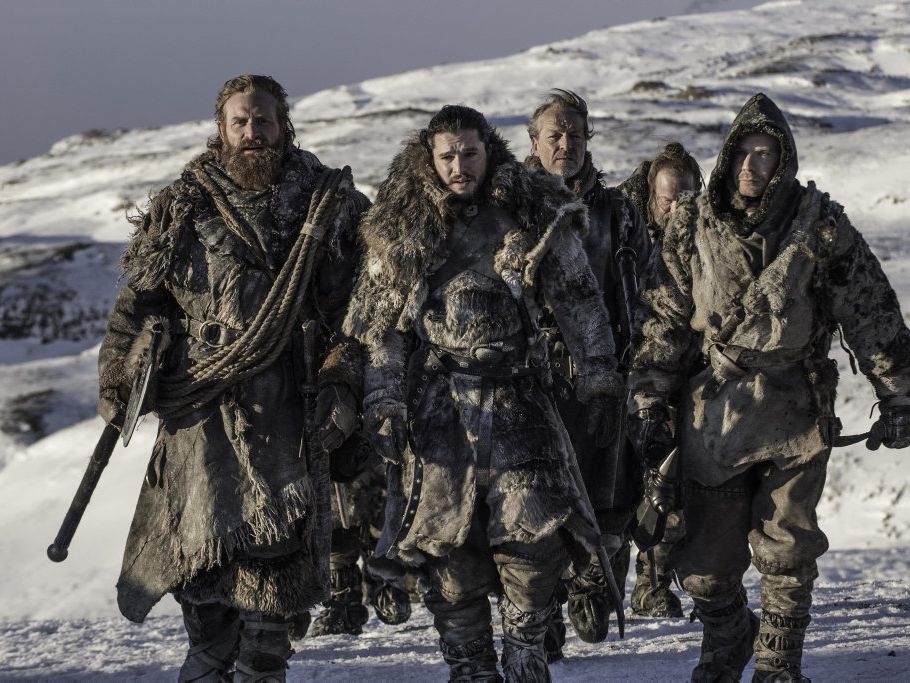
To provide some context, here are some photos from S7E6.
No one is wearing a hat and only Gendry is wearing a hood.
Another photo of some of the same characters but no one is wearing a hat or hood.
Daenerys in winter clothing but she isn't wearing anything to keep her head warm.
1 Answers 2017-11-01
1 Answers 2017-11-01
Reposting this with help from u/jschooltiger so it does not fall into speculation.
Basically I want to know if there are any existing plan on how the relations between Nazi Germany, Fascist Italy, and Imperial Japan would be with each other if they won the war. Hopefully someone can help me.
1 Answers 2017-11-01
This weekly feature is a place to discuss new developments in fields of history and archaeology. This can be newly discovered documents and archaeological sites, recent publications, documents that have just become publicly available through digitization or the opening of archives, and new theories and interpretations.
1 Answers 2017-11-01
1 Answers 2017-11-01
1 Answers 2017-11-01
Why is it that Continental forces typically used Brown Bess muskets as opposed to the home-produced Pennsylvania Long Rifle? If it had superior range and was not imported than why not exploit this as an advantage in massive use over the British? (As opposed to individual rifle regiments)
2 Answers 2017-11-01
Having read Christopher Hill's The World Turned Upside Down, It seems to me that the Common people pretty much hated King Charles I, and even the institution of the monarchy itself. However, I've also read that King Charles II was quite liked by the Common people, and the longevity of the british monarch made me doubt of the prevalence of the impopularity of the monarchy as an institution in that period. Can anyone shed a light on the subject?
1 Answers 2017-11-01
As I understand it, Rome did not have a police force as we understand it. Does that mean that the local legion enforced the laws? Or was it strictly by application from the aggrieved?
What I mean is, if a body turned up after a tavern brawl over some loaded dice, would anybody "investigate"?
Or if, say, a tradesmen was killed by a robber, would anybody official try to catch the robber, or would it be up to the tradesman's family to track down the offender, accuse him of his crime, and demand restitution?
1 Answers 2017-11-01
I've seen this rather weird explanation of the witches-flying-on-broomsticks trope a few times, most recently in this article.
Is there any reason to think it is accurate?
1 Answers 2017-11-01
I've been reading the updated edition of "Chronicle of the Mayan Kings and Queens" and it struck me that while warfare-related events are one of the key things recorded on stelae and other monuments the how isn't recorded there. I have a bunch of questions on the details of Mayan warfare but I'd love to hear any answers that would apply to the Triple Alliance, Teotihuacan, or whoever else:
What do we know about how wars started? (e.g. were messengers sent back and forth with threats? were there initial surprise raids? were there formal declarations of hostilities before battle?)
What do we know about the mechanics of battles themselves? (e.g. was there a designated 'field of combat' or was it smaller skirmishing? Were all participants members of the elite families or were there others? Did battle start with a volley of atlatls and then descend into a confused melee or was it more champion vs champion?)
What do we know about preparation? (e.g. Holy Lords and other nobles seem to have been the primary combatants, did they have specific training regimes that we know about? Who made the spears, knives, and war clubs, were they regular artisans who were making war materiel or dedicated armorers? How long did campaigns last, most communities were only a few days travel away, and it looks like some rulers achieved victories over multiple foes within just a few months?)
1 Answers 2017-11-01
I decided to do some research on politics and the origin of the Republican and democratic parties the other day. I was looking at a site that basically compared he two parties and even showed the popularities of each party by race and gender. I had learned that the Republican Party was formed and they were the driving force that helped abolish slavery, alongside Abraham Lincoln. The site also said that 90+% of African Americans today are democratic (that party was pro slavery at the time for the most part I guess). So I guess my question is how did the parties get so re-arranged? Why is it such a vile thing to be considered a Republican, other than the president sitting in office currently? I’m genuinely interested in informative answers, wasn’t sure if I should post this here or somewhere else. Thanks!
Source: http://www.diffen.com/difference/Democrat_vs_Republican
1 Answers 2017-11-01