1 Answers 2017-09-13
Growing up in the public school system of the American South, I was given a portrait of Caesar in school that was bordering on demonic, the worst of all history's tyrants. It seems like most people (those that I've encountered in my cultural surroundings) have roughly this opinion about him. He seems to be kind of the standard against which tyrannical people are judged.
A while back I read Colleen McCullough Masters of Rome historical fiction series and while I certainly recognize that her version is awfully rosy, it got me wondering about our cultural assumptions around him. So my question for all you historians is not so much about how accurate her books were but more about the line between history and very old propaganda and how that affects cultural assumptions. In this one case, anyway.
Completely Made-up Example to illustrate my question more clearly: If Caesar had enacted Policy X which made life substantially better for 95% of Romans and people living in Roman territories, but the other 5% are the ones who wrote down the most things which have survived, couldn't we still have ended up telling each other of his villainy simply because those are the voices history can hear?
Corollary: How likely is it that the idea of Caesar as a figure of tyranny and sinister action is really just based on the opinion of a relatively small group of super wealthy Roman equivalent of PAC donors whom his policies did not benefit or actively harmed?
If it were possible to poll the entire population of Rome at the time asking if Caesar or the Wealthy Aristocracy were the sinister ones, do we have any good historical basis for guessing what they might say?
Is it possible that we treat Caesar inaccurately systemically (if we even do) based on the political motivations of people at the time and furthered by a series of people and cultures since who latched onto that version of the story for similar political reasons?
Do we see the systemic cultural assumptions about him change through history? Have some cultures or eras framed him as the good guys and the Optimates as the villains? Do we have reason to suspect that one version is more true than the other?
And, finally, do those views shift back and forth within the ancient historian community or is the opinion stable? Is it the case that currently most all subscribe to one side but that 50 years ago it was another way? And 75 years before that? Or do most historians more or less since he died feel that one side is more accurate than the other? Is there anything resembling a consensus opinion on things like this?
1 Answers 2017-09-13
What is the significance I am missing? Most of these men are never mentioned again, yet a considerable amount of effort is made in their descriptions.
4 Answers 2017-09-13
Was it simply considered more prudent to hide the scale of the undertaking? Necessary to divide the work up in some sort of twisted version of distributed lethality? Ease strain on rail transport across wide areas? Other contemporary camp complexes evolved into mixed work and death camps like the obvious in Auschwitz-II, or Chelmno. So why set up whole new camps like Treblinka to run them for only a year or so? Was it simply to avoid disruption or needless questions from additional activity at existent camps, and to make the cleansing of the sites easier once the killing was wound down?
Did it simply grow out of the locally organized widespread mass killings in Poland and Eastern Europe that predated the official Final Solution?
1 Answers 2017-09-13
From "Great Issues in American History" by Richard Hofstadter, I read a piece called "French Diplomatic Correspondence on the Degree of Dissatisfaction of the North American Colonies" which basically suggests this happening. Any other info I could read on this?
1 Answers 2017-09-13
(Okay, I tried searching for any relevant previous answers, but... it's difficult even to guess what search terms might bring up the relevant post, to say nothing of the potato-quality search engine issue...)
A post from another subreddit led me to uncovering this older piece from the now sadly-defunct The Toast. It's obviously a humor piece (and a good one), but it does lead one to wondering, and in my case, wondering in particular about the second and third images in the post. The implication from the post is that they are medieval depictions of Alexander the Great. In two distinct images, he-- if these are real pieces, and they depict Alexander-- is shown conducting some sort of underwater exploration in a submersible container.
Beyond the general "wtf", the questions which come to mind:
Do these images look to be real (not made up for the purposes of the satirical piece) ancient depictions of Alexander the Great, and... is he really being depicted in some sort of submersible?
If so, then where on earth would the notion for such an image have come from? I'm presuming-- perhaps incorrectly-- that there is no way the historical record supports such an event actually happened. If that is correct, and this depicts a legendary/non-historical event, do we have any other indications of the source of such a story?
If this isn't too far afield/broad for this inquiry, do we have any insight into why the creators of these pieces would have wanted to depict Alexander the Great in this fashion? Who is Alexander the Great to these (presumably Christian) monks that they would depict his mythic/legendary status in such a weird and glorifying manner?
Okay, that's what I've got.
1 Answers 2017-09-13
Everyone has heard of Europeans bringing small pox to the Americas, and likely returned with syphilis, but were there any other major outbreaks caused by foreign settlers/explorers/merchants, etc..?
1 Answers 2017-09-13
World War 1 has seen a resurgence in popular interest lately (thanks to Battlefield 1 and other new pieces of media) which leads me to ask why this extremely violent and bloody conflict has taken on such a romanticized depiction.
From what I understand, hardly any of the powers that got involved in the conflict achieved what they wanted out of it, or they achieved their aims through Pyrrhic victories that devastated the countries for decades. Not to mention that many of the postwar treaties (Trianon and Versailles in particular) laid the groundwork for World War II's justifications.
In light of this, when did we start to see more romanticized renderings of the war and the suffering of its soldiers? Did it happen immediately afterwards? During the war? Several decades later in light of World War II's atrocities?
1 Answers 2017-09-13
1 Answers 2017-09-13
This might sound dumb but I am really curious
1 Answers 2017-09-13
1 Answers 2017-09-13
I think i gonna do a ama of him because he is sick and i dont think he will live anylonger sadly but he is a hero of the gpw and one of the last surviving infantry and i cant let his memory fade but i think he may be pulling my leg so what is the survival chance
2 Answers 2017-09-13
I was reading the other day about Hengist and Horsa and beyond from Anglo-Saxon history/pseudo-history and came across a term (now forgotten) whereby some believe that the ancient gods of the Germanic and Scandinavian mythology were once great men/women who had ascended to godhood, just wanted to know if anyone knew this term
1 Answers 2017-09-13
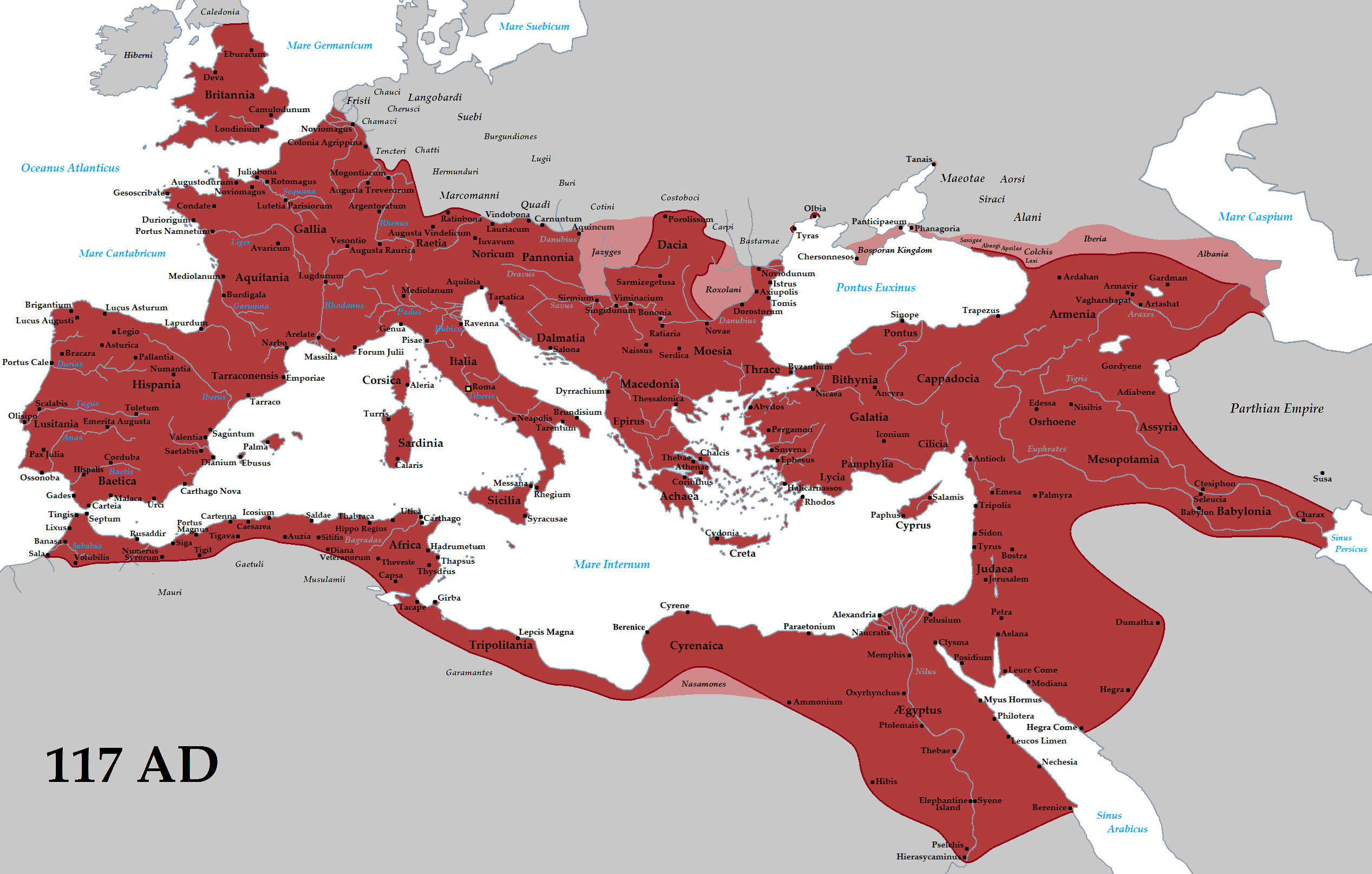
This is something Im always confused about. We accept that this was the Roman Empire, but what determined this in their time? Did they just lay claim and say, "Everything up to this river is ours?" Did the people even know they were "roman"?
Or was it a more practical reason? Like they had military forces in this area?
Or are these borders sort of made up but us? That historians kind of "fill in the bubbles" to show the empires actual influence. But that those in their time didnt view the borders this way.
1 Answers 2017-09-13
1 Answers 2017-09-13
So as far as I know, Sparta was governed by a council of elders who were elected by an assembly of freedmen over 30. Wouldn't this make it a democracy, considering that seemingly anyone could join the assembly as long as they were free and old enough? It doesn't seem all that different from Athens, which is considered a democracy. Is there some link I'm missing here?
2 Answers 2017-09-13
1 Answers 2017-09-13
I'm really coming here out of desperation. I've tried the library, and even asked a teacher for aid. Does anyone know what this citation refers to? The citation came from the book "A history of the goths" by Herwig Wolfram
Edit: added book and author
3 Answers 2017-09-13
1 Answers 2017-09-13
I started watching Vikings this morning and thought, man, it's cold as balls in Scandinavia, and this lady is fishing in a river, in a dress. Was it more practical for carrying items, was it actually warmer to wear layers of skirts (though that seems cumbersome) or was it just expected culturally?
2 Answers 2017-09-13
I noticed this had been asked once or twice before, but no one was able to answer it. I thought I'd give this question another chance.
2 Answers 2017-09-13
Could it happen again?
1 Answers 2017-09-13
For centuries Southern Egypt was one of the most significant centers of culture on Earth, be it from the New Kingdom to the 25th Dynasty, Egyptian civilization extended to the far south of the Nile. But during the from Classical Antiquity and on, it seems to have become a backwater. From the Persians to the Ptolemeics to the Romans, none of these great civilizations conquered far beyond the First Cataract. Why is this? What was going on there during this time?
2 Answers 2017-09-13