1 Answers 2022-03-14
How did Mussolini react to the assassination of Dollfuss?
1 Answers 2022-03-14
Obviously photography makes this style of art a lot easier to produce, but it’s not like artists had been without visual aids before it. Surely it wouldn’t have been impossible to produce a very realistic painting with the use of just one’s eyes? Even if just of a still subject under consistent lighting?
1 Answers 2022-03-14
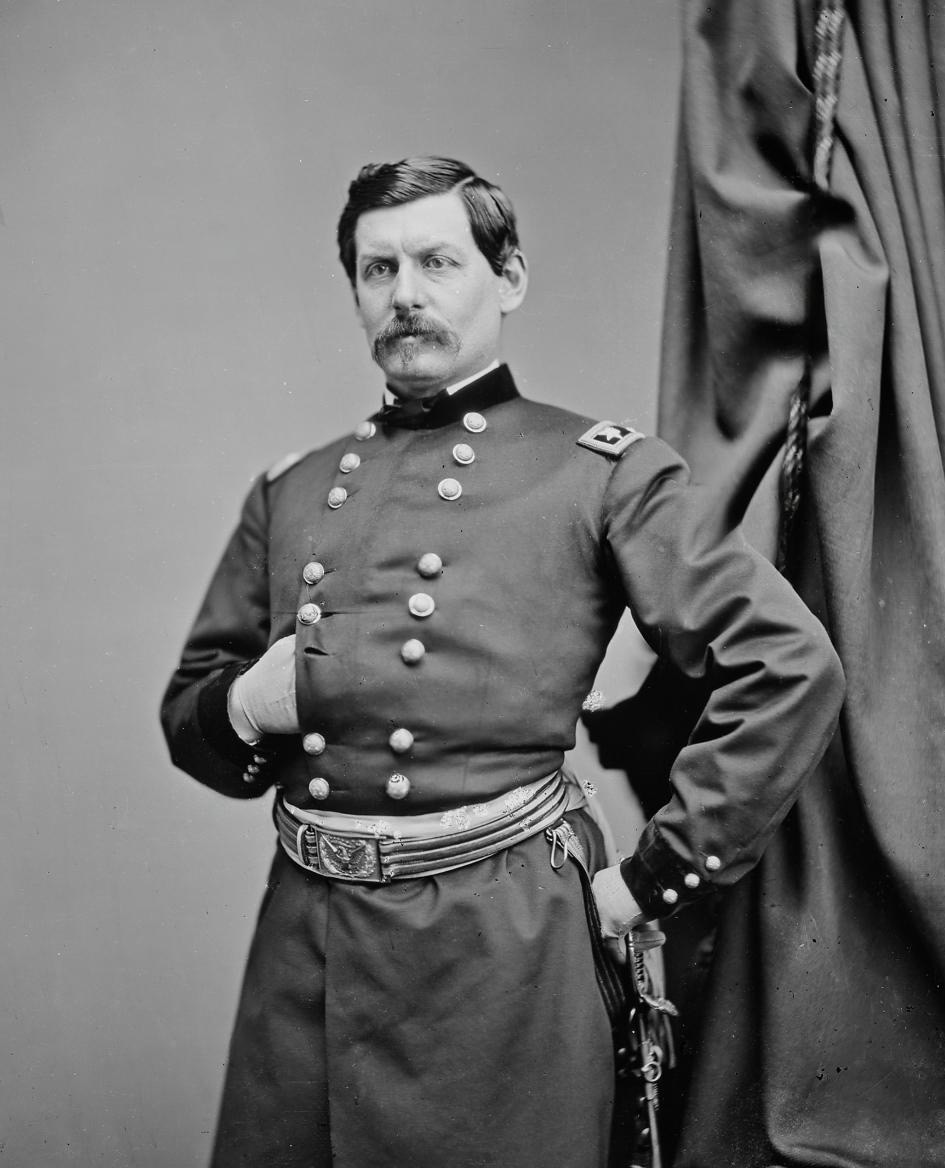
https://upload.wikimedia.org/wikipedia/commons/4/4d/George_B_McClellan_-_retouched.jpg is an example. I never understood the reasoning for this. I think Napoleon did it as well, so it predates the Victorian era.
1 Answers 2022-03-14
Hi Guys,
I'm a soon to be an Historian in modern history. I'm writing my thesis (on war on drugs) while I'm writing those lines.
I've stumbled on an assertion : "Historically, the cornerstone of United States policy is the suppression of illicit drugs at the drug trails' origin" (Fishburne ; 1993).
I'd like to know, where does this doctrine come from, when it was decided and by whom ?
I can't find the origin of it. Do you have any idea ? I just need to be point at the right document or source.
Thanks a lot.
1 Answers 2022-03-14
1 Answers 2022-03-14
1 Answers 2022-03-14
Groups of people who believed that the individual is the vital unit of society, and that the fulfilment of the individual is paramount (rather than subjugation of the individual for the family unit/community).
In Ottoman Hungary, apparently holdouts lived in swamps where they rejected monarchic cultural mores. I wonder if we have record of equivalent in China. Often people speak of China as if everyone universally and truly believed in Confucius's views that the individual is worthless, and must serve the community.
1 Answers 2022-03-14
Do my peers and I know the gravity of what the bomb could mean or are we upbeat about it? How am I treated as a female admin in WW2?
1 Answers 2022-03-14
How did soldiers and commissioned officers during the early Medieval period actually learn how to conduct wars? Were they just thrown into battles and learned that way? Were there military academies? Were talented soldiers tutored?
1 Answers 2022-03-14
I heard somewhere that the stereotipical Indian society of the North American Wild West - nomadic hunter-gatherer tribes, living in tents, hunting for bulls, fighting each other with thomahawks - is not what the Wild West has been before the Europeans arrived.
This comment stated that prior to Europeans, there were "proper" civilizations in North America in the European sense: proper kingdoms/countries with territory, towns, and organized infrastructure, like the Inca were in Middle America. Then, with the Europeans, the well-known plague came that killed as much as 70-90% of the population, resulting in the total collapse of these civilizations. That, mixed with tge introduction of the European horses, resulted in a Mad-Max-like post-apocalyptic scenario, with tribes forming from the remaining population, and nomading around on horseback, and we got to know this as the Indian civilization.
To what extent is this correct? What do we know about the existence and the collapse of these organized societies? How much did the plague actually change the life and culture of the Northern American Indians?
2 Answers 2022-03-14
It is popular on Reddit to repeat that the third largest population of Ukrainians is in Canada. Logically you would think it would likely be another European country as Poland is a close 4th. What is the historical context for the large population of Ukrainians in Canada?
1 Answers 2022-03-14
It is widely considered (at least, I frequently read such opinions) that nuclear bombings of Hiroshima and Nagasaki were one of the biggest factors in Japan surrendering when it did, and not after US invaded Honshu and captured Tokyo. Is that true? What other factors were there, and how much they contributed to it?
1 Answers 2022-03-14
Hello and good morning,
The title is kinda tongue-in-cheek but I’m quoting directly from /u/sirophiucus’s answer on medieval tropes in fantasy literature, which I just read (and loved!).
I would like to know you historians’ point of view on whether middle earth in Tolkien’s works could be described as “medieval” in a historical sense?
I know this isn’t a discussion of the highest importance, nor very new, but it might be entertaining and interesting to have it here (again?).
Have a nice day!
Tglaf
1 Answers 2022-03-14
1 Answers 2022-03-14
In the movie "Enemy at the Gates", Commisar Danilov states "Here the men's choices is between German bullets and ours(Russians)"... Infact, in the initial scenes of the movie it's been depicted that Russian soldiers who attempted to return to their base after most of their comrades fall to the German bullets, were shot dead by their own people...
How common was this practice in war times across the globe?
Was it common in ancient wars too..? (Such as during the era of Romans, Egyptians & Persians)
Did mediaeval times bring any change to this practice (if it existed earlier)?
Was there any religious influence against the retreaters?
How did this practice come to an end in modern era?(hoping it did)
Is there any countries / fighting groups where retreaters meet with the same consequences?
1 Answers 2022-03-14
Sword fighting was taught even during the American civil war. When did soldiers phase out the training for it?
1 Answers 2022-03-14
Hey hey,
apparently it's daylight savings time again and that got me wondering if the Romans had time zones? Which got me wondering when time zones became a thing...
I mean.. I could google it, but where's the fun in that?
1 Answers 2022-03-14
Growing up in Canada as I did, I often heard from here and there how the German soldiers of WW2 feared and respected the Canadian soldiers because of their tenacity, skill, and grit, and that this reputation had come from the efficiencies and abilities of Canadian soldiers during WW1.
Some have said that the Canadians were recognized as some of the best soldiers the British Empire had, and others have said that the term and concept of the original German stormtroopers of WW1 was based off of Canada’s successful usage of the ‘creeping barrage’ as made famous at the Battle of Vimy Ridge.
But is there any truth to any of this from recorded statements or other documented evidence as given by German soldiers and officers in either conflict? Is this a genuine truth of Canadian military history, or is it a puffed-up nationalistic narrative?
Additionally, are there any notable written statements/recorded interviews/etc. from German veterans recalling their experiences with Canadian soldiers which would support the claims made above? And overall, what was the general German sense towards Canada during WW2? And what were Nazi Germany’s diplomatic relations like with Canada?
I can’t think that the Germans held any particular contempt for Canada even then, not only since Germans had long been a notable ethnolinguistic group in Canada for generations by that point, but also because many thousands migrated to Canada in the immediate aftermath of WW2 for a better life.
1 Answers 2022-03-14
1 Answers 2022-03-14
I once read some Sci fi book where the idea that as new land becomes available, birth rates increases in the new lands and thus the net global population increases faster than it otherwise would have. When Europeans colonized the New World, the global population jumped, despite the fact that lots of native people were killed, because of the fast population growth in the colonies.
In the book that was extrapolated to extrasolar colonies where the population grew very quickly from the initial colonizers.
So, has colonization of new lands historically lead to a global population increase? I realize the question is complicated by the various genocides committed by colonizers, but perhaps it's possible to answer anyway.
And are there non-coloniam examples of the underlying question of whether new land leads to population increases?
Thanks!
1 Answers 2022-03-13
As per: https://blog.english-heritage.org.uk/women-written-history-interview-bettany-hughes/
As someone who is currently doing an MA degree related to history I was wondering to what extent this is true and/or misleading. As Dr. Hughes' post gives no "workings" related to the statement and I can only find her as the original one stating this statistic, I am apprehensive about the validity.
I of course understand that women have often lacked any significant historical record, but in my "ancedotal" experience (a poor source I know) this percentage would be higher, albeit only a few. This might be due to modern historical pedagogy encouraging wider source equality, or something else entirely.
Any insight would be greatly appreciated!
Edited: a few typos
2 Answers 2022-03-13
I feel like I’ve noticed that in the few decades following the 60’s and 70’s when stark social, political and cultural change was made that we had this increase in commodification, misogyny, homophobia etc. and it seems like it could have in part been due to the backlash against the how the “counterculture” eventually become more mainstream culture.
I also assume that technology influenced this but I am just wondering what at least some of the exact things are that contributed to how the counterculture/progress/“hippie” type of movement became less popular in the 80’s and beyond.
I think it’s interesting that in the last few years a lot of these progressive ideals have started to become popular again.
1 Answers 2022-03-13