Last week I visited the brilliant gallery of House of MinaLima in London. As a huge fan of the artwork displayed there I always wanted to look more into what were the sources of the things they sometimes use.
What really caught my attention were two manuscripts that were used in the backgrounds of some of the graphics there.
There was also another one which was more in format of the table but still looked like a manuscript to me.
Here are the photos: http://imgur.com/a/u09Yr
1 Answers 2017-07-03
Seems most people think it was canceled due to flooding by the Germans or because of German Naval Presence. Can anyone confirm the story behind this?
1 Answers 2017-07-03
I've always wondered this. Did critics just need time to soak it in, or did society's opinions change on a macro scale about what makes good music (or any type of media for that matter) and did that affect it?
1 Answers 2017-07-03
For example; I'm reading about Dallas Stoudenmire and some of his gunfights are very detailed in writing. Similar events during this period seem very detailed versus other periods.
1 Answers 2017-07-03
1 Answers 2017-07-03
I had a great history Professor back in college. IANAH, but life-long novice student of it. Today, I posted his comment I remembered from my class on European history about The Holy Roman Empire, and posted it to a map of The HRE in /r/mapporn. This has lead to downvotes. I am asking here how accurate that statement by my Professor was.
1 Answers 2017-07-03
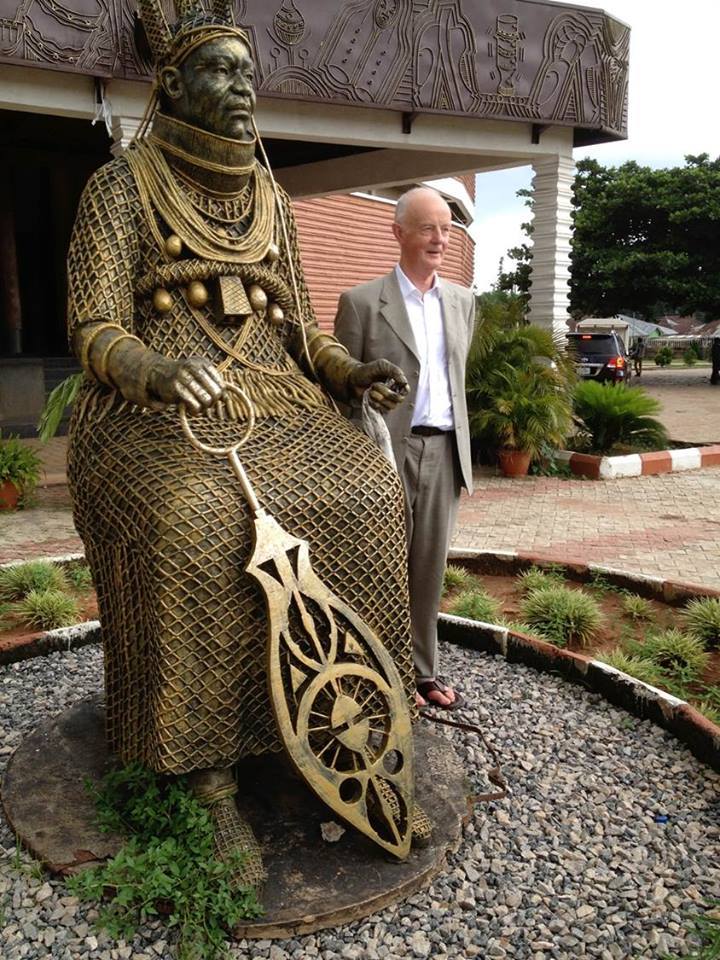
First of all, there's this picture which was posted in an article about bronze statues being returned to Nigeria. This one looks too good to be true to be honest.
Then, there are those two busts. These actually look fairly believable, but still, the degree of realism is incredible.
So, are those statues authentic ? When were they constructed, and can we guess who they represent ?
1 Answers 2017-07-03
I'm sure it was an even more brutal and tedious task than I imagine, given we're talking about a world that has not yet industrialised.
Sawing down trees is one thing, but dealing with fields of giant tree stumps and root systems is entirely another!
1 Answers 2017-07-03
And as a follow-up: are there any historical mistakes in the play due to his use of sources?
And of course I meant: do we have any idea...
2 Answers 2017-07-03
The Zimmermann Telegram exposed Germany's plan to persuade Mexico to keep the US busy, and as we know, this might have provoked the entry of US into WWI. However, what exactly made Zimmermann or perhaps the German Empire in general believe that Mexico had the military capability and willpower to effectively tie up the United States?
Furthermore, after the interception of the telegram, why did Zimmermann publicly admit at least twice that he sent the telegram? Germany could have waited for the anti-war and anti-British elements in the US to dismiss the telegram as a British forgery to drag the US into WWI and avoided the entry of a new formidable enemy, but Zimmermann's confession clearly vouched for the telegram's authenticity. What could be the reason why Zimmermann made this confession even at the risk of provoking the US to fight Germany?
I could not explain either of these questions no matter what angle I take, but I refuse to simply dismiss this as pure stupidity. I think there must be something that I'm not seeing. Any answer and thought are appreciated. Thanks!
EDIT: Corrected few grammar errors and added few details
3 Answers 2017-07-03
1 Answers 2017-07-03
African history (except Egypt/Sudan) is a real blank in my knowledge which is pretty frustrating because I have read/watched a lot about Western Europe/Asia/South America etc.
This book: https://www.amazon.co.uk/PRECOLONIAL-BLACK-AFRICA-Comparative-Political/dp/1556520883 has given me a nice brief overview (Ancient Ghana, Ancient Burkini Faso etc.) but I am hungry for more. I would like to know about the political structures of tribes but preferably kingdoms, societal structures, specific rulers, economy, their relationship with the outside world, mythology, daily life etc.
A lot of books that are coming up are old and they are far and few between. I'm finding getting the information I need quite difficult.
3 Answers 2017-07-03
[deleted]
1 Answers 2017-07-03
Upvote the answer(s) that you liked best this month. Submit ones which you don't see included but consider worthy!
14 Answers 2017-07-03
I specifically mean war started for religious reasons rather than war that change the religion of a place after a war.
1 Answers 2017-07-03
1 Answers 2017-07-03
They're hardly the only hereditary leaders of an Islamic sect. The family of al-Wahhab is rich too, but they've got the Saudi state backing them. Where did the Aga Khan's money come from?
1 Answers 2017-07-03
I’m on a bus in southern Spain headed to Granada. The area is arid, rocky, and quite hilly. It made me wonder if ancient armies, particularly the Romans, marched with their armor on, or was it carried by pack horses / mules? Movies always depict the Romans marching fully geared for war, but that seems rather inefficient and exhausting.
Thanks guys!
1 Answers 2017-07-03
“Only the victims of other genocides suffer” (Churchill, 1997, p. XVIII).
Ta'c méeywi (Good morning), everyone. Welcome to another installment of Monday Methods. Today, I will be touching on an issue that might seem familiar to some of you and that might be a new subject for some others. As mentioned in the title, that subject is the American Indian (Native American) Genocide(s) and how to combat the denial of these genocides. This is part one of a two part series. Find part two here.
The reason this has been chosen as the topic for discussion is because on /r/AskHistorians, we encounter people, questions, and answers from all walks of life. Often enough, we have those who deny the Holocaust, so much to the point that denial of it is a violation of our rules. However, we also see examples of similar denialism that contributes to the overall marginalization and social injustice of other groups, including one of the groups that I belong to: American Indians. Therefore, as part of our efforts to continue upholding the veracity of history, this includes helping everyone to understand this predominately controversial subject. Now, let's get into it...
In the United States, an ostensibly subtle state of denial exists regarding portions of this country's history. One of the biggest issues concerning the colonization of the Americas is whether or not genocide was committed by the incoming colonists from Europe and their American counterparts. We will not be discussing today whether this is true or not, but for the sake of this discussion, it is substantially true. Many people today, typically those who are descendants of settlers and identify with said ancestors, vehemently deny the case of genocide for a variety of reasons. David Stannard (1992) explains this by saying:
Denial of massive death counts is common—and even readily understandable, if contemptible—among those whose forefathers were perpetrators of the genocide. Such denials have at least two motives: first, protection of the moral reputations of those people and that country responsible for genocidal activity . . . and second, on occasion, the desire to continue carrying out virulent racist assaults upon those who were the victims of the genocide in question (p. 152).
These reasons are predicated upon numerous claims, but all that point back to an ethnocentric worldview that actively works to undermine even the possibility of other perspectives, particularly minority perspectives. When ethnocentrism is allowed to proliferate to this point, it is no longer benign in its activity, for it develops a greed within the host group that results in what we have seen time and again in the world—subjugation, total war, slavery, theft, racism, and genocide. More succinctly, we can call this manifestation of ethnocentric rapaciousness the very essence of colonialism. More definitively, this term colonialism “refers to both the formal and informal methods (behaviors, ideologies, institutions, policies, and economies) that maintain the subjugation or exploitation of Indigenous Peoples, lands, and resources” (Wilson & Yellow Bird, 2005, p. 2).
Part of combating the atmosphere of denialism about the colonization of the Americas and the resulting genocide is understanding that denialism does exist and then being familiar enough with the tactics of those who would deny such genocide. Churchill (1997), Dunbar-Ortiz (2014), and Stannard (1992) specifically work to counter the narrative of denialism in their books, exposing the reality that on many accounts, the “settler colonialism” that the European Nations and the Americans engaged in “is inherently genocidal” (Dunbar-Ortiz, 2014, p. 9).
To understand the tactics of denialism, we must know how this denialism developed. Two main approaches are utilized to craft the false narrative presented in the history text books of the American education system. First, the education system is, either consciously or subconsciously, manipulated to paint the wrong picture or even used against American Indians. Deloria and Wildcat (2001) explain that:
Indian education is conceived to be a temporary expedient for the purpose of bringing Indians out of their primitive state to the higher levels of civilization . . . A review of Indian education programs of the past three decades will demonstrate that they have been based upon very bad expectations (pp. 79-80).
“With the goal of stripping Native peoples of their cultures, schooling has been the primary strategy for colonizing Native Americans, and teachers have been key players in this process” (Lundberg & Lowe, 2016, p. 4). Lindsay (2012) notes that the California State Department of Education denies genocide being committed and sponsored by the state (Trafzer, 2013). Textbooks utilized by the public education system in certain states have a history of greatly downplaying any mention of the atrocities committed, if they're mentioned at all (DelFattore, 1992, p. 155; Loewen, 2007).
The second approach occurs with the actual research collected. Anthropologists, scholarly experts who often set their sights on studying American Indians, have largely contributed to the misrepresentation of American Indians that has expanded into wider society (Churchill, 1997; Deloria, 1969; Raheja, 2014). Deloria (1969) discusses the damage that many anthropological studies have caused, relating that their observations are published and used as the lens with which to view American Indians, suggesting a less dynamic, static, and unrealistic picture. “The implications of the anthropologist, if not all America, should be clear for the Indian. Compilation of useless knowledge “for knowledge’s sake” should be utterly rejected by Indian people” (p. 94). Raheja (2014) reaffirms this by discussing the same point, mentioning Deloria’s sentiments:
Deloria in particular has questioned the motives of anthropologists who conduct fieldwork in Native American communities and produce “essentially self-confirming, self-referential, and self-reproducing closed systems of arcane ‘pure knowledge’—systems with little, if any, empirical relationship to, or practical value for, real Indian people (p. 1169).
To combat denial, we need to critically examine the type of information and knowledge we are exposed to and take in. This includes understanding that more than one perspective exists on any given subject, field, narrative, period, theory, or "fact," as all the previous Monday Methods demonstrate. To effectively combat this denialism, and any form of denialism, diversifying and expanding our worldviews can help us to triangulate overlapping areas that help to reveal the bigger picture and provide us with what we can perceive as truthful.
A number of scholars and those of the public will point out various other reasons as to the death and atrocities that occurred regarding the Indians in the Americas. Rather than viewing the slaughter for what it is, they paint it as a tragedy; an unfortunate, but inevitable end. This attitude produces denial of the genocides that occurred with various scapegoats being implemented (Bastien et al., 1999; Cameron, Kelton, & Swedlund, 2015; Churchill, 1997).
One of the reasons they point to and essentially turn into a scapegoat is the rapid spread and high mortality rate of the diseases introduced into the Americas. While it is true that disease was a huge component into the depopulation of the Americas, often resulting in up to a 95% mortality rate for many communities (Churchill, 1997, p. XVI; Stannard, 1992; Dunbar-Ortiz, 2014, pp. 39-42), these effects were greatly exacerbated by actions of colonization. David Jones, in the scholarly work Beyond Germs: Native Depopulation in North America (2016), notes this in his research on this topic when he states, ". . .epidemics were but one of many factors that combined to generate the substantial mortality that most groups did experience" (pp. 28-29). Jones also cites in his work Hutchinson (2007), who concludes:
It was not simply new disease that affected native populations, but the combined effects of warfare, famine, resettlement, and the demoralizing disintegration of native social, political, and economic structures (p. 171).
The issue with focusing so much on this narrative of "death by disease" is that it begins to undermine the colonization efforts that took place and the very intentional efforts of the colonizers to subjugate and even eradicate the Indigenous populations. To this notion, Stannard (1992) speaks in various parts of this work about the academic understanding of the American Indian Genocide(s). He says:
Scholarly estimates of the size of the post-Columbian holocaust have climbed sharply in recent decades. Too often, however, academic discussions of this ghastly event have reduced the devastated indigenous peoples and their cultures to statistical calculations in recondite demographic analyses" (p. X).
This belief that the diseases were so overwhelmingly destructive has given rise to several myths that continue to be propagated in popular history and by certain writers such as Jared Diamond in his work Guns, Germs, and Steel (1997) and Charles Mann's 1491 (2005) and 1493 (2011). Three myths that come from this propagation are: death by disease alone, bloodless conquest, and virgin soil. Each of these myths rests on the basis that because disease played such a major role, the actions of colonists were aggressive at worst, insignificant at best. Challenging this statement, Dunbar-Ortiz (2014) draws a comparison to the Holocaust, stating:
In the case of the Jewish Holocaust, no one denies that more Jews died of starvation, overwork, and disease under Nazi incarceration than died in gas ovens, yet the acts of creating and maintaining the conditions that led to those deaths clearly constitute genocide (p. 42).
Thus solidifying the marked contrast many would make regarding the Holocaust, an evident that clearly happened, and the genocides in North America, one that is unfortunately controversial to raise.
The Papal Bull (official Church charter) Terra Nullius (empty land) was enacted by Pope Urban II during The Crusades in 1095 A.D. European nations used this as their authority to claim lands they “discovered” with non-Christian inhabitants and used it to strip the occupying people of all legal title to said lands, leaving them open for conquest and settlement (Churchill, 1997, p. 130; Davenport, 2004; Dunbar-Ortiz, 2014, pp. 230-31).
While numerous other Papal Bulls would contribute to the justification of the colonization of the Americas, this one worked toward another method that made its way down to our day. Going back to Stannard (1992), he criticizes other scholars purporting this notion:
Recently, three highly praised books of scholarship on early American history by eminent Harvard historians Oscar Handlin and Bernard Bailyn have referred to thoroughly populated and agriculturally cultivated Indian territories as "empty space," "wilderness," "vast chaos," "unopen lands," and the ubiquitous "virgin land" that blissfully was awaiting European "exploitation”. . . It should come as no surprise to learn that professional eminence is no bar against articulated racist absurdities such as this. . . (pp. 12-13).
This clearly was not the case. The Americas were densely population with many nations spread across the continents, communities living in their own regional areas, having their own forms of governments, and existing according to their interpretation of the world. They maintained their own institutions, spoke their own languages, interacted with the environment, engaged in politics, conducted war, and expressed their dynamic cultures (Ermine, 2007; Deloria & Wilkins, 1999; Jorgensen, 2007; Pevar, 2012; Slickpoo, 1973).
Similar to Holocaust denialism, critics of the American Indian Genocide(s) try to claim that the United States, for example, was just trying to "relocate" or "remove" the Indians from their lands, not attempting to exterminate them. Considering how the President of the United States at the time the official U.S. policy was set on removal was known as an “Indian Killer” (Dunbar-Ortiz, 2014, p. 96; Foreman, 1972; Landry, 2016; Pevar, 2012, p. 7), for example, many of these removals were forced upon parties not involved in a war, and typically resulted in the death of thousands of innocents, removal was not as harmless as many would like to think.
These are but several of the many methods that exist to deny the reality of what happened in the past. By knowing these methods and understanding the sophistry they are built upon, we can work toward dispelling false notions and narratives, help those who have suffered under such propaganda, and continue to increase the truthfulness of bodies of knowledge.
Please excuse the long-windedness of this post. It is important to me that I explain this to the fullest extent possible within reason, though. As a member of the group(s) that is affected by this kind of conduct, this is an opportunity to progress toward greater social justice for my people and all of those who have suffered and continue to suffer under oppression. Qe'ci'yew'yew (thank you).
References
Bastien, B., Kremer, J.W., Norton, J., Rivers-Norton, J., Vickers, P. (1999). The Genocide of Native Americans: Denial, shadow, and recovery. ReVision, 22(1). 13-20.
Cameron, C. M., Kelton, P., & Swedlund, A. C. (2015). Beyond Germs: Native Depopulation in North America. University of Arizona Press.
Churchill, W. (1997). A Little Matter of Genocide. City Lights Publisher.
Davenport, F. G. (2004). European Treaties bearing on the History of the United States and its Dependencies (No. 254). The Lawbook Exchange, Ltd.
DelFattore, J. (1992). What Johnny Shouldn't Read: Textbook Censorship in America (1st ed.). New Haven and London: Yale University Press.
Deloria, V. (1969). Custer Died For Your Sins: An Indian Manifesto. University of Oklahoma Press.
Deloria, V., & Wilkins, D. (1999). Tribes, Treaties, and Constitutional Tribulations (1st ed.). University of Texas Press.
Deloria, V., & Wildcat, D. (2001). Power and place: Indian education in America. Fulcrum Publishing.
Diamond, J. (1997). Guns, Germs, and Steel: The Fates of Human Societies. W.W. Norton & Company.
Dunbar-Ortiz, R. (2014). An Indigenous Peoples’ History of the United States (Vol. 3). Beacon Press.
Ermine, W. (2007). The Ethical Space of Engagement. Indigenous LJ, 6, 193-203.
Foreman, G. (1972). Indian Removal: The Emigration of the Five Civilized Tribes of Indians (Vol. 2). University of Oklahoma Press.
Hutchinson, D. (2007). Tatham Mound and the Bioarchaeogology of European Contact: Disease and Depopulation in Central Gulf Coast Florida. Journal of Field Archaeology, 32(3).
Jorgensen, M. (2007). Rebuilding Native Nations: Strategies for governance and development. Oxford of Arizona Press.
Landry, A. (2016). Martin Van Buren: The Force Behind the Trail of Tears. Indian Country Today.
Lindsay, B. C. (2015). Murder State: California's Native American Genocide, 1846-1873. University of Nebraska.
Loewen, J. W. (2008). Lies My Teacher Told Me: Everything your American history textbook got wrong. The New Press.
Mann, C. C. (2005). 1491: New Revelations of the Americas Before Columbus. Knopf Incorporated.
Mann, C. C. (2011). 1493: Uncovering the New World Columbus created. Vintage.
Pevar, S. L. (2012). The Rights of Indians And Tribes. New York: Oxford University Press.
Puisto, J. (2002). ‘We didn’t care for it.’ The Magazine of Western History, 52(4), 48-63.
Raheja, M. (2007). Reading Nanook's smile: Visual sovereignty, Indigenous revisions of ethnography, and Atanarjuat (the fast runner). American Quarterly, 59(4), 1159-1185.
Slickpoo, A. P. (1973). Noon Nee-Me-Poo (We, the Nez Perces): The Culture and History of the Nez Perces.
Stannard, D. E. (1992). American Holocaust: The conquest of the new world. Oxford University Press.
Trafzer, C. E. (2013). Book review: Murder state: California's Native American Genocide, 1846-1873. Journal of American Studies, 47(4), 2.
Wilson, A. C., & Bird, M. Y. (Eds.). (2005). For Indigenous Eyes Only: A decolonization handbook. Santa Fe: School of American Research.
23 Answers 2017-07-03
1 Answers 2017-07-03
While researching history, I often come across many Germans in non German countries such as the Habsburgs in Spain, the Balkans and Italy, Peter III in Russia, Wittelsbach in Scandinavia and Greece, the Hohenzollerns in Romania, etc. Why are they so popular?
2 Answers 2017-07-03
What were USA - British relations like directly following the American War of Independence? Did either side hold a grudge? How long did it take for relations to become friendly again? Did the founding fathers ever step foot in Britain after? I figure this question is fitting with the 4th almost here.
1 Answers 2017-07-03