I read in "The duel in early modern England: civility, politeness, and honour" by Peltonen, Markku that honour duels in England didn't evolve from judicial duels but rather were an import from the continent.
What I'm wondering is how did the duel of honour start in France? Was it in the 16th century, or did it start earlier? Did it come over from Italy?
2 Answers 2017-05-04
Did singers before the "pop music era" (not a technical term, I think) ever sing like how they do today? It seems like in early representations and descriptions of singing it was always long and drawn out, like what you think of when you think of opera now.
I'm having a hard time articulating the differences, but there is a noticeable difference between the vocals of Paul McCartney or Prince and what we think of vocals being like from pre-modern times.
2 Answers 2017-05-04
I hope this question doesn't fall under the "polls or trivia" clause regarding the types of questions that can (or should) be asked here. I apologize if it does.
I was wondering if you could recommend a few books that deal specifically with the church (christian) during the crusades. Its motivations, recruiting tactics, etc. Books about the crusades often deal with battles, with those doing the actual fighting, Christianity vs Islam, who was a barbarian, if it was provoked, whether or not it was the first wave of colonialism, etc. While all of that is very interesting in its own right, I was more curious about the church itself. What were they trying to accomplish? Were the armies sort of sub-contractors/mercenaries for Christendom? That sort of thing. I realize that "the crusades" isn't a single event, so books on specific crusades or more general "concise history" types are equally welcome.
Thanks in advance.
1 Answers 2017-05-04
This week, ending in May 04 2017:
Today's thread is for open discussion of:
History in the academy
Historiographical disputes, debates and rivalries
Implications of historical theory both abstractly and in application
Philosophy of history
And so on
Regular participants in the Thursday threads should just keep doing what they've been doing; newcomers should take notice that this thread is meant for open discussion only of matters like those above, not just anything you like -- we'll have a thread on Friday for that, as usual.
3 Answers 2017-05-04
I am guessing Pesto or Alfredo?
2 Answers 2017-05-04
Did they allow the wine just for communion or did they use something else?
1 Answers 2017-05-04
r/the_donald said this here.
Obviously, r/the_donald is biased and the claim was unsourced, but still, is there any truth in that claim that CNN was founded just so they could help Jimmy Carter win the 1980 Election? Probably not, but still, I don't know anything about CNN history so I can't verify this claim.
Thanks!
1 Answers 2017-05-04
For Example, John F. Kennedy, Ulysses S. Grant, George W. Bush, James K. Polk, Rutherford B. Hayes, Warren G. Harding, Franklin D. Roosevelt, Dwight D. Eisenhower, Lyndon B. Johnson
1 Answers 2017-05-04
1 Answers 2017-05-04
Hello I was just wondering when exactly did democrats and republicans switch views on things and how exactly that came to be ( also very sorry if this isn't specific enough)
1 Answers 2017-05-04
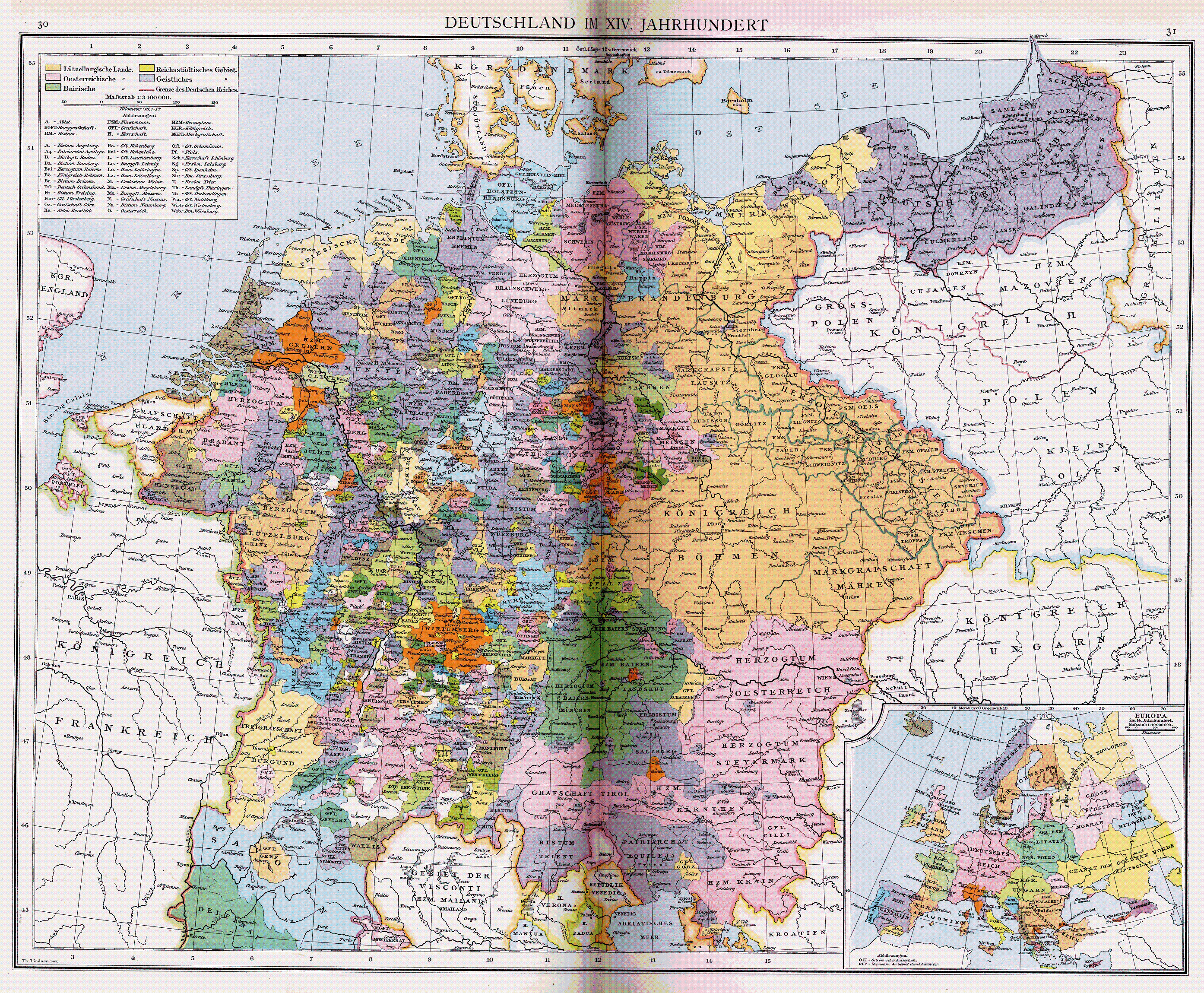
When you look for maps of the Holy Roman Empire, even the most detailed ones such as these: 1, 2, 3 show numerous white spots. And that even though the scale allows the display of the smallest Free Imperial Cities and there are significant settlements in those regions (e.g. Schleiden, Gerolstein, Limburg, Rheda-Wiedenbrück, Engen, Ilanz...) of which the history is in principle known.
So what's the deal with this manner of representation? Are these territories really to small to display? Are those disputed areas? Did they have an unclear status? Is it historically just not known?
1 Answers 2017-05-04
Seriously -- everyone. They can't all be at work, can they?
2 Answers 2017-05-04
1 Answers 2017-05-04
I'm curious if anyone has successfully used PaperPlanes in their research.
A decent summary here: https://historywomble.wordpress.com/2014/10/14/some-thoughts-on-the-history-manifesto/
1 Answers 2017-05-04
Apologies if the question is a little presumptuous, but I've always been curious about the development of the feudal systems in Europe and Japan.
They both seem a little similar, but I assume that Europeans weren't saying "Hey, you should try out feudalism!" or the Japanese saying "Hey, I've heard about this system called feudalism; we should have a crack at it!"
How is it possible that two similar(ish) systems developed almost in tandem with so little contact between the continents?
3 Answers 2017-05-04
Okay, first off I want to just preface this by saying I'm not really that well versed in history at all, so I apologize if I mess any facts up.
From what I understand, ancient Greeks and Romans were much more advanced than the majority of Europe in the middle ages. Not only did they have a working sewage system through the use of aqueducts, but they also developed a number of pioneering medical practices, and were able to engineer complex machines such as the Antikythera mechanism. But then 800 years later, all of a sudden people are just living in their own filth and bleeding themselves to get rid of headaches.
What happened to cause such a regression?
1 Answers 2017-05-04
In the middle of a party/barbeque, all the girls go upstairs and sleep in a big room together while the men talk downstairs about the War. Was this typical?
3 Answers 2017-05-04
I've recently started heavily reading on cinema from various countries during the 60's but often times find myself lost in contextual references that might seem so clear to someone better read/studied than I am. So in short, I was wondering if anyone has a good recommendation of a book which covers the history leading up to the 60's. Say World War II forward. The countries I am most focused on is France and Japan.
Thank you!
1 Answers 2017-05-04
The term has entered the American vernacular, but I don't know much about it except as a humorous expression. I've heard in Ken Burn's documentary "The West" that ashes from a ceremonial pipe were intentionally spilt on the boots of General Custer during a negotiation to afflict him with bad luck, but that's about it.
1 Answers 2017-05-04
1 Answers 2017-05-04
Partially curiosity, partially asking for a friend of mine who's interested. What kind of education is necessary to work as a translator in ancient languages (Latin, Greek, etc.)? Would a Classics Bachelor's with several classes in the language do? Or is this a "nothing short of a PhD" field? Are ancient-language translators usually trained in Classics? History? Linguistics?
Additionally, what kind of jobs are available in this field? Do they tend to be with universities, museums, etc.? Are they usually in person, or remote? Or does this job even exist on its own, or is it done mostly by professors/researchers?
1 Answers 2017-05-04
I know that an exact conversion of Roman currency to modern currency is impossible, but is there any way that we can roughly estimate how much this purchase of power would have cost today?
Edit: When asking what this would equate to in modern terms, I meant how much in dollars this would cost based on the gold/silver content of the coin and gold/silver prices today.
3 Answers 2017-05-04
Title pretty much says it all. Can I only ask questions about history here? Or can I ask questions about historians? Things like education needed for certain jobs, where to find jobs, etc. as a historian?
2 Answers 2017-05-04
I was reading through a lot of WW1 posts on this sub and something that struck me was that there was a 'live and let live' system on these sectors. As in, the two sides pretty much seemed to have a truce and no combat occurred.
Of course the very name Quiet Sector, means thee wouldn't be as much as violence happening as during a major offensive.
However, were there still trench raids happening? Like, did they ever completely stop in a quiet sector?
Could soldiers still expected to be gassed and shelled at random intervals?
Or were they truly 'quiet' sectors?
Thanks
1 Answers 2017-05-04