My understanding from my (rather excellent) history teacher was that it was considered a formality for them to provide this privilege to the King and that he would reasonably have expected it as his traditional right. Why did Parliament take such a confrontational stance from the onset and sour relations from the word go?
2 Answers 2017-02-01
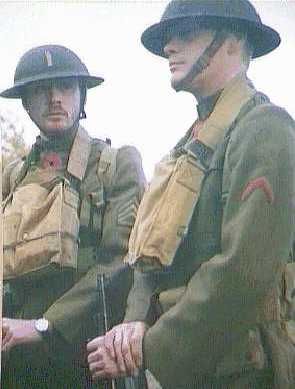
http://www.worldwar1.com/dbc/jpg/2dbstalk.jpg
Specifically, what were they used for and why worn in such a strange fashion?
1 Answers 2017-02-01
The French Wikipedia article on the Marriage of Figaro (the play, not the opera) claims that, in spite of the play having been censored by the king, Marie-Antoinette organized a representation in the Trianon in 1785, with herself playing the Countess, and the count of Artois (future king Charles X) playing Figaro (Wikipedia doesn't mention any of the other cast members). The claim is, of course, unsourced.
I know Marie-Antoinette did act in plays she stage at the Trianon with her entourage, but that seems quite a bit risqué. I also have trouble imagining the count of Artois going through the famous Figaro monologue (which is, basically, "down with the nobility and privileges") without massive cognitive dissonance.
A quick Google search only yields the official webpage of the Trianon in Versailles, which has the same (also unsourced) claim, and a forum where someone claims that this is untrue (yet again without sources, although it's harder to source a refutation).
Does anyone here know better?
1 Answers 2017-02-01
There was another question posted recently asking why the U.S kept a large standing army after WWII. It looked like a fairly easy thing to answer. To keep the Warsaw Pact in check. It takes too long for armies to ramp up in modern warfare. Prep has to happen many years before a conflict might occur.
But that got me to thinking: during his farewell address, President Eisenhower, 5-star general, commander NATO, famously warned of the Military Industrial Complex. As I recall, his point was that we were setting up a vast and well-funded web of organizations that had a sole purpose of creating more and more tools of modern warfare. Their interests and the nation's interest were not always aligned.
So what did he envision as an alternative? I can't imagine him wanting to downsize the army, and he, more than anybody else, knew the critical role that time and preparation plays in war. What other strategy could the west have adopted?
1 Answers 2017-02-01
1 Answers 2017-02-01
Was the Daimyo/Clan head always responsible for leading the army, or could he give authority to one of his generals? How were generals and officers chosen?
Additional question, how is a Retainer different from a vassal?
1 Answers 2017-02-01
Were they ever planning on grouping them together as a Dominion as they did with later colonies (with limited self government), or was this something that came about as a result of the experience of the American Revolution? Or did they just have a plan to keep things as they were for the time being?
3 Answers 2017-02-01
I am looking for any type of resources regarding the depiction of ancient tents. Specifically, does anyone have and idea what kind of tents might be used on Greek campaign, such as seiging Troy?
1 Answers 2017-02-01
Sub-question: when did passports and borders in general become commonplace?
1 Answers 2017-02-01
According to Wikipedia, George Washington was called "Conotocaurious", or "Town Destroyer" by the Iroquois. I've only ever read that fact in the context of "did you know...?" What was the nature of Washington's relationship with American Indians, and how did it evolve? Did it differ between tribes?
1 Answers 2017-02-01
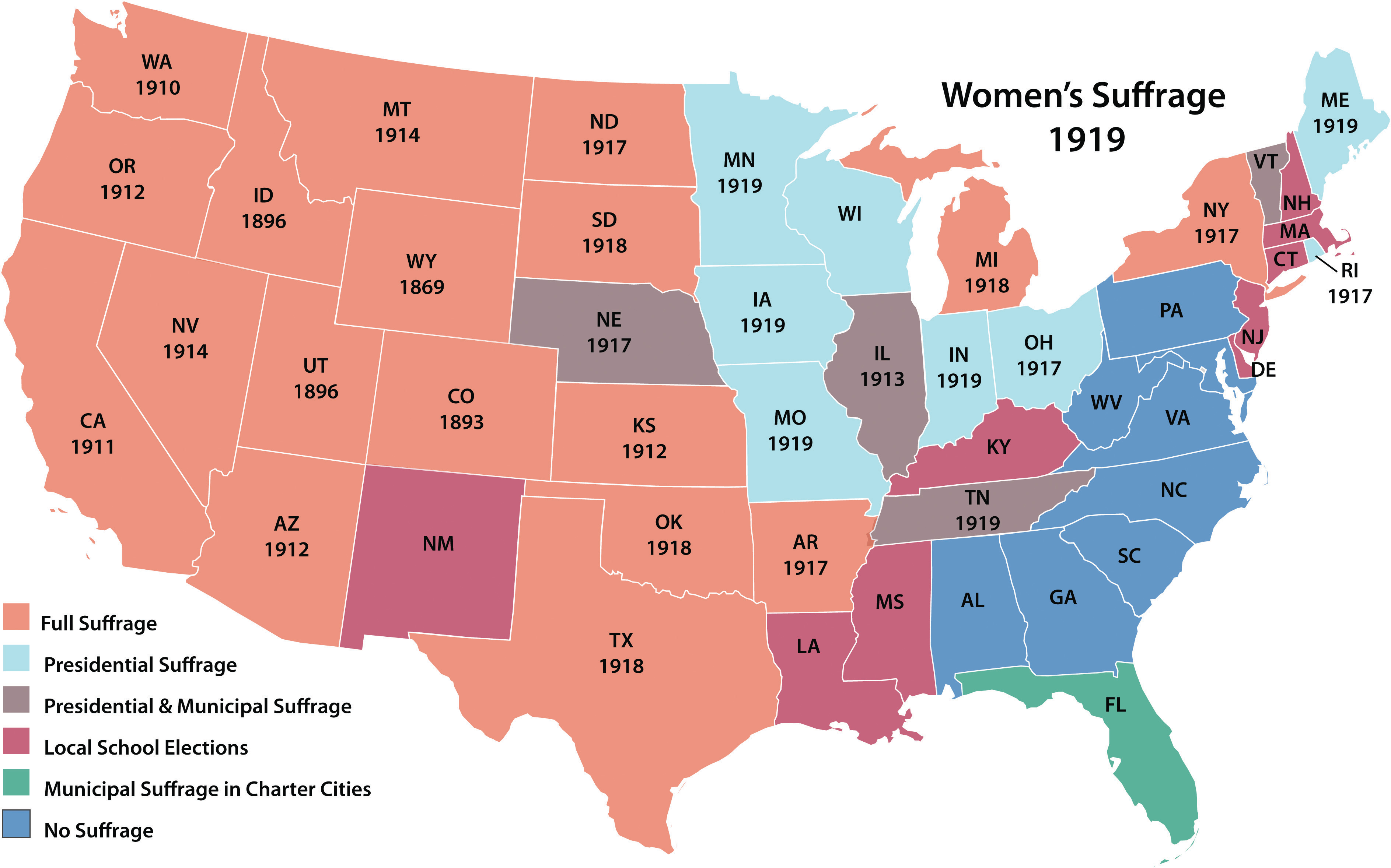
Here's a map showing when women in each state won the right to vote before the 19th amendment was ratified: http://images.flatworldknowledge.com/trowbridge2_1.0/trowbridge2_1.0-fig05_031.jpg Given that the northeast was the cradle of the feminist movement in the U.S. (with the Seneca Falls convention taking place in New York), why did the western states allow women to vote before the eastern ones?
2 Answers 2017-02-01
These pictures were taken by reconnaissance planes around the time of the Cuban Missile Crisis. Are these real?
https://assets.documentcloud.org/documents/454577/pages/new-cuban-missile-photos-2-p1-normal.gif
http://www.utaot.com/wp-content/uploads/2012/12/cuban_missle_sam_launch.jpg
1 Answers 2017-02-01
Slavery of African's was common place in the America's, but why were Native American's not enslaved, and if they were why don't we hear much about it?
3 Answers 2017-02-01
I'm curious as to how much the average German knew of what was going on with the ghettos , concentration camps and other crimes against humanity . I ask because of another post showing German soldiers burning their uniforms after finding out what was happening in the death camps . They must of at least had a hunch something of the sort was happening , right ?
1 Answers 2017-02-01
I'm having a hard time finding the answer I'm looking for here. I'm curious both about what tactics were used and how they changed over the course of the war.
I've found a lot about how technology (particularly rifling and railroad networks) made fighting very different from previous wars. But I can't find anything about how these changes affected things like organization, priorities, and movement on the battlefield.
It seems that they entered the war using tactics not far off from what you'd see in the American Revolution. I'm assuming they realized problems with this over the course of the war and made changes accordingly.
1 Answers 2017-02-01
I'm rather confused by all that surrounds Yukio Mishima and the Tatenokai. I've gathered from the information I've found that he was a very successful writer and founder of the Tatenokai. However, I'm confused on his attempted coup d'etat and the following suicide. It's noted that his John Nathan, who wrote his biography, believed his coup d'etat was simply a pretext for his suicide, and the entire thing had to be planned. This fact is backed up by other members of the Tatenokai.
What I do not understand is what he was trying to prove. It almost feels random, as if the entirety of it was to be poetic. Can anyone shed light on this for me? Was he truly desiring to restore power to the emperor of Japan following the implementation of the "Post-war Constitution." Following this up to make it more confusing, a literary award was established to honor his life only 18 years after his suicide, and only 11 years after the Tatenokai held multiple people hostage.
3 Answers 2017-02-01
As is often taught in American history classes part of the reason why the North won was because of it's heavy industrialization compared to the South. At the same time though, the South is usually portrayed as the agricultural powerhouse of the United States at the time, why wasn't it able to be used to starve the North into submission long before industrial capacity became a factor? Were the North's border slave states enough to feed the union and it's textile industry?
1 Answers 2017-02-01
So I've always heard about how Hitler made Germany a power during the thirties, and that he brought Germany back from depression, what did he directly do that made Germany a great superpower?
1 Answers 2017-02-01
I've played some video games and seen films where it's not uncommon to see bazookas, PIATs, panzershrecks or anti-tank rifles for the Soviets in use.
I wonder though how common were these weapons on the battlefield, were they effective, and whether infantry doctrine saw them more as a last resort when they have little chance of retreat or to quickly find an opportunity to use it against a tank.
Also, were they commonly used for anti-infantry or gun emplacement purposes, say to knock out a machine gun post in a building? And are there other notable anti-tank infantry weapons not listed above?
2 Answers 2017-02-01
Salmonella, botulism, E. Coli, tapeworms, general illnesses brought on by eating undercooked meats; were these an issue for early humans? Or are they a problem brought on by the (cosmically) recent trend of, ya know, widespread sanitation and general sterilisation of our environments making us more susceptible to things that Grugg The Palaeolithic Gentleman would have simply shrugged off, or failed to even notice, rather than a potentially fatal infection?
1 Answers 2017-02-01
It's a snowy day here. I'm curious how the Romans, the Chinese, or any other civilization dealt with snow. Were they aware of salt, cinders, or did they have slaves to shovel out houses?
2 Answers 2017-02-01