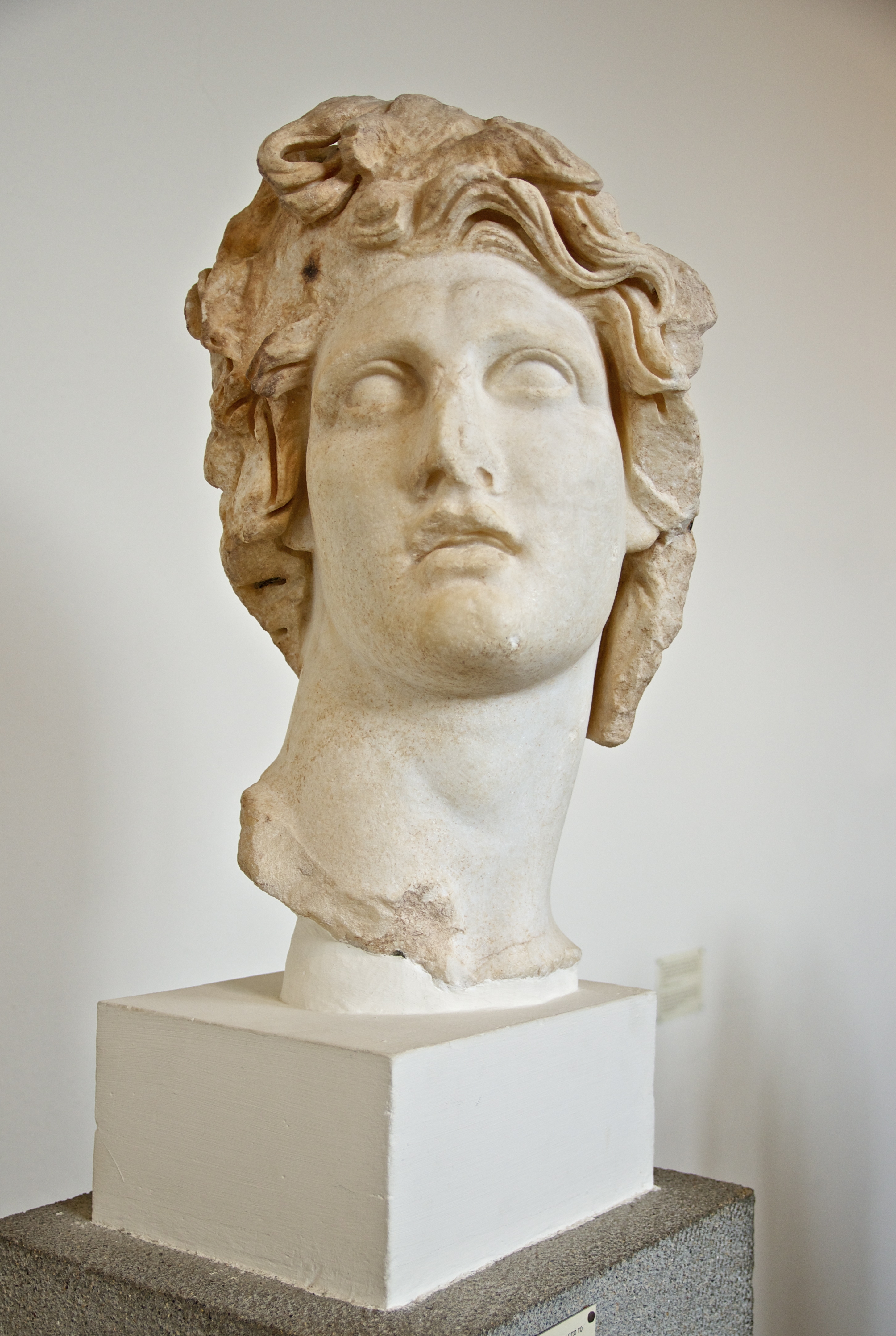
I've seen this quote attributed to Socrates - "No man has the right to be an amateur in the matter of physical training. It is a shame for a man to grow old without seeing the beauty and strength of which his body is capable."
Does anyone know if Socrates followed his own advice? Was he built like a Greek god?
5 Answers 2016-12-09
1 Answers 2016-12-09
1 Answers 2016-12-09
[deleted]
2 Answers 2016-12-09
How did this gun fare against the Panthers later in the war?
1 Answers 2016-12-09
I found some money that my grandfather brought home from World War II and was quite surprised to see pesos and centavos from Japan. What is the backstory with this? There was also Mexican money with it, but I've never heard of his being in Mexico so I was wondering if it relates to the Japanese currency. Thanks!
1 Answers 2016-12-09
[deleted]
1 Answers 2016-12-09
1 Answers 2016-12-09
1 Answers 2016-12-09
I have heard it as, "anyone who was not a liberal at 20 years of age had no heart, while anyone who was not a conservative at 40 had no head." In his time/era, what are the definitions of conservative/liberal and how do they differ from modern day definitions?
1 Answers 2016-12-09
Obviously many people were convicted of witchcraft in medieval Europe, but were there people who actually worshiped satan, or tried to conjure demons, cast spells, etc?
1 Answers 2016-12-09
1 Answers 2016-12-09
I have a coworker who is Indian and recently I was chatting about history and two things came up that made me question what I know about history.
First, I said that Sanskrit was connected to European languages and that there was a migration of peoples from the Caucasus into the Indian subcontinent. He said that this theory was a product of British imperialism and completely false and had been disproven. What is the truth of this?
Second, I mentioned that Peppers were from the new world exchange so they had to come over at some point after contact with the new world. He said that Peppers have been in India forever and their most ancient texts talk about them. How is this possible if Chili Peppers are from the new world ? Was India trading with the new world prior to European arrival ?
2 Answers 2016-12-09
1 Answers 2016-12-08
I'm doing a project for my Latin class and was wondering if there were any documented or prominent secret societies. All help is appreciated.
1 Answers 2016-12-08
I've looked every where for a single source which details the way humans lived during each age (Stone Age, Bronze Age, dark age, etc...) along with the key events and discoveries of those eras, preferably in chronological order, but haven't found anything. Does such a source exist?
1 Answers 2016-12-08
Were they interested in it? Did the romans hate it? Did the tudors love it? Could the elizabethans care less?
1 Answers 2016-12-08
2 Answers 2016-12-08
Does the evidence support the idea that he massacred innocent civilians at Drogheda and Wexford, or is it more likely to be Catholic propaganda, in the same vein of the reported murdering of 100,000 protestants being murdered by Catholics in the 1641 rebellion when there were not even that many Protestants present in the country at the time?
As an Irishman I was woefully unaware that this was ever even a question. It is taken as common knowledge here that Cromwell was a butcher who murdered his way from one town to the next, accepting surrenders from cities and then butchering the inhabitants.
I have recently discovered that outside of Ireland this is not the opinion at all, and there is evidence to support the idea that Cromwell was better than most of his contemporaries at sparing civilians due to the rigorous disciplining of his troops.
Which of these ideas holds more weight in the historical community at large, or does the truth lie somewhere in between?
1 Answers 2016-12-08
Anecdotally, it seems like variants of paisa are popular across cultures and languages to refer to money, e.g.:
In Indic countries, "paisa" usually refers to money or coins. In former Spanish colonies, the official currency is often "peso." In Swahili, "pesa" means money. And in Czech, the way to say money is "penize."
Is this pure coincidence, or is there some deeper reason why a meaningful cross-section of the world uses this word?
1 Answers 2016-12-08
1 Answers 2016-12-08
and what happened to them if there were?
EDIT: to clarify, I'm not asking about de facto slavery where poor black farmers remained financially chained to former plantation owners for decades. I'm talking about the immediate days after the end of the war. Are there any known cases of slave owners willfully choosing to ignore the outcome of the war and that slavery had become illegal.
4 Answers 2016-12-08
I understand that older slaves were used in house labor and other tasks less physically demanding than the field labor. But once the person was too old to do even that, or perhaps contracted a communicable disease that could cause other slaves to die, was it common practice to "put the slave down" like we do with old house pets today? What about slaves born with birth defects or severe intellectual disabilities?
Not sure if this would have been documented, so it may not be answerable.
2 Answers 2016-12-08
I remember being taught in school that after the nazis deemed the war lost, the effort put into the holocaust was increased. The reasoning would have been to at least achieve their goal of exterminating the european jews, even if military domination seemed to have failed.
Is this consensus? Is there proof? Who's decision would that have been?
1 Answers 2016-12-08