There's a suit of armor housed in Schloss Ambras (Caslte Ambras) outside of Innsbruck, Austria which allegedly belonged to a man named Bartima Bon. According to the vary small amount of info I was able to find, this gigantic man fought in a tournament in Vienna in 1560. That's about all I can find.
This is a picture of the armor here. The image has the smaller armors labelled as childrens armor (which could be whole different question in and of itself) but even compared to the adult armor in the castle it was huge. It looked like it could be worn by a modern NBA star.
Now I know this armor exists. It's about 7.5-8 feet tall. I've seen it with my own two eyeballs. But even in the castle itself, the info about the owner was incredibly sparse.
/u/WARitter answered a question about medieval arms and armor in this question here and he mentioned that one of the notable collections of historic arms and armor was made by a duke in Tyrol. Innsbruck is and has been the capitol of Tyrol for a while and I wonder if these are related in some way? Does anyone have any info on this guy or his armor? Or does anyone know of a good place to start looking?
1 Answers 2016-10-31
So I was watching a tv show and saw people celebrating stuff in a dystopian world. So it made me wonder, did people (civilians I guess) do anything for fun in Leningrad? In Stalingrad? And what could they even do? There was no internet or TV. Just wondering.
1 Answers 2016-10-31
2 Answers 2016-10-31
The Korean war started in 1950. The B-36 was introduced in 1949. Older B-29 superfortresses were slaughtered by Mig-15 fighters. The B-36 was faster (700 km/h vs B-29s 574 km/h), flew higher (12,000 m vs 9,710 m), and could carry more bombs. Instead of deploying a B-36 aluminum overcast, the US only used a few of them for recon operations.
Why was that?
1 Answers 2016-10-31
Often in hip-hop songs recently I've been hearing that "nigger" derives from the Ethiopian term "negus" which used to mean emperor/king. I've been attempting to find evidence where this comes from for a project and was wondering if r/AskHistorians had any evidence of where the term derived from, because I have only found blog posts referencing this subject and nothing much that is credible.
1 Answers 2016-10-31
On one hand I could imagine colonization would bring technological advancement and economic interconnectedness.
On the other hand I could imagine all of the wealth being sucked out of colonies and sent back to the mother country.
Can someone explain the mechanisms by which colonialism aided/harmed colonies, and whether or not it had an overall negative or positive impact ?
It would be nice if your answer looks at both sides, rather than implying it was exclusively bad or exclusively good. This seems like a complex enough issue that it shouldn't have a black and white answer
1 Answers 2016-10-31
I was watching Before the Flood when I reached a scene where Leonardo DiCaprio is talking to Al Gore. Screenshots of the scene in question. There seems to be a grenade in a glass case behind him. This made me curious about its background story, but my Google-fu was not strong enough to find an answer. Do you have any ideas on why it might be there?
1 Answers 2016-10-31
Be it Alexander the Great, the mongol horde, or calvary during the American Civil War, i have trouble imagining how one could maintain control of their horse during the chaos.
Any help would be very much appreciated! Thanks for your time.
1 Answers 2016-10-31
"Trudeau said Castro had wanted them to send Michel back to Cuba when he was seven to attend pioneer camp for children, something the family often teased Michel about." - Source
I'm asking more specifically, what would the routine be like? What was the living situation? What was the housing situation? Etc.
1 Answers 2016-10-31
[deleted]
1 Answers 2016-10-31
I found an account that the black plague gave a massive boost to Christianity in terms of the proportion of the European population which is Christian. The explanation was that Christians were generally much better at nursing, so had significantly lower mortality rate; moreover, Christians were willing to take care of non-Christians, which resulted in significant amounts of conversions.
The thing that doesn't add up for me though is that I thought Christianity was already the very dominant religion of Europe at the time of the black plague.
1 Answers 2016-10-31
1 Answers 2016-10-31
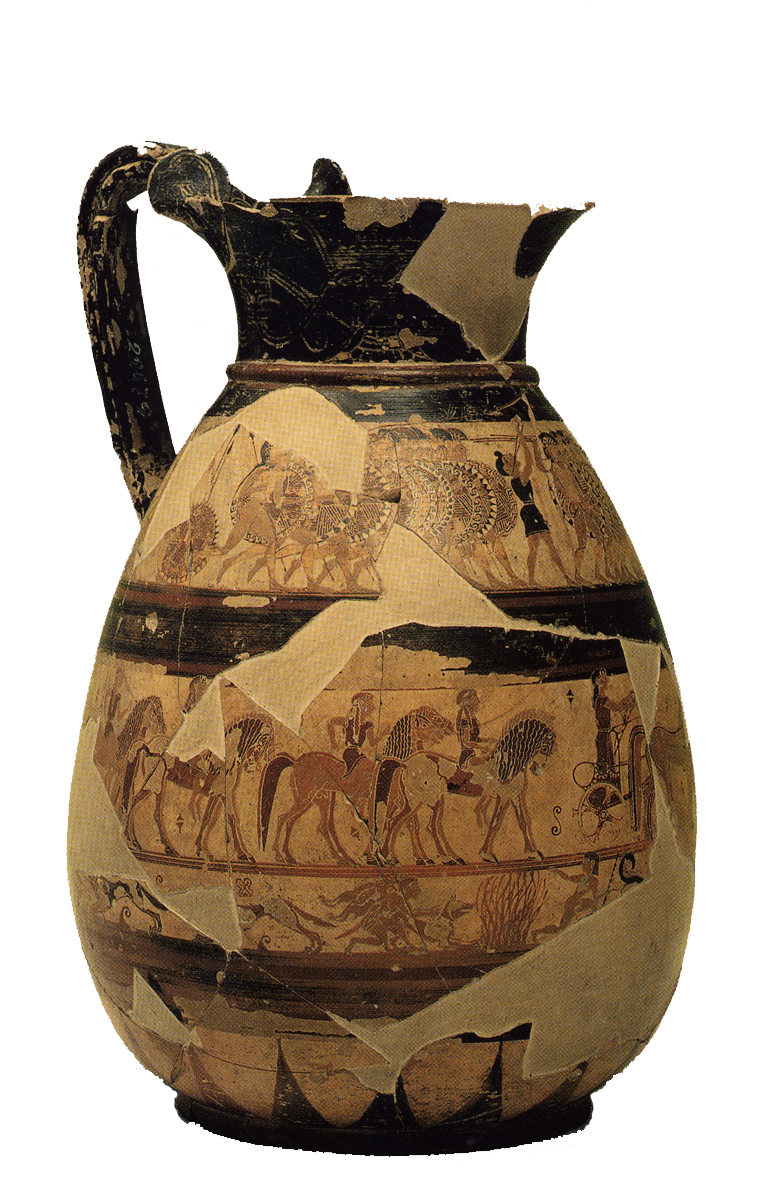
We looked at the chigi vase in my class today and ended up discussing hoplite warfare and cavalry use. No one knew quite how horses were used in warfare. I have read about Alexander's companions, but don't know much about the use before him and Philip II So my question is how widespread were cavalry in warfare and what were their purpose before the time of Phillip and Alexander?
1 Answers 2016-10-31
Was the downfall of tsarism and the coming to power of the Bolsheviks inevitable, or precipitated by other factors?
Also, do you know of any historians who argue that the events were inevitable? I've scanned the internet for specific historians, but can't find any :(
1 Answers 2016-10-31
Hello everyone and welcome to the 21st installment of our continuing series of Rules Roundtables! This project is an effort to demystify the subreddit and also to gather your feedback to help improve it! We aren't just covering the hard and fast rules though, but also looking at other aspects of the subreddit, with this week focusing on the community as a whole, and non-flair participation!
##The /r/AskHistorians Community
/r/AskHistorians has been growing for five years now, and we are continually amazed at what we have managed to build here. But we can't take all the credit. Aside from the 400 or so Flaired users who we are ever indebted to for their time and commitment, it is all of you, the readers, 'askers', and lurkers of /r/AskHistorians who make the AskHistorians community what it is. We know that sometimes it can be a little hard to feel connected though, as the bar for posting is quite high, and in META threads or other instances where we loosen the rules, it is always great to see the lurkers come out of the woodwork. But we don't want readers to feel like they are on the outside, so aside from using this thread to give all of you guys a shout-out, we also want to talk a little bit about the /r/AskHistorians Community, and how to be a part of it even if you don't have flair.
###Asking Questions
Perhaps this seems a little obvious, but we can't stress it enough! /r/AskHistorians couldn't exist without the inquisitive minds out there who ask dozens of questions every day. Thoughtful, interesting questions are the lifeblood of the subreddit, and help to make it a better place. We even recognize users who have long-running track records of asking great questions with the Interesting Inquirer flair.
But don't just limit yourself to posting new questions. I think I speak for almost everyone who has answered a question on this subreddit that nothing makes us happier than getting follow-up questions! Upvotes are nice, gilding is cool, but follow-up questions are the kind of engagement that all of us nerds crave. And don't be afraid to ask ones that you fear might be stupid or obvious to others. This is stuff that, in many cases, we have studied for years, if not decades, and love the opportunity to teach others.
###Say "Thanks"
Even if you don't have a follow up question, even a simple "Thank You for the Answer" can make writing an answer with 2 upvotes seem totally worth it, so don't be afraid to post that! I will note though, that while it doesn't break the rules to say Thanks, we do prefer that if someone else already has, just upvote that one. When there are a half-dozen replies to an answer all saying "Thanks", we'll remove all but a few to keep the thread from getting too cluttered.
In addition though, don't forget about the Sunday Digest threads. Submitting your favorite answers from the past week there is a fantastic gesture that respondents always appreciate, and also the best way to nominate answers for the 'Best of the Month' contest we run.
###Upvoting Questions
As I already noted, it is the thoughtful, interesting questions that really make this subreddit tick. Not to say that learning what brand toothpaste Hitler prefered isn't interesting to someone, but we know that there are a lot of topics and questions which are consistent in their recurrence, and we do now and then hear complaints about the balance of topics, or requests to implement moratoriums. While this doesn't really fit with the mission of the subreddit per se, you can still make a difference! Checking out the New Queue and upvoting questions you see there that are interesting and unique can really help shape what ends up trending, and getting the most attention.
There are only so many mods, and we are only able to devote so much time to monitoring threads. We catch a lot of the chaffe pretty quickly, but some always slips through. Reporting comments or submissions which break the rules is an invaluable service that helps us keep the subreddit clean and on track! It is an invisible service, but know that we deeply appreciate it!
###Participate in Discussions!
Just because you don't feel qualified to answer a question about 17th c. Swedish basket weaving doesn't mean there aren't ways to participate. The occasional META threads which allow for 'tomfoolery' are always amazingly popular, but what many people forget is that we have one of those every week! While we don't want it to devolve into nothing but pun chains, the "Friday Free-for-All" threads exist to allow for a more relaxed space to shoot-the-shit and let our hair down. "Thursday Theory", "Monday Methods", "Saturday Sources", and "'What's New' Wednesday", also offer great opportunities for more free-wheeling conversations.
###Answer Questions!
We know a lot of people just read the subreddit, and don't think themselves to be qualified to participate on the answer side of things, but don't sell yourselves short. We've seen many fantastic answers prefaced by "First time posting" or showing surprise that a question fell within their purview. Plenty of questions come out of left-field, and present opportunities for the most esoteric displays of knowledge you never thought you'd have the chance to display in a history subreddit!
On top of that, we run the weekly "Tuesday Trivia" feature very much with the intent of getting wider participation. You might not feel qualified to write 5,000 words on a topic, it is the kind of space that you can share that little tidbit you remember from history class!
In addition, we also have been trying to increase the rate at which we hold "Floating Features" (and are always looking for more topic suggestions there), which allow for more free-flowing discussion about very broadly defined or open topics, and welcomes responses of all kinds.
##Back to Where We Started
And that is the long and short of it. Just because they might not be able to write 10,000 words to answer some obscure and esoteric question doesn't mean a reader is any less a part of this community that the most answeraholic flairs. Everyone contributes in their own way, and we really appreciate everyone who helps make /r/AskHistorians great! If you have any questions or thoughts that you'd like to share, please let us know here, as we're always looking for ways to improve the experience on the subreddit for everyone!
7 Answers 2016-10-31
[deleted]
2 Answers 2016-10-31
My understanding is that the English Reformation at its initiation was a very top down affair, with a fair amount of popular discontent, particularly at measures such as the Dissolution of the Monasteries. However, the run up to the Civil War saw a great deal of popular action against any sign of "papism" (such as ornamentation of churches and pews) and stories of secret Catholic plots circulated widely.
So how exactly did the "ordinary people" of England go from Catholic to strikingly anti Catholic?
1 Answers 2016-10-31
Was he an Indian muslim? Or was he Turkish or Persian?
1 Answers 2016-10-31
I am genuinely wondering why the stereotypical Ottoman is depicted with a turban when now a days most Muslims don't wear them and primarily when you see a man wearing one they are Sikh. Was it a religious symbol at one point? Did it die out along with the Ottoman Empire? Are there still other groups of Muslims that wear the turban?
1 Answers 2016-10-31
3 Answers 2016-10-31
I'm in particular interested why there are divergent numbers. Of course, I'm also aware of anti-Semitism that pervades the historical research. Hence my question about the methods of going about with calculations.
The question could comprise larger methodology than WW2 in particular, so it could be that calculations follow a particular pattern that is applicable to wars/atrocities in general (e.g. how do we estimate that 1/3 of male population died in the 30 years war?).
1 Answers 2016-10-31
I wrote a short story years ago about a Georgian kid that gets sold into serfdom by his family during a war with the Persians. The problem is that I've forgotten most of the history this story was based on. I know it takes place during the 16th century and is sometime after 1511 because I made a reference to the book "Praise of Folly”. The actual story takes place three years after he was sold into serfdom and during that time I know their is a conflict between France and Italy.
Can anyone pinpoint the time frame? Maybe tell me a bit of history about the time period?
1 Answers 2016-10-31
Question inspired by recent events in ROK. It seems to be the holy grail of crazy conspiracy theories that actually happened, involving masons, secret services, and the top echelons of society. I do wonder though whether P2 was more of a really dodgy networking club, or whether it actually came close to running Italy behind the scenes.
1 Answers 2016-10-31