By egalitarian, I mean that all members of a HG society had the same power.
Most of the arguments I hear are mainly based on speculation, but one I heard is that since there was no wealth, no notion of property, there was no way for hierarchies to form and people to be subject to the rule of another person who was more powerful due to the leverage he had.
But couldn't you give the argument that in HG societies, men were dominant over women, they competed for food and resources (especially when they were scarce), and fought other tribes for land?
1 Answers 2016-04-11
Were they unaffected by the Great Migrations? Is there a history of discrimination that prevented minorities from coming?
1 Answers 2016-04-11
The main title really says it all. I understand that a lot of these sources might be in Hindi, Urdu, Bangla, Punjabi, etc., but even those are fine.
Alternatively, if anyone knows of any secondary sources that uses these primary sources, then I would be happy to look at those too (though I've combed through JSTOR and Google Scholar a lot).
2 Answers 2016-04-11
The Wikipedia article on standing desks, as well as a bunch standing desk producer's websites, tote around the fact that da Vinci used a standing desk.
But I haven't actually seen a source for this. I mean sure, you can infer he used a standing desk as he was a painter/engineer, but does anyone have a source to enlighten the truth for me?
1 Answers 2016-04-11
1 Answers 2016-04-11
I recall reading at some point that there were fears regarding the power of the explosions: eg: the atmosphere would ignite or the chain reaction would not stop, etc.
While it seems like scientists performed due diligence with assessing these concerns via modelling and research, were there any concerns or dangers that remained truly unknown until the test was performed?
How did they determine proper range/distance for safety, eye protection, etc-- or was that all just protocol for any experiment of that size and estimated power?
1 Answers 2016-04-11
I was watching "The Right Stuff" a couple of days ago and I remember the cabinet meeting where they were discussing the types of wonky people they were considering sending up into space and the room went crazy when Eisenhower insisted on test pilots as being the type of people who should be tested. Was there some kind of bias? Did the early NASA planners basically want just mindless specimens?
1 Answers 2016-04-11
Hello, everyone! Welcome to the ninth installment of our continuing series of Rules Roundtables! This project is an effort to demystify what the rules of the Subreddit are, to explain the reasoning behind why each rule came into being, provide examples and explanation why a rule will be applicable in one case and not in another. Finally, this project is here to get your feedback, so that we can hear from the community what rules are working, what ones aren't, and what ones are unclear.
Today, the topic for discussion is our ‘No “Soapboxing” or Loaded Questions” rule! This rule, which goes hand-in-hand with our ‘No political agendas or moralising’ rule, exists to ensure that acceptable questions for /r/AskHistorians are asked in ‘good faith.’ The two rules read:
No "Soapboxing" or Loaded Questions.
This subreddit is called AskHistorians, not LectureHistorians or DebateHistorians. While we appreciate your enthusiasm for the history of issues that play a role in your life, we are here to answer your questions about issues, not provide a sounding board for your theories or a podium for your lectures. All questions must allow a back-and-forth dialogue based on the desire to gain further information, and not be predicated on a false and loaded premise in order to push an agenda.
Additionally when posting, we prefer that any posts that you make are well-sourced and directly address the asker's question. Do not take the opportunity to make claims that are politically or religiously motivated. All comments are expected to be sourced, answer the asker's question, and relevant.
and:
Answers should not include a political agenda, nor moralise about the issue at hand. This is not the place for you to say that communism is a failure and against human nature, nor that capitalism is evil and dehumanises people. Historians report the facts and events as neutrally as possible, without an agenda - moral or political.
These rules are perhaps some of our more esoteric, as they hinges more heavily than many rules on the judgement of the moderation team – is a question loaded in wording or intent, is it soap-boxing, and is it acceptable? To lay out the thoughts underpinning our Soapboxing / Loaded Questions and Political Agendas / Moralising rules, let’s first look at how we define Soapboxing or loaded questions, and what examples of these questions might look like. Secondly, we’ll address exactly why it is Soapboxing and moralising are problematic on /r/AskHistorians.
So, how do we define Soapboxing or Loaded Questions?
A ‘Soapboxing’ question, broadly defined, is a question which is designed to promote a specific agenda. /r/AskHistorians expects questions to be asked in good faith – that is, in the genuine interest of learning and seeking knowledge. A Soapboxing question, rather than being asked in good faith, is asked as a pretext to push a particular agenda or viewpoint, generally through editorialised titles or descriptions. Soapboxing questions are often also loaded ones, and often also break our no current events rule.
There is no one-size-fits-all description for a Soapboxing question, and they do rely on judgement calls from the moderating team. They will, however, often appear in the following formats:
OP posts a reasonably framed question title: “What drove the escalation of US military involvement in Vietnam in 1964?”, but upon opening the body of the submission, OP’s description contains an enormous wall of text promoting a particular view on the above question title. “[Magnum Opus about the merits/evils of the LBJ administration.]”
OP posts a reasonably framed question, but when receiving an answer, becomes antagonistic or combative with the answerer when not getting a response to fit their preconceived notions.
OP’s question employs loaded language to push their agenda and steer any discussion: “Why did America's morality decline so sharply after 1964?" This question clearly pushes a particular worldview, and a subjective view of ‘morality’ which warps subsequent discussion. Worded more appropriately (and hopefully in good faith!), a question like this might ask: "Did the cultural upheaval of the 1960s have a noticeable change on public perceptions of morality in the ensuing decades?"
The same definitions and examples that apply to Soapboxing and Loaded Questions apply to comments which breach our Political Agendas / Moralising rule. While there is once again no universal format or form which these comments will take, they seek, either overtly or implicitly, to drive a particular agenda at the expense of good history and academic integrity.
This is not to say that answers can not or should not delve into controversial topics, or deal with political hot-button issues when necessary, but rather that we would expect the answerer to approach the issue earnestly and in goodfaith, and in this case more than any other, draw on proper, academic sources and be clear in their citations. History often is controversial, and we aren't shying away from that, but simply asking that all users show proper respect for the historical method, as opposed to an approach which could be called polemical.
Every question and explanation is driven by a given historical narrative, but it is the disregard for or deliberate manipulation of language, arguments and evidence to drive a particular agenda at the expense of learning, and open-minded and good-faith discussion which sets soapboxing and moralising questions and comments apart.
/r/AskHistorians and you: Why are Soapboxing and Moralising bad for the Sub?
Soapboxing, editorialising, and firebrand argumentation have their place in modern politics, be it in a newspaper Op-ed, an online blog, or a message board - but /r/AskHistorians isn’t that place. This Subreddit operates on the fundamentals of evidence-based argumentation, civility, good-faith, and general respect for the historical method. A core aspect of the functioning of /r/AskHistorians is that questioners seek to learn in good faith, and that those answering seek to teach in kind. Questions and answers that seek to promote certain agendas at the expense of these values run counter to good historical practice and to the culture we seek to promote on here.
When discussions on /r/AskHistorians are driven or disrupted by Soapboxing and moralising, the quality and rigour of the Sub’s content inevitably suffers, and threads often become politicized and filled with vitriolic back-and-forth arguments. This is obviously something we’d all rather avoid, and, much like the 20 Year Rule, the Soapboxing/Moralising rules exist in part to help prevent those situations.
So what about the Mods?
At the end of the day, it’s the moderating team that call the shots as to which questions and comments breach our Soapboxing and Moralising rules, and we are the first to admit that we won't always get it right, but we do our best to be objective and fair. We're a diverse team, and calls which might be controversial are reviewed by multiple mods, who bring together a wide array of view points. We aren't trying to push some specific agenda, and if nothing else, we get complaints from all over the spectrum! So in the event that you do believe the wrong call was made, you can always reach us with a modmail to politely state your case for reversal.
So that's the sum of it! If you have any further questions or want clarification, please don't hesitate to ask.
Edit: Based on discussion from this Roundtable, while the interpretation of the rule remains the same as laid out here, the wording of the rule has been modified to better reflect the intent of it:
This subreddit is a place for learning and open-minded discussion. As such, answers should not be written in the interests of advancing a personal agenda, but should represent a sincere effort to make an argument from the historical record. They should be constructed in keeping with the principles of the historical method - that is to say, your evidence should not be chosen selectively to support an argument that you feel is right; your argument should instead demonstrably flow from your critical engagement with an appropriate range of evidence. This is not to say that answers can not or should not delve into controversial topics, or deal with political hot-button issues when necessary, but rather that we would expect the answerer to approach the issue earnestly and in good faith. History often is controversial, and we aren't shying away from that, but rather asking that users will show proper respect for the historical method in constructing their response and avoid approaches which might be viewed as polemical.
4 Answers 2016-04-11
https://www.youtube.com/watch?v=MsC_qQn7ctk&nohtml5=False starting at 23.07 in this video, he goes into detail explaining why European Scholars deemed Mesopotamia/Sumeria as the origins of writing because they were biblically, politically bound too
that they were afraid to admit that Africa/Ancient Kemet is the origin of writing and civilization and goes into detail about it
how accurate is he?
1 Answers 2016-04-11
(I was asked over at https://np.reddit.com/r/Ask_Politics/comments/4e90xi/in_the_us_why_didnt_the_framers_choose_to_have/ to post this question here, which I think is good advice. I trust this will not be an issue.)
1 Answers 2016-04-11
Was the war lost for Germany come June '44 or would a different outcome of Operation Bagration have made a difference? I do not ask this in an alternate history sense of what would have happened, but rather what Germany's options would have been had AGC not been destroyed.
2 Answers 2016-04-11
Obviously, if you want to stand out for your proclivity towards violence and sadism then Nazi Germany was a difficult place to do it: records of abuse, massacres and genocide are commonplace. How then was Heydrich, surrounded by these other people and events, able to occupy (then and now) perhaps the highest position of scorn for his brutality? Was his rule in Czechoslovakia genuinely novel in its harshness?
1 Answers 2016-04-11
1 Answers 2016-04-11
1 Answers 2016-04-11
Specifically, I'm curious as to how the ancient powers with substantial naval forces - civilizations like Athens, Carthage, Imperial Rome (any non-Western civilization as well, of course) - found the officers that commanded individual ships? Would they have been recruited from merchant vessels, well connected minor nobility, foreign peoples or domestic sailors?
2 Answers 2016-04-11
I thought that it was illegal to trade with them because they posed a threat to national security.
2 Answers 2016-04-11
I watched "Tora, Tora, Tora," on Netflix over the weekend, and came away with this question.
At one point in the film, a flying instructor and student are flying and end up encountering an entire squadron of Japanese planes.
With hundreds of Japanese planes heading across the island, and people knew that hostilities with the Japanese were likely, how come no one notified officials at Pearl Harbor?
2 Answers 2016-04-11
I read about how the Mona Lisa has shrunk considerably because of the number of times it has been stolen, why aren't those pieces preserved so that they can be reattached?
8 Answers 2016-04-11
1 Answers 2016-04-11
1 Answers 2016-04-11
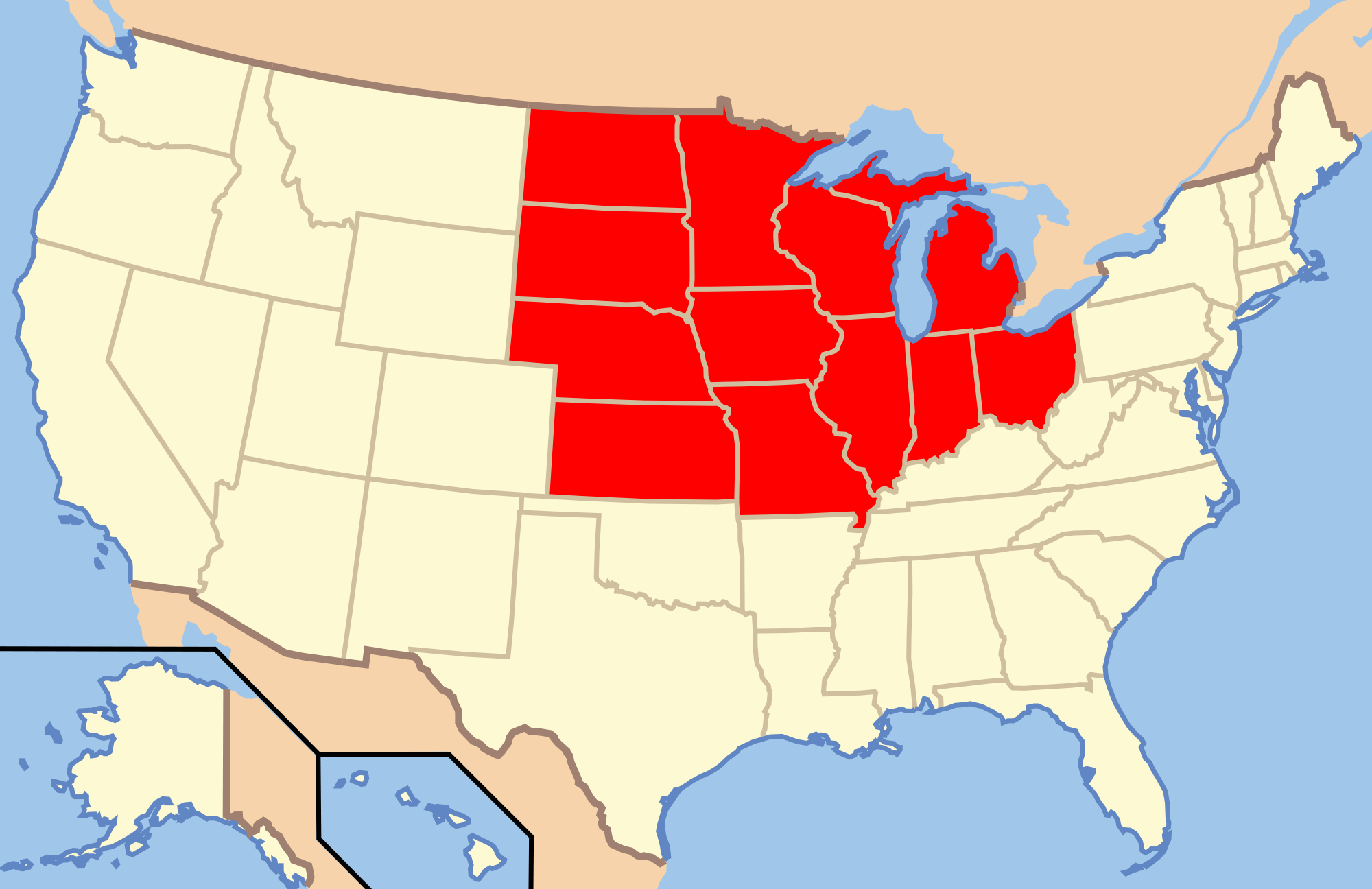
In the novel, 'The Great Gatsby' a character is asked "What part of the middle west?" And his answer is "San Francisco" I looked up what is the mid-west of the US today, here is a picture. If you don't want to click it, know that San Francisco is no where near the shaded area, it's on the other side of the country.
So I'm wondering if, in the past, the mid-west was not the same as it is today. Simple question really, but google hasn't turned anything up, except city plans.
2 Answers 2016-04-11