if he controls only half of Berlin and half of Germany, saying "i'll give my part of the city to east Germany" is a contradiction. I'm sure I'm the one who's wrong but I don't get where.
1 Answers 2021-11-05
I know he has a few credits in the 50s as a voice over but I cant find much else about him and consequences of his role for Nazi Germany in WW2.
1 Answers 2021-11-05
On the 5th of November 1605 a group of English Catholic conspirators attempted to blow up the Houses of Parliament with King James and the joint chambers inside. This would have left a huge power vacuum with plenty of unknown consequences. Did the conspirators have an after plan? How would they restore order after this cataclysm and was there someone in mind to become the next King?
1 Answers 2021-11-05
I hope that history of science is in the focus of this subreddit.
I was wondering how were stars explained in the late XIX/early XX century when scientist knew enough to make educated guesses but did not know about nuclear fusion. Did they thought it was simple combustion, or did they thought it was a mystery?
1 Answers 2021-11-05
The Allies found scores of abandoned German heavy tanks in Normandy and in other places that could easily be restored to running order. Given that the Allies had trouble with dealing with German heavies for most of the war, why didn’t they just use them to fight the Germans?
2 Answers 2021-11-05
1 Answers 2021-11-05
Hello! I'm looking for a historian versed in the lives of famous Jewish women. I know that's super specific. That's because I'm seeking a consultant for a series of children's books I'm in the process of writing. The questions I have are not onerous, and I'm well-versed in the material, but am only an amateur historian and don't want to get things wrong. If you know someone who'd be interested, please lmk. Thank you!
2 Answers 2021-11-05
I am looking for books that highlight the years 800s-1500s. I am interested in politics, culture, society and royal houses, obscure or not. If someone can give me a list of books with up to date info that fill these interests that would be great.
I have been quite interested in the houses of Hauteville and Normandy lately as they had very interesting stories and impacts to society.
3 Answers 2021-11-05
My own father seems to have come from a generation where it's odd for boys and men to cry so it has led me to believe that these men, 100 or 200 years ago remained stoic and composed, to what extent is this true?
1 Answers 2021-11-04
My fiance showed me this TikTok that strongly implies that JFK either was gay or had a gay relationship. I was skeptical, because history TikToks are notoriously unreliable with their facts and conclusions, but I don't know enough to actually dispute it. Is the video correct or is it a misrepresentation? Or is it just impossible to know?
1 Answers 2021-11-04
Poland is pretty set between the east and west of Europe. What led to Christianity and the Latin alphabet winning our over Eastern Orthodoxy and the Cyrillic one?
1 Answers 2021-11-04
In addition, how cognisant were they of the risks of not keeping wounds clean, and how did doctors rationalise wounds becoming infected?
1 Answers 2021-11-04
Hi, I've been wondering how long would take to reach for example Batavia or Wilemstad with an Dutch 18th century ship. Does anyone know the answer?
1 Answers 2021-11-04
Hungarians settled in the Carpathian basin in between A.D 903-910. By A.D 1000, they became a feudal society.
How were the social classes in this feudal society formed? Did everyone participating in the conquest become rulers of a fiefdom, or did conquerors end up pushing their own people into serfdom?
1 Answers 2021-11-04
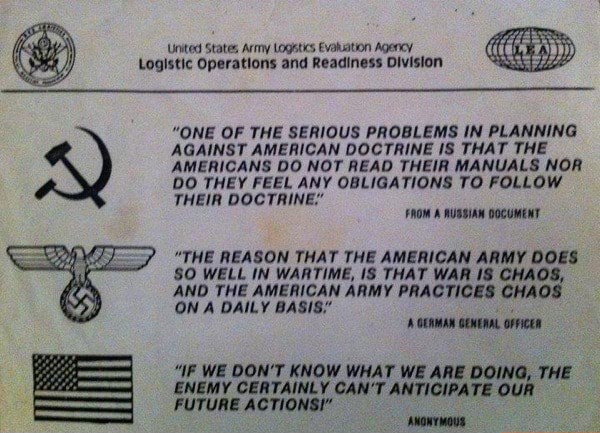
The meme in question: https://imageproxy.ifunny.co/crop:x-20,resize:640x,quality:90x75/images/3710a6307bcf7313312e689717b4ec0269f048a8b1f6d9cd308e5ef9fbe10c9d_1.jpg
Is this document real?
2 Answers 2021-11-04
AskHistorians Podcast Episode 187 is live!
The AskHistorians Podcast is a project that highlights the users and answers that have helped make r/AskHistorians one of the largest history discussion forums on the internet. You can subscribe to us via Apple Podcasts, Stitcher, or RSS, and now on YouTube and Google Play. If there is another index you'd like the podcast listed on, let us know!
This Episode
I spoke with /u/Starwarsnerd222 about the ways in which the origins of the First World War are discussed in textbooks aimed at students of international secondary school curricula. What do they do well? What do they not? How far do they adhere to contemporary historiography, and how far do they hold onto older tropes? And where do we go from here, what are the ways forward for more accurate curricula development? Find out all this and more in this episode.
1 Answers 2021-11-04
Bandanas with a paisley pattern are seemingly ubiquitous, being even more common than even a plain colored cloth. How did this come to be? Is it the result of mass manufacturing?
Have there been other historically popular patterns?
1 Answers 2021-11-04
I mean, when the written word was invented, hierarchical structures and complex economic systems were already relatively widespread in the places writing appeared. If we only looked at society how it looked when writing was developed, then we'd probably get a very skewed look at "human nature", right?
1 Answers 2021-11-04
The question is a bit misleading.
I am aware that the Soviets and Germans used armoured trains the most during the war. Their most common tasks were the following:
What I don't get are the actual tactics employed:
Furthermore, it's firing range is limited and it takes quite a lot of luck for the fighting to be close enough to the tracks that the train can actually provide useful support, but not too close that the enemy can just throw grenades at the train or destroy it with artillery support.
There is also the fact that there will probably be a lot of obstacles auch as trees and buildings near the rail line obscuring the firing line.
What purpose does a mobile anti-aircraft battery on train tracks serve? If a town is in danger of air attacks, just put static AA guns in it. If it isn't, well, you don't need the train then. Its very unlikely that the threat status of a town would switch from "safe from air attack" to "unsafe from air attack" in such a short time that the only option is to quickly deploy an armoured train with anti-aircraft guns to the town.
How exactly would a train provide anti-partisan support? There were way too few armoured trains to have one every 20km. So the armoured train may be 100km away from where the partisan attack is currently happening. Until the train arrives to fend them off, they will be long gone.
Besides, the partisans could just easily blow a part of the track in advance so that the train can't proceed to that area anyway.
If this is a show of force thing to dissuade partisans from attacking the rail line, well, see above. The partisans just wait until the train is gone and attack.
So yeah, how did the actual tactics look like? I am aware of how they were used strategically, but I can't wrap my head around how this would translate to actually useful tactics. Also, were they at all effective? With hindsight, should they have been built or not?
1 Answers 2021-11-04
1 Answers 2021-11-04
My parents were pastors in a... fairly unique church when I was a child. The church also ran a small school, which I attended until I was twelve (when we left.) In addition to the expected skepticism of evolution and climate change, several other scientific ideas were held in contempt. I specifically remember a lesson about continental drift, during which my teacher became extremely agitated and started yelling even though nobody else was saying anything. When I asked my parents about it they told me that continental drift is probably real, but that I shouldn't talk to my friends about it or contradict the teacher.
How widespread was opposition to continental drift at the time? When you grow up in this stuff it's hard to know...
1 Answers 2021-11-04
Thursday Reading and Recommendations is intended as bookish free-for-all, for the discussion and recommendation of all books historical, or tangentially so. Suggested topics include, but are by no means limited to:
Regular participants in the Thursday threads should just keep doing what they've been doing; newcomers should take notice that this thread is meant for open discussion of history and books, not just anything you like -- we'll have a thread on Friday for that, as usual.
4 Answers 2021-11-04
Every readily available source seems to focus on the electors and on the big dynasties that were, in practice, always elected, but who was legally (or customarily) eligible to become Emperor? Was it anyone the Electors saw fit, even, hypothetically, a commoner? Did he have to be a noble? A noble of a specific rank? A noble with territories within the Empire? How about those that had demesnes both inside and outside the imperial borders? Could the Emperor be a woman? A child?
1 Answers 2021-11-04