I've watched some documentaries about jews that survived through nazi encampment,but I never heard of any real high ranking officials living to tell the tale. Are there any that have gone public?
1 Answers 2015-06-30
1 Answers 2015-06-30
Hamilton is probably one of the most famous and well known Founding Fathers who didn't end up becoming President (alongside Franklin). Did he ever consider running for the office?
2 Answers 2015-06-30
1 Answers 2015-06-30
I realise it's quite a broad question.. but could someone try and explain what considerations went into planning the war at a strategic level?
In my reading, I see river-control come up a lot. What was involved in controlling a river? Was there more to it than just controlling the cities on it, and using them to base your gunboats out of it? Also was the main reason just to control it as a quick supply line (how much faster than land-based supply is river-based supply?) or also to deny the enemy crossing it with an army (or is it too easy to just blow away a couple gunboats and send your army across even without controlling it?)
The cities that became focal points, what made them focal points? Were they all just transportation hubs, or were there other reasons an army might think "we better take this one" or "we better fortify this one"? In the 1860s was being an industrial centre that big of a deal, or were factories rudimentary enough that it was easy to just pop a new one up elsewhere?
Thanks
1 Answers 2015-06-30
2 Answers 2015-06-30
1 Answers 2015-06-30
2 Answers 2015-06-30
I also heard that 100,000 Americans migrates to the USSR during this time. Is that true?
2 Answers 2015-06-30
I've often saw this poster from WWI which showed the Germans / Kaiser Wilhelm II as a giant gorilla robbing a women
https://upload.wikimedia.org/wikipedia/commons/6/6e/Harry_R.Hopps%2C_Destroy_this_mad_brute_Enlist-_U.S._Army%2C_03216u_edit.jpg
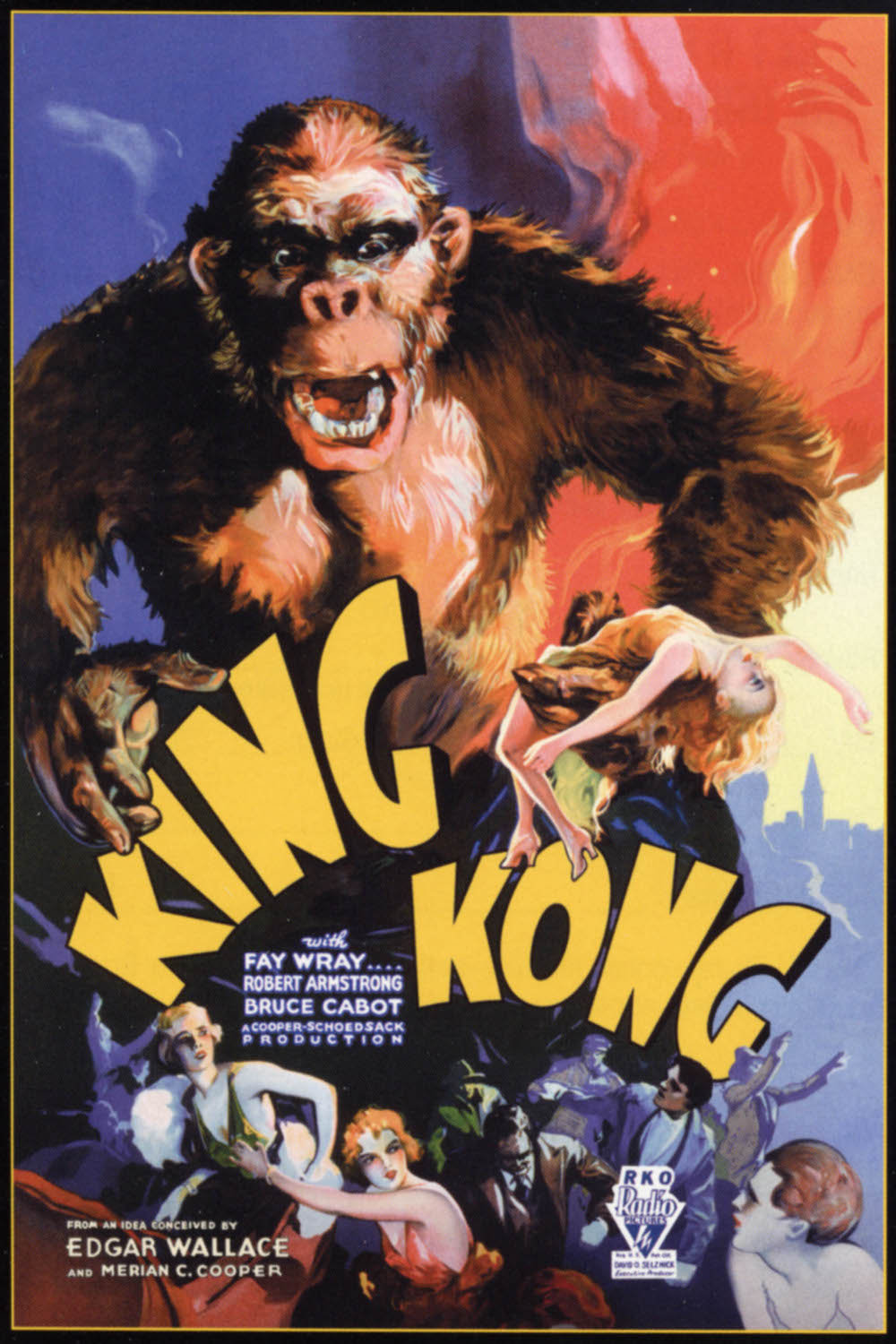
So a short question: Is it just a coincident that this poster's motive is so similiar to the King Kong movie that was released in 1933? As far as I remember, King Kong is not based on any novel and so I wondered if the whole topic, with stealing the women and a giant gorilla, was either common in that time or if both ( King Kong and the Poster) are inspired by the same source? Could anyone provide some background about that?
For example, here is another poster from the King Kong movie that is somehow pretty close to the war propaganda poster. http://www.nitehawkcinema.com/wp-content/uploads/2014/09/kong-33-1.jpg
1 Answers 2015-06-30
I'm want to learn more about my roots and would love to read about the civilization in depth and maybe even learn a bit of the language. When i was in school i took several latin american courses that briefed over them but i never did get to take a specifically oriented class of them.
Could anyone guide me to a great read about the civilization, the theories about them, etc.
1 Answers 2015-06-30
This has always driven me crazy.
2 Answers 2015-06-30
What were you trying to do when maneuvering your tactical divisions of men in battle?
If it is to "gain an advantageous position relative to your enemy," particularly what problems / factors were you trying to alleviate upon your tactical maneuvers?
When looking at classic battles, why do the roles of divisions of men differ by their degree of mobility?
Would tactical maneuvers even exist if the divisions of men possessed equal speed?
Are the variations of tactical maneuvers few and fairly simple?
1 Answers 2015-06-30
I am watching WWII in Color and I am wondering why the french ships refuse to join the British or sail to a neutral port? Wouldn't that be the smarter option?
1 Answers 2015-06-30
Lacking text sources is there anything we can point to as far as physical evidence that the people of a particular area and time utilized slave/corvée/other forms of forced labor? Say in Roman construction sites, the areas around ancient Chinese royal tombs, etc.? I can't think of anything except obvious stuff like shackles, which depending on the context could just as easily be signs of imprisonment with no implication of forced labor.
Is there anything about the layout of a farm or a city that would point to forced labor as opposed to other economic modes?
1 Answers 2015-06-30
1 Answers 2015-06-30
I am currently reading War and Peace by Leo Tolstoy, and I have some questions about the titles count and prince, which appear almost on every page of this novel.
Which of these titles has a higher ranking within the aristocracy? Are they degrees on the same ladder, or are they in completely unrelated categories? Because in the novel, Prince Bolkonski considered his son marrying a countess unfavorable, while Prince Vasili basically arranged his daughter's marriage to Count Bezukhov because he thought it was advantageous.
Do princes and counts have a direct familial relationship to the Tsar? Or are they from different, unrelated families?
Is it possible to acquire those titles? Like when a person acquires the title Sir or Dame?
Do they have any specific obligations towards the state? Or are they just basically people with high status and too much money and manpower, who can choose to cooperate with the state at their own leisure?
1 Answers 2015-06-30
My family has been in Virginia since 1607 (On one line, it goes back to Robert Beheathland.) I didn't come here to brag though, this is a serious question. Why do people with Virginia ancestry have a lot of "gateway ancestors?"
2 Answers 2015-06-30
1 Answers 2015-06-30
I have visited a few museums in Germany, and can't recall ever seeing a statue of Hitler. I've also never seen any in old photographs or documentary footage. my understanding is that the Nazi state was essentially one big cult of personality around the Fuhrer. We know that Hitler widely appropriated symbols and propaganda techniques from both the Catholic Church and the Communist party, both of which seem obsessed with statuary. So why wasn't every street corner festooned with statues of the Fuhrer, the same way busts of Lenin are found everywhere in the former eastern bloc?
2 Answers 2015-06-30
I ask this question because of this article I read. It's a very long read where the writer follows the footsteps of a British explorer who disappeared on an expedition in the amazon trying to find a lost city. The writer talks a lot about the tribes who were living there when the explorer passed through (and still are living there now).
At the end he talks about meeting an archaeologist working there who says that they are the descendants of a more "advanced" civilization who build settlements surrounded by a moat and a wall. He claims they also had roads and bridges connecting the settlements, plazas and pottery. (Ctrl+F "archeologist named Michael Heckenberger " to find the part I'm referring to)
Is there any truth to this? If there is could you tell me something more about why they're gone now?
1 Answers 2015-06-30