When electricity is usually blue or white in color. Is this just a trope of American cartoons, or has it been depicted as yellow in Norse depictions of Thor and Greek depictions of Zeus?
1 Answers 2015-06-22
2 Answers 2015-06-22
I don't think this would apply to countries with a Parliamentary system, but at least in the US, have there been cases of a Republican running successfully as a Democrat or vice versa, an Independent as either, etc? I'd guess that there would at have been some of that in the 60's as the Southern politicians switched from D to R.
1 Answers 2015-06-22
1 Answers 2015-06-22
1 Answers 2015-06-22
I realised while reading about French Naval expansion up to WW1 that I had no idea what the French Navy actually did in the war. I've always got the impression the British Navy fought and kept the Germans bottled up in the North Sea. Wikipedia says the French faced the Austrian in the Mediterranean, which doesn't seem like the most challenging task, and had an important role in the Dardanelles campaign.
Can anyone expand on what the French Navy did in the war? Is their apparent lack of action simply because with the Germans kept in check by the Royal Navy there weren't any big set-piece naval battles? (Thinking about it, I can only name a single naval battle from WW1.)
1 Answers 2015-06-22
1 Answers 2015-06-22
My understanding is that all the events that created tension between North and South were directly or indirectly related to slavery, and without the growing abolition movement and the controversy over the expansion of slavery to new states, the Civil War never would have happened.
But I've been hearing a lot from the "states' rights" crowd lately claiming slavery was NOT the main cause of the Civil War. Were there any specific issues not related to slavery/abolition that caused resentment in the South? Were there any other specific "rights" not related to owning slaves that Southern leaders felt were threatened? Did they reference these issues or rights in any speeches or documents?
1 Answers 2015-06-22
If you go visit the Vatican Museums, a ton of the art on display there (possibly most of it) is pre Christian, specifically of Roman origin. Why did they put it at one of the centers of Christendom, instead of either leaving it in the Forum or destroying it outright like they did with others (such as the statues that were on the Pantheon)?
2 Answers 2015-06-22
I suppose this could be applied to any war, really, though I'm specifically most interested in the American Revolutionary war. Apologies if this question is too broad (it probably is.)
1 Answers 2015-06-22
I've noticed a lot of 19th and 20th century references in Slovenian and Yugoslav print to either Austrian Germans or Austria in general that involved the colour green over the years (examples: http://www.maribor-graz.eu/images/1920_lhm_plebiscit_ukm.jpg; http://matejzalar.si.hosting-14.domovanje.com/wp-content/uploads/2011/10/7357031_09fbb284a07c4b1578432d23ec9b7ecf_large.jpg). Initially, I thought it just had to do with the fact that in the Carinthian plebiscite of 1920, the pro-Austria ballots were green, but I've recently discovered much earlier references of the kind (e.g. the Laibach Casino, a popular meeting point for Germans in Ljubljana was popularly known as "die grüne Insel"). I was wondering how the connection came about and was hoping someone here could shed some light on it.
2 Answers 2015-06-22
With the potential for Greece to leave the Euro and all the talk of the Drachma making a return I have been thinking about currency names and what they tell us.
For example, Turkey uses the Lira, as did pre euro Italy, Lebanon for a while (still used as a slang word today) and Israel too for a time - all continuations of the roman empires Lira...of course Israel moved to the shekel, another throwback currency name!
Are there other examples of such continuation in other currencies reflecting older and more ancient borders?
Equally are there other examples of throwbacks like the shekel...perhaps a modern equivalent of the successors of Alexander the great minting coins with his head to bask in his reflected glory and legitimacy (like this one here - http://www.britishmuseum.org/explore/a_history_of_the_world/objects.aspx#31 )
1 Answers 2015-06-22
What prevented the Meiji restoration from occurring centuries earlier? If the Emperor was really considered to be almost divine, how could the shogunate possible coerce or maintain control over an individual with so much potential power?
3 Answers 2015-06-22
If every King of England down to Richard III (d. 1485) was a direct male descendant of the counts of Anjou, why do historians arbitrarily stop calling this lineage "Anjou" or "Angevin" after 1154 and start calling it "Plantagenet?" And why is there another switch in names to "Lancaster" and "York" when the Angevin male line seems to be unbroken?
2 Answers 2015-06-22
I've been seeing a few posts on Reddit lately about the Great Wall of China and wanted to know why it was built, other than keeping the mongolians out. Then I begun thinking about human nature and how purpose ties into it.
Could being bored or feeling purposeless lead to civilizations to undertake such large projects?
I know the Great Pyramids of Giza had many reasons for being built, one of them is to give the Egyptians a huge ego boost for their existence as well as signifying great power.
Forgive me if I sound like a 5 year old, but I've been thinking about the history of humanity from a philosophical perspective. And I've begun thinking about the notion of 'being bored with life' which leads to questioning its purpose, which ends up going down a rabbit hole of other deep questions. I figure we humans generally deal with this problem by incorporating activities such as hobbies and other projects that give our lives meaning. So for great leaders to keep their empires alive, I'd assume they keep their spirits up by undertaking great projects or creating 'feel good stories' like myths and legends to kind of keep people distracted until they die, thereby keeping their power secure.
So could the seven wonders of the world have an innate relationship with a fundamental questioning of our existence?
1 Answers 2015-06-22
What were the other major effects of the GI bill?
1 Answers 2015-06-22
1 Answers 2015-06-22
Welcome to Monday Methods.
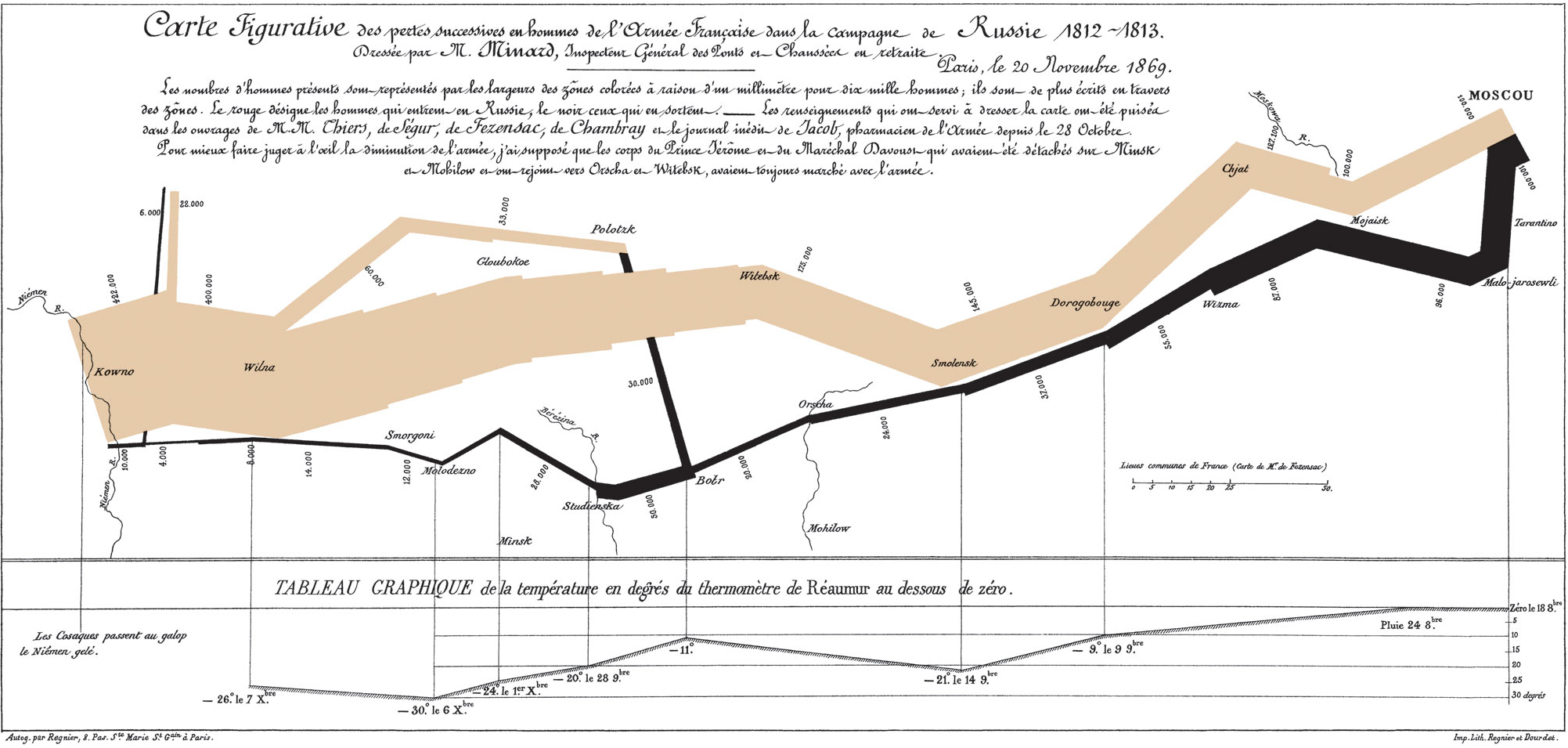
As the title suggests, today we will discuss maps and graphs and other pictorial ways of conveying information.
The first question should be: what are the limitations of the infographics. Should every military campaign be shown through a graphic like the Minard graph or was that only feasible for a specific type of campaign?
Similarly, when are maps of kingdom/state boundaries ineffective? Do these lines on a paper give a false sense of surety when describing ancient or non-Western societies with different ideas of space and borders?
As always, further questions within this topic are welcome, so feel free to ask them.
Next week we will discuss the particulars of studying the Digital Humanities.
4 Answers 2015-06-22
It always struck me as odd that violently bumping into each other became the de facto dance move at most of the punk concerts I went to growing up. How did such an out there tradition become so commonplace?
4 Answers 2015-06-22
I have a lot of questions about Roman Britain. I hope it's not against the rules to post multiple questions, as they're largely grouped around a single theme.
At any given time, what number of military troops were typically stationed in Roman Britain? What was considered the minimum number to ensure Roman authority?
What was the ratio of Roman "immigrants" to Britain compared to natives?
What proportion of the general population could speak and understand Latin?
What kind of infrastructure did the Romans build, in addition the famous roads and Hadrian's wall? For example, did any town of Roman Britain have sewers like Rome did? I know that London didn't have a sewerage system until the 19th century, so I'm guessing not, and yet they did build baths.
What were the major products of Roman Britain? I'm aware of wool and tin. But I've also read that there were silver and gold mines in Britain during this period, which surprised me. What kind of quantity of silver and gold did these mines produce? When were the deposits exhausted? Did the Romans discover/mine coal?
Where did Roman Britain trade with directly? Did ships just shuttle between Britain and Gaul, or would British ships make their way to the Mediterranean?
What global trade goods made their way to Britain from the wider empire? Would anyone in Britain have their hands on goods like silk and cinnamon, for example?
Would there have been any place in Roman Britain that would have had a substantial library? I'm thinking in particular of Greek and Roman philosophy/mathematics, but also Roman technology/engineering knowledge.
Thank you for your patience, hopefully someone might be able to answer some of these! If you're wondering, the motivation behind all these questions is that I'm interested in alternate history and specifically in what would have had to occur in order for Roman culture to continue in Britain post-410 AD.
1 Answers 2015-06-22
This question is inspired by a Vice news documentary (https://youtu.be/Iq0rZn8HFmQ) on a man living in solitude with only his wife. I found it interesting because he isn't the survivalist type, he looks like you could have plucked him out of any office building. At one point as he is over looking the land scape he says, '' I blame the Romans, really [for settling nomads].. ''
1 Answers 2015-06-22
1 Answers 2015-06-22
I tried finding a source to that story, but I didn't manage to do it.
It says that the merchant, knowing the Impaler's reputation, noticed that the Count had given him one too much coin. He quickly gave it back, to which Dracul replied that this was a test, and if he had not given the ducat back, the count would have had the merchant executed.
I somehow doubt this happened, despite Vlad's cruel image, one gold/silver coin seems ridiculous.
1 Answers 2015-06-22