1 Answers 2015-04-07
1 Answers 2015-04-07
He was a general in the Civil War. Legend has it that he didn't like how some generals didn't care too much if their army didn't have shoes or good food, or any other essentials. He decided to take extra care of his men, and even went as far as to hiring prostitutes to stay with them. I guess other generals saw this as him showing off, and poked fun at them. They called them "Hooker's Army" and The name stuck ever since.
My family is 100% sure this factual and even takes offense when prostitutes are referred to as hookers. I'm skeptical because That seems like such a widely used term that likely didn't come from that single source. Is this just a family legend that got stretched and exaggerated?
1 Answers 2015-04-07
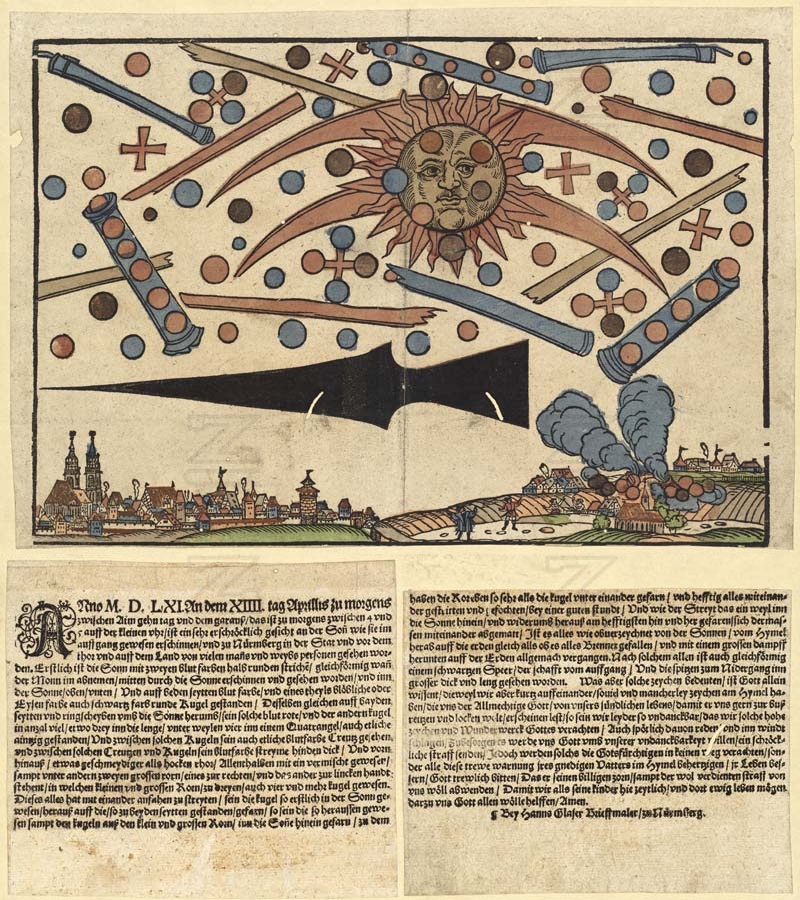
The Nuremberg phenomenon took place on 1561 and this was a depiction of it.
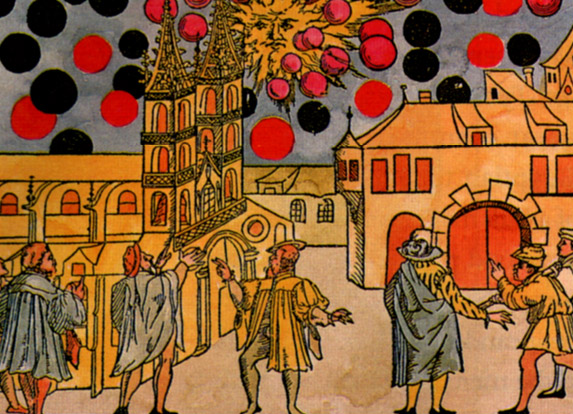
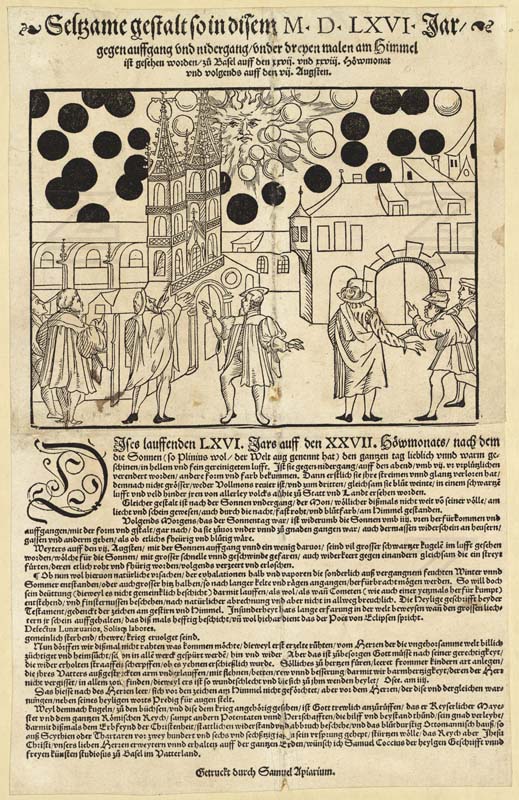
Something similar happened in Basel, and these are [more depictions]
(http://upload.wikimedia.org/wikipedia/commons/8/86/LinkSeltsame_Gestalt_so_in_disem_MDLXVI_Jar.jpg).
Is it possible that this was just a joke?
Was this a misinterpretation of natural phenomena?
I've always been fascinated by strange recorded events like these ones.
2 Answers 2015-04-07
2 Answers 2015-04-07
1 Answers 2015-04-07
They obviously couldn't be on deck just walking around, getting in the way of the sailors actually driving the ship. And there were no entertainment rooms, to my knowledge. So... what did they do with themselves when they weren't working?
2 Answers 2015-04-07
Before he met the archangel, was he a polytheist, jew or a christ? Or did he belong to a different religion?
1 Answers 2015-04-07
Why would Russia support NK in the war for such a small plot of land? Was it to spread communism? And did we really stop the spread of communism through helping SK win the war?
2 Answers 2015-04-07
Recently I finished reading "Monstrous Regiment" by the late Terry Pratchett and in this book, a girl who lives in a strictly religious country where women are technically not allowed to own any property decides to join the army when her father dies to find her brother who was declared missing in action during the war that is devastating her country, because she cannot legally take over the bar her father used to run. Problem: women cannot join the army, so she dresses up as a man.
Now I know Pratchett often drew parallels to real-world history, so I was wondering if this happened in other conflicts, more specifically the crusades as large amounts of men were drawn in to fight in the holy wars in the Levant. Did some of these women, upon hearing that their beloved had disappeared, decide to join the war disguised as a man? Is there any record of this?
2 Answers 2015-04-07
Hello everybody
I'm trying to learn more about how identity in Western Europe/North America is formed because of your gender and roles/social constructs it brings. Also any kind of biological not social studies about what it means for your psychological/physical development because you are born a man/women is also very welcome. My main interest lies in Modern Western world after WW2, but I'm also interested in learning the big picture about it, so other continents/times is also welcome
Studies about people with not usual sexual preferances is not my main interest, but I'm pretty sure it could bring very interesting points about the grand scheme of things, so it is also welcome.
Very thankful for any kind of input! Sorry if I haven't made myself clear, English is not my native tongue.
2 Answers 2015-04-07
I remember browsing "fact" sites as a youngling and seeing this one pop up every now and then. Rationally, I thought there must have been a number of accounts on this event, but I was, and still am, not sure what the truth behind this event is.
1 Answers 2015-04-07
Greetings all,
I'm an undergrad student, and for the final project of my American History class I am collecting love letters from the American antebellum period.
I have not had more trouble than I expected finding actual letters; however, finding scholarly writing about the history of love letters has proven somewhat difficult. I am wondering if anyone might be able to point me in the right direction, or may even know of a specific source/book/article they'd recommend? Many thanks.
Also, I recognize that love letters may be too narrow of a topic to find an entire book on. Thus, broader topics like courtship and letter-writing should probably suffice. Again, I appreciate any advice and direction you have to offer.
Edit: in the case that some future student stumbles across this post during their own search for writings on love letters, I'd like to share my findings:
Eustace, Nicole. “’The Cornerstone Of a Copious Work’: Love and Power in Eighteenth-Century Courtship.” Journal of Social History 34.3 (2001): 517. America: History & Life. Web. 9 Apr. 2015.
Lystra, Karen. Searching The Heart: Women, Men, and Romantic Love in Nineteenth-Century America. New York: Oxford University Press, 1989. Print.
Rothman, Ellen K. Hands And Hearts: A History of Courtship in America. New York: Basic Books, Inc., 1984. Print.
Waterman, Bryan. “Coquetry And Correspondence in Revolutionary-Era Connecticut: Reading Elizabeth Whitman’s Letters.” Early American Literature 46.3 (2011): 541-563. America: History & Life. Web. 9 Apr. 2015.
1 Answers 2015-04-07
We're they sent to camps? Killed by gestapo? Did they try to speak out against him?
1 Answers 2015-04-07
Since askpoliticians doesn't exist.
2 Answers 2015-04-07
A question that has always fascinated me. In my previous readings, the general consensus was that Stalin was stunned by Hitler's betrayal, but did Stalin plan on sticking a knife in Hitler's back before he got beaten to the punch?
3 Answers 2015-04-07
My great great grandfather was a chap called Arasuke Sone ( 曾禰 荒助). Sone was a reasonably prominent Meiji-era politician in Japan.
On the death of my grandmother, we came across some references to Sone (diaries etc) in the family store house, which had been left largely sealed from around the time of his death.
There are minimal references to his life online (Wikipedia etc), but I am struggling for more in-depth biographical information. I've travelled to the Hagi Museum in Japan to learn more about the extended Samurai clan, but beyond some brief references (similar to Wikipedia), there was quite limited information about Sone specifically.
I'm not sure if this is the kind of question that Ask Historians deals with, but is there someone out there who can point me in the right direction?
1 Answers 2015-04-07
"It started in the mid 1800's, and the stars were finally aligned just right in 1940." That is what my history professor said today. He explained that the roots of WW2 began around the same time as the French Revolution. He also explained that events like the Boxer Rebellion, the Franco-Prussian war, and obviously WW1 directly influenced WW2.
Could anyone give me a direct timeline of the events that influenced WW2 up till it actually began?
1 Answers 2015-04-07
In his book 15 Minutes: General Curtis LeMay and the Countdown to Nuclear Annihilation, L. Douglas Keeney mentions in a couple spots that SAC suspected the Soviets might secretly place high-yield nuclear weapons at the bottoms of major US harbors, with a view to detonating them at the start of a nuclear war.
Is there any evidence that the Soviets had planned to (or attempted to) do just that?
(I realize that the Soviets apparently never fielded 100-MT devices as outlined in the scenario, but even a 15 or 20-megaton bomb would cause a hell of a lot of damage.)
Conversely, is there evidence that SAC expected the Soviets to do that because they planned to do something similar to Soviet ports?
1 Answers 2015-04-07