1 Answers 2015-01-15
1 Answers 2015-01-15
2 Answers 2015-01-14
I'm well aware that the soldiers on all sides generally agreed that this war would be short, and done before Christmas of 1914. They quickly found themselves in Fox Holes, Slit Trenches, and Trenches. 4 years of trench warfare commenced essentially.
Looking at the Battle of the Somme, miles not even in the double digits were claimed by all sides collectively, and approximately a million died.
Something had to have changed with trench warfare. How were these innovations used?
2 Answers 2015-01-14
In the debate of religion, we turn to the question of one vs. many lives. Many religions do believe in reincarnation, and I have wondered if Christianity have believed at one point in time the doctrine of reincarnation too.
The story is that emperor Justinian wanted to use his authority to stop the belief in reincarnation in 545 AD and the Pope at the time, Pope Vigilius, defended the belief for reincarnation.
Here's a source writing about the matter: http://reluctant-messenger.com/reincarnation-pope.htm
Is there any reason to believe that this didn't happen, or do you have a more direct source stating that it did?
2 Answers 2015-01-14
1 Answers 2015-01-14
I realize the obvious answers to this are that they did not hold the city of Rome for most of that era and that their capital during that era was the city formerly known as Byzantium. However, they always referred to themselves as the Roman Empire (Empire of Romans if you want to literally translate), while outsiders tended to as well with the exception of some nations in the West as far as I know.
So building on my question, how is it that "Byzantine Empire" came to be the dominant term? Is this common across most languages, or is it something particular to English? Finally, will this ever change? I have noticed a few historians starting to refer to it as the Roman Empire instead.
2 Answers 2015-01-14
1 Answers 2015-01-14
I've just been reading "All the countries we've ever invaded" and at one point it mentions an English fleet that assisted the Crusaders.
How did a fleet of Anglo-Saxons come to be there? Were they Varangians or exiles?
1 Answers 2015-01-14
George I, George II and George III were simultaneously kings of Great Britain and of Hanover, in personal union. I'm aware that the streak ended in 1837 when Victoria became queen of the UK but not of Hanover because of Hanover's different succession law.
During the years of personal union, was any effort made to integrate the two kingdoms? Was any effort made to try to make the succession laws of the two kingdoms more consistent in order to preserve the personal union? Was any effort ever made to incorporate Hanover into the UK the way that Scotland and Ireland had been incorporated?
1 Answers 2015-01-14
I have to admit I'm somewhat of a gender studies newbie and I'm trying to educate myself about the issue. I watched this video (https://www.youtube.com/watch?v=VosH1MOTsfQ) and the youtuber says that Gender differentiation was all the rage in the 1600s... but when did it start?
Was there some point in history where people were just too poor or didn't have enough energy to make two different types of clothing for girls and boys?
Can someone point me in the right direction or explain to me when all this variance among sexes started?
Also while we're on the subject, I also heard that women used to walk around in Europe topless and nobody really freaked out about it. Is that true?
Any help would be appreciated.
1 Answers 2015-01-14
A bit of a weird question, but I was told this by a tourist guide at Topkapi Palace, and he had a little print of this painting (http://en.wikipedia.org/wiki/The_Tortoise_Trainer). Does this have any basis in reality, and if so, where would such a strange tradition have originated?
1 Answers 2015-01-14
We all know William the Conqueror was from Normandy and thus spoke french. Also I'm guessing the Plantagnets also spoke French in Court, but by the time of Elizabeth the court speaks English. My question, when did the royal family and the court drop French and adopt English?
1 Answers 2015-01-14
1 Answers 2015-01-14
My knowledge of the Atlantic slave trade isn't all that great, but as I understand it by the end of the 19th century it was no longer practiced by the major world powers who'd once propagated it (the US, Britain, France, Spain etc)
The thing I don't understand is that if there was a drive amongst at least some Whites to abolish slavery, why did there continue to be such extreme racism afterwards? The question seems to especially apply to America, since my limited reading has given me the impression that a big push behind abolition was done by the religious who viewed it as sinful/abhorrent to God, and yet America, despite it's largely religious population (ie the Bible Belt) has a legacy of even institutionalised racism, such as the Jim Crow laws. Why didn't the religious aspects of abolitionism take hold in such religious areas?
How was it that people were able to recognise the humanity of other races/convince others of it enough to end slavery only for entrenched racism to prevail for decades, and in some cases even to the present day? It seems that, if people realised how wrong slavery was that they would surely do away with their racial hate and beliefs. Did the abolitionist movement not actually strike a chord with most people, but was somehow able to influence governments? Was it simply a case that a few pen-pushers managed to make slavery illegal whilst the average Joe continued to hold, and pass on, racist views?
1 Answers 2015-01-14
I know that San Marino boasts of being the world's oldest republic, but I'm assuming it wasn't always a democracy? If San Marino was not historically a monarchy, how was it governed, and when did it become a bona fide democracy?
Also, how did it manage to survive for so long without either being absorbed into Italy or any of the other states that later united to become Italy? Surely Mussolini would have been inclined to invade San Marino, especially since it acted as a haven for huge numbers of Italian, and especially Jewish, refugees?
2 Answers 2015-01-14
A friend and I were having a discussion about this, and we can't seem to find any reputable sources on the subject. We are fully aware of the famous music of that era, such as Mozart, but are not sure if that was popular at the time, and haven't been able to find any reputable sources talking about the popular music of the time.
4 Answers 2015-01-14
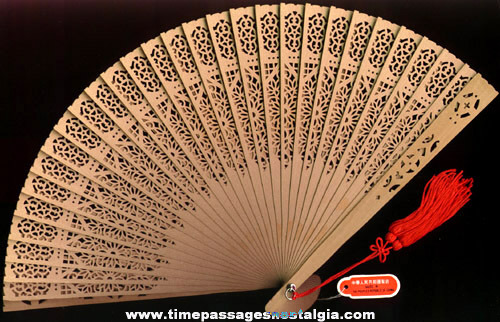
Many times in pictures or/and movies I find samurais and people who know kung fu holding an handheld fan. Why is it?
Does it have some kind of historical background?
An fan
1 Answers 2015-01-14
How absolutely outclassed was Paraguay. Was there any possibility of them achieving a few politically and militarily significant victories or were they going to suffer the fate they did during the war?
Why was the Paraguayan military so outclassed even when they had an expanding industry base and a comparitively modern equipment base for their armed forces compared to Brazil or Argentina.
Why did Francisco Lopez believe he could win this war in any context considering his vast population disparity compared to Argentina and Brazil
1 Answers 2015-01-14
My teacher made a requirement for an essay that it cannot contain alternate history. For instance, no "if hitler had never lived" or "if the Roman Empire never fell". I want to know why alternate history is an issue when looking at the meaning of an event.
Edit: Wow thanks guys. You went above and beyond what I was hoping for! Imagine if you hadn't shared what would have happened...
2 Answers 2015-01-14