1 Answers 2014-04-30
Knowing that no serious historian uses "dark ages" to describe Medieval Europe, I always have trouble when I see the Greek Dark Ages. Is it commonly accepted that this is an accurate phrase for describing the period?
1 Answers 2014-04-30
I apologize if my question seems a little biased or inflammatory, it just seems highly revisionistic to me.
1 Answers 2014-04-30
I have a growing interest in 19th- and 20th-century German history; unfortunately, I'm currently long on enthusiasm and short on factual knowledge. My understanding of World War I has been that though the war used to be blamed entirely on Germany, the current attitude is that while Serbia lit the metaphorical match, and Germany and Austria-Hungary set it to the tinder, the whole European woodpile was already very dry. However, the Fischer Thesis, which I understand is widely accepted, once again lays the blame mostly on Germany. It isn't universally accepted, though, and much of the online material I've found says things along the lines of "the Fischer Thesis remains contentious to this day". What I'm asking, basically, is "if I were, hypothetically, to argue against the Fischer Thesis, how fast would I be laughed out of the building and made an example of in /r/badHistory?"
1 Answers 2014-04-30
Was it just the lack of air cover on the Japanese side? Even so, the battle just seems extremely one-sided.
1 Answers 2014-04-30
I met someone yesterday who migrated from a Nepali refugee camp. I was absolutely stunned to find out that she and her family were expelled from Bhutan. The interpreter went on to explain that the Nepalese settled there as part of the Ghurka Conquest, a historical event I never heard of before. It was also quite surprising that the Bhutanese King, who coined " Gross National Happiness" would condone the expulsion of a people who considered themselves Bhutanese. I am hoping Ask Historians can give me some background. Many thanks in advance!
1 Answers 2014-04-30
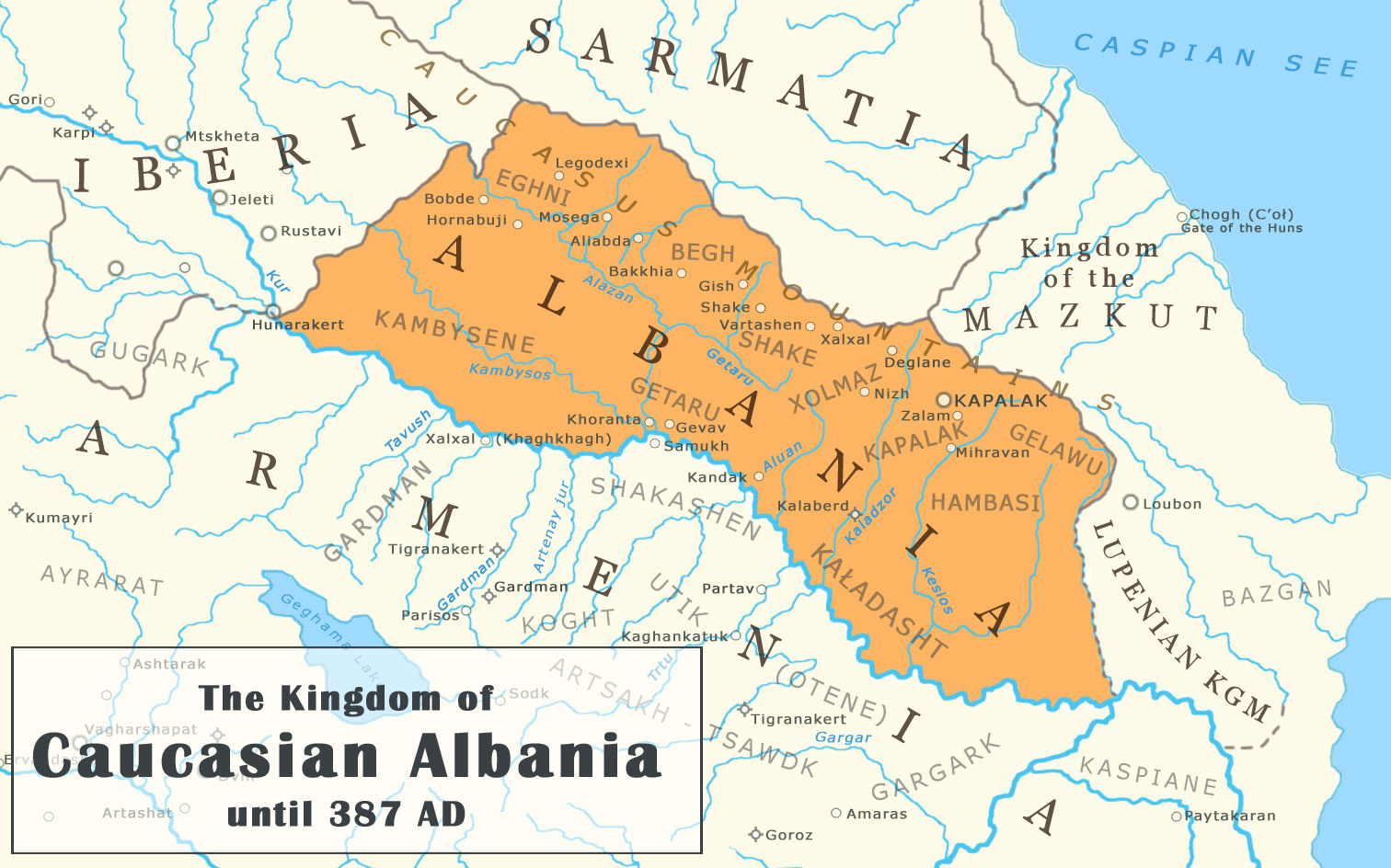
http://upload.wikimedia.org/wikipedia/commons/c/c9/Aghuank.jpg
I'm really interested in this region as a whole and this has always perplexed me.
edit: Seems I've spelled Caucasus wrong.
2 Answers 2014-04-30
Also what were the roles of the government leaders outside of the party? It seems so different from other countries/eras.
1 Answers 2014-04-30
People frequently reference the stories' events as part of Greek mythology but they are usually thought of as works of fiction, not prophecy. So if they were then what was the precedent for stories, sch as the above or plays, becoming religious canon. If they weren't then what was the basis ancient Greek faith, their Bible so to speak?
2 Answers 2014-04-30
1 Answers 2014-04-30
I was thinking about how men are portrayed in ancient period movies as having long hair and beards. I wondered if men were ever clean shaven or always had a beard going. Did they use their iron knives to roughly chop their hair off? Did they ever have short hair cuts like we do now?
3 Answers 2014-04-30
Looking at maps of the Roman Empire, they only ever controlled the very north coast of continental Africa. Were the Romans aware of what lay past the Sahara? Were there ever Roman sea expeditions down the western coast, or ever even navigate around the southern tip of the continent?
1 Answers 2014-04-30
Obviously there were people with unauthorized access to networks and devices as depicted in the movie War Games going many years back. I mean more how countries (such as the US and China) actively try to break into each other's sensitive systems (banking, defense, power, etc.).
I recently saw an episode of The Americans where the Soviets physically attacked ARPAnet, but I don't mean this type of attack.
Attacks originating from foreign soil to a country using only electronic bits of data. Do we know when this started? Or when was it first reported by a country?
Living in the US gives me the feeling that, beyond the NSA transgressions, there has been a good number of other incidents in the past I've never heard of.
1 Answers 2014-04-30
From what I can tell both sides were forced to dig into the earth to protect themselves from the storm of steel above them. However, I read that leadership would rotate soldiers into the trenches to try to keep them fresh and keep morale up as much as they could. So if they could pull soldiers out of the trenches, and the trenches were just absolutely horrid conditions, why even keep them there in the first place? If the gunners were doing a good enough job keeping the enemy pinned down, why not have the others safely behind the guns in some bunker, away from the awful conditions, awaiting orders or a charge of some sort? Were their any necessary duties that they needed men to perform that forced soldiers to remain in the trenches?
1 Answers 2014-04-30
For example is any of their culture still alive today? Is any of their technology still used? How did they affect us?
4 Answers 2014-04-30
I recently attended an Honor Flight event (WWII vets fly out to Washington D.C. to see the WWII memorial) and got into a conversation with a WWII pilot. He told me that he flew aircraft in the continental United States (I forget exactly where). He said his missions consisted of flying his up-armored aircraft at low altitude so that friendly anti-aircraft could use him as a training target.
I wanted desperately to believe him, but I haven't been able to verify this happened. Wikipedia suggests that unmanned Culver PQ-14s were used for this sort of training, but maybe that was later in the war.
Was a cranky old WWII vet pulling my leg here or is there a chance the U.S. actually shot at our own planes over our own soil for training purposes?
1 Answers 2014-04-30
Some have been saying that taking the US of the gold standard was good while some are saying that it benefits the moneyed elite.
I just want to clarify. Thank you for you answers!
1 Answers 2014-04-30
In my U.S. history survey today my professor briefly touched on the Iranian hostage crisis, the failed rescue attempt and her scathing opinion about the weakness of Jimmy Carter's foreign policy. Given the public outrage over the Benghazi attacks recently, why wasn't some kind of military presence in Iran considered and/or carried out?
1 Answers 2014-04-30
2 Answers 2014-04-30
We discussed this quite a bit during a class I took on slave uprisings and rebellions. Would anyone care to discuss why they believe there was only one successful slave rebellion? It seems to me that numbers were not an issue for the most part. I have my own opinion as to why certain rebellions (Nat Turner's, for example) failed in freeing slaves. To be clear: my definition of a SUCCESSFUL rebellion is one in which slaves were no longer being held in bondage.
http://www.dcte.udel.edu/hlp2/resources/slavery/slaves-US-1790-1860.pdf (Slave population by year in the U.S.)
http://www.freeaainnc.com/censusstats1790-1860.pdf (Free african american population same time period)
1 Answers 2014-04-30
It seems that the smart move by the Confederacy would have been to just avoid open conflict at all costs. The notable quote by Confederate secretary of state Robert Toombs about an attack on Fort Sumter,
"Mr. President, at this time it is suicide, murder, and will lose us every friend at the North. You will wantonly strike a hornet's nest which extends from mountain to ocean, and legions now quiet will swarm out and sting us to death. It is unnecessary; it puts us in the wrong; it is fatal."
makes it seem that opinion was not unpresent. How widespread was the opinion that war should be avoided at all costs? Was there any hope that the confederacy could just wait it out and then just obtain a significant degree of autonomy from the union? Was the union set on the mindset of going to war to reign back in the southern states, or if the confederacy had played their cards right, was calling the unions bluff on their willingness to go to war a possibility?
On a somewhat separate note, what exactly did Jefferson Davis mean in this quote of a portion of his farewell address to the senate upon the secession of Mississippi?
The communities were declaring their independence; the people of those communities were asserting that no man was born--to use the language of Mr. Jefferson--booted and spurred to ride over the rest of mankind; that men were created equal--meaning the men of the political community; that there was no divine right to rule; that no man inherited the right to govern; that there were no classes by which power and place descended to families, but that all stations were equally within the grasp of each member of the body-politic. These were the great principles they announced; these were the purposes for which they made their declaration; these were the ends to which their enunciation was directed. They have no reference to the slave; else, how happened it that among the items of arraignment made against George III was that he endeavored to do just what the North has been endeavoring of late to do--to stir up insurrection among our slaves? Had the Declaration announced that the negroes were free and equal, how was the Prince to be arraigned for stirring up insurrection among them? And how was this to be enumerated among the high crimes which caused the colonies to sever their connection with the mother country? When our Constitution was formed, the same idea was rendered more palpable, for there we find provision made for that very class of persons as property; they were not put upon the footing of equality with white men--not even upon that of paupers and convicts; but, so far as representation was concerned, were discriminated against as a lower caste, only to be represented in the numerical proportion of three fifths.
I am a little confused on if Jefferson Davis was speaking derogatorily about the blacks, or if he was calling out the hypocrisy of the North, in that the three fifths compromise effectively established the blacks as non-persons.
4 Answers 2014-04-30
Just wondering for a story I'm working on, if anyone has any relevant reference that would be great. Sorry if this question has already been asked.
Basically, what would the average seaman/passenger be doing all day long? And how long would such a travel last, say going from Lisbon to Brazil?
Thanks !
1 Answers 2014-04-30