I understand Φιλιππος means a "lover of horses", which seems like a strange name to me. The best explanation I can find for this comes from Wikipedia:
In Ancient Greece, the ownership of horses was available only to those rich enough to afford them. Thus, "lover of horses" can also be understood as "noble".[citation needed]
Is this accurate? Was "lover of horses" a way of saying that you were rich or noble? Do we have any information on when Φιλιππος started being used and/or what the meaning was for naming your child a lover of horses?
2 Answers 2014-04-12
I would like to learn more about the Maccabean Revolt, and I'd appreciate any recommendations about good books that cover it. I don't particularly care if they are specifically about the Revolt or discuss it in the larger context of Jewish / Seleucid and/or Middle Eastern history.
1 Answers 2014-04-12
1 Answers 2014-04-12
We have all heard the horror stories (well, at least i have), that the gulags, especially the ones under Stalin, were a little better if not worse then the concentration camps under Nazi Germany. I however, am very skeptical of this, as i read from somewhere (i forget the source) that the gulags had a drastically low mortality rate compared to the Nazi death camps. This leads me to my question, how bad were the gulags in the Soviet Union?
1 Answers 2014-04-12
Robert E. Lee, Stonewall Jackson, Jefferson Davis etc.
1 Answers 2014-04-12
I don't know too much about it besides basic things, an explanation behind with some interesting facts would be really appreciated!
1 Answers 2014-04-11
1 Answers 2014-04-11
This is something I have trouble understanding. Before the Norman invasion in 1168, Ireland had its own Celtic Church. Supposedly Pope Adrian IV issued the Laudabiliter papal bull in 1155 to bring the Celtic Church in line with the Roman Church and force Gregorian reforms. The island was taken as a Papal possession. Wikipedia has some harsh quotes like
The Norman invasion of Ireland thus had the backing of the Papacy. Pope Alexander III, who was Pope at the time of the invasion, ratified the Laudabiliter and gave Henry dominion over the "barbarous nation" of Ireland so that its "filthy practices" may be abolished, its Church brought into line, and that the Irish pay their tax to Rome.
You would think that throughout the centuries that this would have been imprinted as a collective memory on the Irish people. Yet, to my knowledge, the Irish clinged to Catholicism a lot. They wouldn't accept Protestant reforms under the Tudors and the Irish people's association with Catholicism goes right through the penal laws all the way to the war of independence.
What gives? Why would these people defend so vehemently the very organisation that betrayed them? Why wasn't there a schism of the Celtic Church from the Catholic Church? That seems more like the Irish people's first and true Christian organisation.
2 Answers 2014-04-11
I am an Army veteran so I haven't been schooled on the lore of Chesty from a Marine perspective. I know the prayer and all that but I don't get why Marines today revere him. Marines who served with him didn't like him and didn't appreciate his desire to sacrifice them on frontal assaults on strategically unimportant positions for his glory. Yet any other Marine treats him like a God. Why is that?
1 Answers 2014-04-11
Obviously people during the Cold War did not just all of a sudden stop worrying about communism but McCarthyism did not last throughout the entire time period. Why is that?
2 Answers 2014-04-11
When did people start referring to their heart as the place where love comes from? Is it cultural or is it more related to biology?
1 Answers 2014-04-11
3 Answers 2014-04-11
Did he help the U.S. because he was helping out a fellow mason?
1 Answers 2014-04-11
2 Answers 2014-04-11
I once heard from a classicist friend that Vergil, the epic poet and miracle worker, was treated very much like a saint in the Catholic church, hence his appearance in the mosaics of a famous cathedral in Siena(I think?) and his role in the Divine Comedy. I have not found any good information online, however.
More importantly, though, some Greek Orthodox websites list feast days (and therefore name days) for clearly pagan names, like Herakles, Perikles, Themistokles, Sokrates, etc. Now, I'm very aware that many gods and heroes were slowly given "Christianized" names and identities after the fall of Rome, but the idea of putting these figures in their Classical names on the same level as saints is rather odd.
My question for you is are there any Christian saintly or saint-like characters from before the time of Christ?
1 Answers 2014-04-11
I hear the island hopping strategy referred to as a great strategic move, but it really seems like the only remotely sensible move, unless I'm missing something. Was anyone really suggesting trying to take the vast majority of Japanese-held islands, or was there a more specific aspect of the island hopping strategy that resulted in its high regard?
2 Answers 2014-04-11
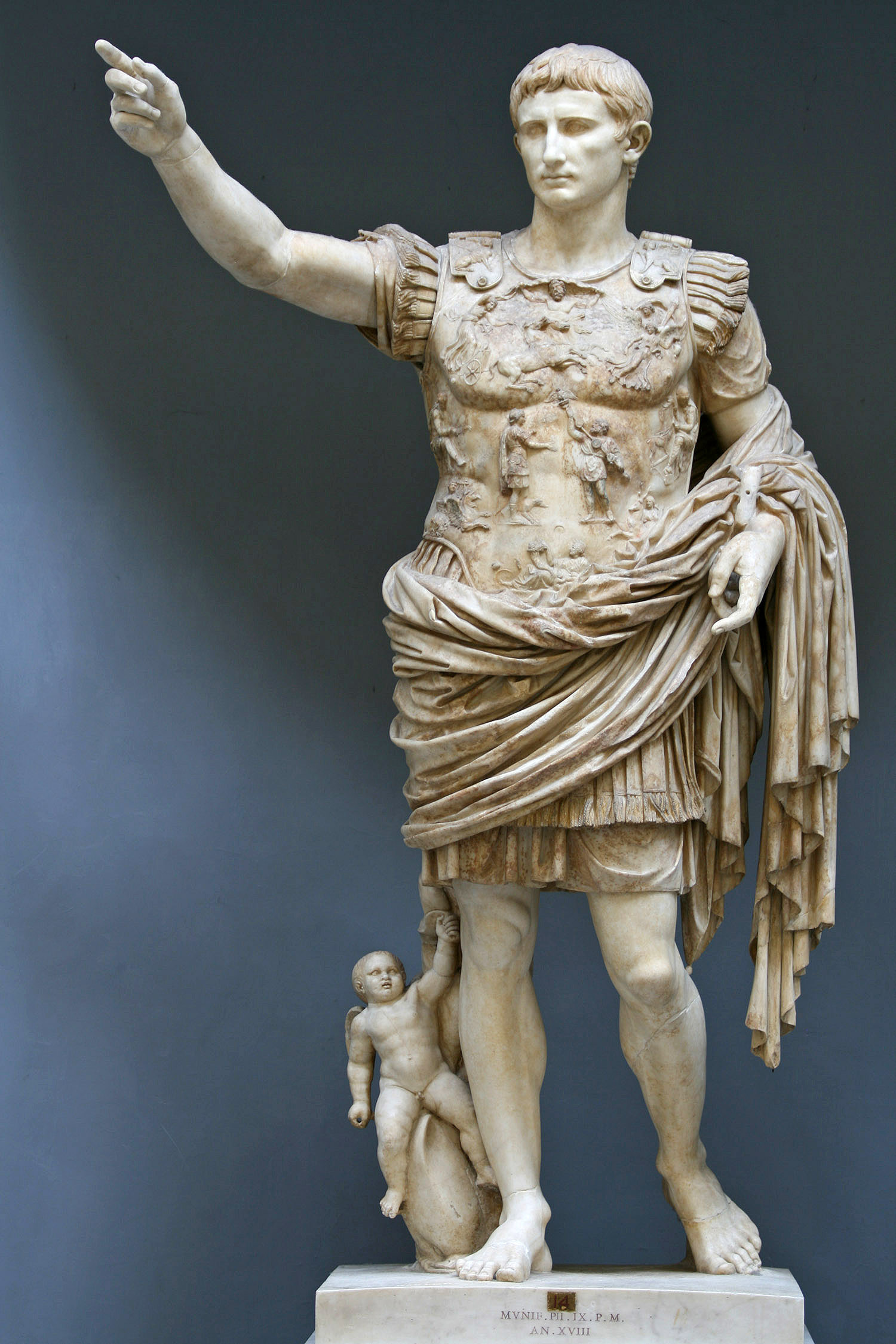
The Romans and their predecessors in Antiquity created amazingly life-like sculptures, like this statue of Augustus, or the Lacoon and Sons. But it seems that toward the end of the Roman Empire, sculpture decreased in "quality" (by which I mean realism), like this head from a statue of Constantine, and this statue of the Madonna and Child.
So what gives? Did the training and art necessary to pull off life-like sculptures simply become "lost" over time as the Empire changed or decayed? Or was it a cultural change in artistic styles, like people preferred less realistic sculptures? Or was it something else entirely?
3 Answers 2014-04-11
The AskHistorians Podcast is a project that highlights the users and answers that have helped make /r/AskHistorians one of the largest history discussion forum on the internet.
You can subscribe to us via iTunes, Stitcher or RSS. If there is another index you'd like the cast listed on, let me know!
Previous Episodes:
This week's Episode:
/u/gingerkid1234 walks us through the history of the various languages and dialects Jewish people have spoken over the millenia. From proto-Afro-Asiatic roots to the influence of Russian slang on Israeli Hebrew, with many diversions along the way. Your host for this episode is /u/400-Rabbits.
Please ask any followup questions in this thread. Also feel free to leave any feedback on the format and so on.
If you like the podcast, please rate & review us on iTunes.
6 Answers 2014-04-11
From what I can tell, the wars that expanded Rome considerably (between 500-300 BC) were quite complicated. Some argue that Rome was motivated by defense and security while others argue that it was purely to increase power and prestige. I have yet to find a source which provides a complete picture of Roman motives. I would really appreciate some input as I am insatiably curious about this topic.
2 Answers 2014-04-11
During the Victorian era, we find a kind of boom in literature with authors from Poe and Milton to the Brontë sisters and Oscar Wilde (and many more). What kind of process would a person go through to publish poems, novels, and the like? Did anything interesting occur at the time that made it particularly difficult or easy to become published?
1 Answers 2014-04-11
1 Answers 2014-04-11
This question is sparked by a discussion of Guns, Germs, and Steel, but it is not a continuation of that discussion. A complaint was made that Diamond presented determinism and that got me wondering. I know the philosophical discussions regarding determinism and free will and such, I wondered what historians here think about the topic. What is too deterministic? Or where can we identify historical causality?
My position is that I see history moving from a humanity to a science. That if we find cause we find cause. Sometimes an individual is critical and agency matters, sometimes it does not.
I would say this is most clear in history of science. Maxwell was a genius, Einstein was a genius. But if neither one of them lived physics today would be pretty much the same with the same equations. The path would be different and certainly it is the job of historians to document and understand those paths, but we would get to the same place.
1 Answers 2014-04-11
Suppose the Axis had beaten Britain, not invaded Russia, US not gotten involved, basically any scenario where the Axis had won. All "ifs" aside, certainly the Axis had a plan for what they would do should they win?
1 Answers 2014-04-11