A beleaguered general sits with his trusted lieutenants in a hastily-raised tent, plotting strategy by the dim light of torches. They stand around a table on which a large map has been unfurled. Various figures representing the size and strength of opposing forces are arrayed in formation.
This is a common trope of popular portrayals of medieval-era battles. But is there any historical evidence for this idea? Wouldn't accurate maps of enemy territory be relatively hard to come by, much less an assortment of figurines to mark troop size and troop variety?
6 Answers 2014-03-24
It seems like subculture, especially among youth, has been much more popular in the last few decades then ever before. Is that true? When people look back at Beatniks, Flappers, and Bohemians it always seems like the modern imagination of old-timey cities that are bursting at the seams with underground culture might be a little exaggerated.
Would the general population have been very aware of subcultures, in the way that most people now could describe the look and music of b-boys, hipsters, goths, burning man hippies, and punks? Does the influence that subcultures seem to have on art and music mean that they are more interesting to study in proportion to how many of them there actually were? Were there subcultures in places and times that haven't made it into American pop culture's view of history?
1 Answers 2014-03-24
I haven't, as of yet, been able to find an explanation for what Akhenaten did that goes beyond "he was a religious fanatic", but surely there were other reasons?
1 Answers 2014-03-24
What, if any, set of laws were passed in Germany that gave the Nazis the power to detain, torture, experiment on, and execute the Jews in WW2? Did it even have a legal foundation within Germany (i.e., were the Jews "sentenced" to camps), or was it just something that party officials said "hey go do this"?
1 Answers 2014-03-24
The US failed missions such as the Bay of Pigs and Operation mongoose. They also placed Missiles in Turkey and Italy, and quarantined Cuba. The USSR had Sputnik which gave the Us reason to believe the Soviets could hit them, and also scared the American Population. They also put Missiles in Cuba. But what actions did Cuba and Castro do that influenced the CMC? Besides the obvious "they accepted missiles from the Soviets". I have always pondered this. Thank you for your help /r/AskHistorians !
1 Answers 2014-03-24
I was taught that Guy Fawkes Day followed the Jewish tradition of turning a significant event or victory into a holiday, and my history professor described GFD today as a kind of "English Purim". In addition, many English rulers of the late 16th and 17th centuries compared themselves to kings like Solomon and David. How did they reconcile this with their open hatred of the Jewish people during this time?
1 Answers 2014-03-24
I always found it odd that Reagan's "tear down this wall" speech was only 4 years before the collapse. At that point was the USSR still running strong to an outside observer?
This question can go for both the West and to Soviets themselves.
1 Answers 2014-03-24
Reading around this subreddit has left me wondering how people manage to remember historiography and general bits of obscure knowledge from books and other sources they read. There are some super knowledgeable folk on here and I'm curious how they do it. Is it a case of having a great memory, or how do you collate all your information? I read books on subjects and I'd love to be able to do more with what I know, though I realise also that I'm more an armchair observer at the moment than anything else.
Basically, what I'm asking is how best to log information from various sources that I want to be able to refer to in future and potentially use to help contribute here; thank you for any input.
6 Answers 2014-03-24
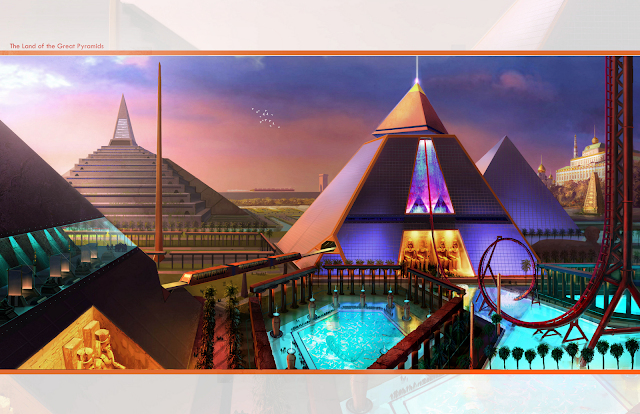
I am really interested in seeing what Egypt originally looked like in the Old Kingdom.. I was wondering if anyone could tell me, or if you had or know of any concept art that would be great!
EDIT1: I did a quick google search and didn't find anything I was looking for.. I know Ancient Egypt didn't have any roller coasters
1 Answers 2014-03-24
1 Answers 2014-03-24
Trying to figure out more about the man. I've heard some say he was one of the most corrupt people who ever lived and took everything he could while winning political allies by looking the other way. And I have also heard some claim he wanted to do good but was just overwhelmed by rebellions, warlords, communists, Japanese, etc.
1 Answers 2014-03-24
What was Spain's relationship with Northern Africa in the late 15th and early 16th centuries?
I know they had some influence in Tunis at some point.
1 Answers 2014-03-24
I've always learned that Galileo invented the telescope, but recently I've learned that it was patented in 1608, a year before he invented it. What really happened?
1 Answers 2014-03-24
3 Answers 2014-03-24
Where there other options for names that were turned down?
1 Answers 2014-03-24
So other then Republicans and Democrats what was the last party to hold a slight chunk of congress.
History of beliefs? Why and when did they dissolve.
*i do mean other then the "Independent" party
2 Answers 2014-03-24
I heard that there were units even fighting in Berlin still in 1945. Is that true? I'd love to read up more on that
1 Answers 2014-03-24
Seems in all texts he's referred to as Conrad instead of von Hötzendorf. This seems to fly in the face of other precedents. His German counterpart is always referred to as Moltke or von Moltke.
The Austrian foreign minister before Berchtold is also referred to as von Aehrenthal.
So what gives with Conrad?
1 Answers 2014-03-24
Socialist figures, socialist organizations, wars in which socialist factions played a heavy role. Anything on the topic would be great. I even live somewhat near the University of Florida, which is supposed to have a superb Latin American, and especially Caribbean, selection. So feel free to challenge them with obscure quality volumes.
For the record, I did check out the book list, which was quite good, but light on the subject of socialism in Latin America specifically.
1 Answers 2014-03-24
A serf's family can't be broken up as I understand the difference between serf and slave.
1 Answers 2014-03-24
While reading a historical trivia book I came across the author following up explaining how rich Crassus was by saying, 'Yes, the old phrase, "rich as Crassus" refers to him.' My first thought was, that's not a phrase, at least in the proverbial sense, and the author is mixing up Crassus and Croesus. I did some searching and found some others saying "rich as Crassus," but wonder if this is just a case of confusion that has spread or if this is an actual common saying; not that "rich as Croesus" is that common of a saying anymore. So, is "rich as Crassus" an old phrase or not?
1 Answers 2014-03-24
The Black-Red-Gold was used by the 1848 liberal revolutionaries and the Weimar republic, so the connotations for Germans of the period must surely have been of failure and impotence. Obviously they didn't have a lot of say in the matter, and the allies were no doubt keen to avoid using the Imperial/Nazi Black-White-Red combination, but do we know anything about what was thought about the new flag/s? When did they start becoming more accepted?
1 Answers 2014-03-24
I know that Muhammad's daughter Fatima had children and from there I assume her children had children. Is this something that is well documented throughout history or is it lost to us now?
Edit: Grammar
3 Answers 2014-03-24
When I was an undergraduate the thesis I wrote to gain my degree in history discussed how the sport of hockey mirrored and at some points defined the Cold War between the East and West.
I'd like to know details of other moments in history when sport transcended "just a game." I know soccer has affected and been affected by history, such as Francisco Franco's rule in Spain, for example, but know nothing of details beyond a few pages in a book by Franklin Foer.
1 Answers 2014-03-24