To keep it brief i remember reading from Plutarch that every year it was a tradition for the spartan population to kill Helots and it was also a rite of passage for young men. I had the impression (maybe mistaken) that all or most Spartan men killed a Helot every year.
But the issue I have is first Spartan men were each assigned a helot family from birth that was responsible for feeding that individual Spartan. This alone seems to me to be an indicator that maybe not all Helots were open season. I would also think it likely that Spartans themselves had servants attend to their needs such as cleaning their homes or cooking food etc.
Second if all or most Spartans were killing helots every year, even given the numerical superiority of the helots, there would not likely be a way to replenish their numbers fast enough. The helots did the farming in Sparta and I assume the Spartans knew this was important.
Overall the question is maybe a matter of size and scope. If the did this every year, was it more limited in scope?
1 Answers 2020-12-17
It's not in a great state now, but even before it seems to always have been overshadowed by northern city states like Milan and Venice.
1 Answers 2020-12-17
I have a selfish reason for asking, in that I have always wanted to read both, particularly the Odyssey, and this will help me decide which translation to get. But I think as a general question it is an interesting starting point to discuss how epic poems are translated.
The translation can make a big difference to the experience. I read Dante's Inferno set in Belfast vernacular, and it was quite a bit funnier and faster-paced than another version I had read. Inferno was translated into English 50 times in the 20th Century. What is driving that?
Are modern translations more like cover versions than recitals? Is there always a trade-off between fun-to-read and dry-and-difficult-but-faithful? Can there ever be a definitive modern translation?
2 Answers 2020-12-17
Greeting! I was going through the reading list and didn’t see any listing of books of any form of mythology. Could I get some recommendations please? I’d prefer mesoamerica as that’s my favorite civilization and so far, what I’ve read has been.... contradicting. That being said, I’d love any book recommendation for any form of mythology.
1 Answers 2020-12-17
2 Answers 2020-12-16
Title kinda says it all, really weird to me thinking that a nation that truly created modern European culture and the Renaissance would somehow in just under 300 years be almost completely discredited from its former glory. Perhaps I'm missing some vital context or maybe it has to do with the vast historical gap I have with the Medicis and development of ideology but idk hoping a historian can help me out
1 Answers 2020-12-16
1 Answers 2020-12-16
I'd like to learn about the German military strategy as well as the inner workings of the political system the Nazi's had. I feel like it's pretty easy to find general information from either the American, british pov, but there is very little out there from german pov and it's pretty hard to find actual literature on the subject matter blindly.
1 Answers 2020-12-16
1 Answers 2020-12-16
Friedrich Paulus was the last commander of the German 6th Army who surrendered in Stalingrad. I'm pretty sure that being a high ranking German officer on the Eastern front makes you a POS by definition, but is their any direct proof of him being a Nazi/war criminal? I know he was part of the Friekorps, and I've seen claims of him calling himself a National Socialist even after his surrender, but there weren't any sources.
Any help or references would be appreciated!
1 Answers 2020-12-16
I think everyone knows about the Kelly gang and their infamous iron suits, but since body armor was even used (albeit quite rarely) in the US Civil War, as well as body armor still being a thing with cuirassiers in Europe at the time, were there any gunmen known to also wear body armor at that time as well in the American West? The image of what I'm referring to is the breastplate that Ray McCoy wears in Call of Juarez. I'm sure the answer is more complicated than a simple yes or no, but I'm very intrigued.
1 Answers 2020-12-16
Continuing from the title, did the eunuchs expect no retaliation by He Jin's men? what is the context that makes their actions make sense?
2 Answers 2020-12-16
I mean in western culture we have always seen Jesus as a white malé with long brown hair and sometimes blue other times brown eyes but what would Jesus's ethnicity based in were he actually lived his genes etc.? Like what would he actually look like in reality
1 Answers 2020-12-16
Would i be able to use money from my native country in a different country? Would foreign currency be of any value to me? Would i be able to exchange it for my homeland's currency? If so, how? Also, how much did all of this change over time?
1 Answers 2020-12-16
I know that the Nazis were working on nuclear development, but that they were primarily focused on their Wunderwaffe projects. However I was wondering how close did they actually get to having a working nuclear weapon? Also if they were able to create one would they be able to use it?
1 Answers 2020-12-16
In terms of illumination of books and manuscripts, were certain styles of illustration associated with particular monasteries? Or was there an effort toward standardization and uniformity? Or was it all just a bit of a muddle?
1 Answers 2020-12-16
In most depictions of the past, the upper and lower classes dressed noticeably differently. This is obviously a painting of the family of a nobleman and this is obviously a painting of a peasant family. Despite being from around the same time, the two are very different.
Even in films set as recently (1912) as Titanic, the first and third class passengers are portrayed as dressing quite differently. For example, this screencap is from a deleted scene where the first class passenger Rose visits the third class areas on the Titanic and is greeted with stares.
Today, you would be hard-pressed to deduce the social class of someone based on their appearance alone (example). When did this change happen and why?
Dear GOD/GODS and/or anyone else who can HELP ME (e.g. MEMBERS OF SUPER-INTELLIGENT ALIEN CIVILIZATIONS):
The next time I wake up, please change my physical form to that of FINN MCMILLAN of SOUTH NEW BRIGHTON at 8 YEARS OLD and keep it that way FOREVER.
I am so sick of this chubby Asian man body!
Thank you!
- CHAUL JHIN KIM (a.k.a. A DESPERATE SOUL)
1 Answers 2020-12-16
I have a speech to write about the 1918 pandemic and am not allowed to use info published after 1918 can anyone help with a valid source of info (preferably not a .com site)?
1 Answers 2020-12-16
As the title says. I want to try my hand at recoloring photos, both for practice for practical matters and my passing interest in everything WW2. Here is a link to the photo. https://imgur.com/gallery/MxmpfBV
1 Answers 2020-12-16
In maps of the proposed states, Bosnia and Herzegovina isn't included. What was planned for this region?
1 Answers 2020-12-16
Please Be Aware: We expect everyone to read the rules and guidelines of this thread. Mods will remove questions which we deem to be too involved for the theme in place here. We will remove answers which don't include a source. These removals will be without notice. Please follow the rules.
Some questions people have just don't require depth. This thread is a recurring feature intended to provide a space for those simple, straight forward questions that are otherwise unsuited for the format of the subreddit.
Here are the ground rules:
34 Answers 2020-12-16
Given that the longbow was so devastating, why didn't the French do whatever they could to also have it?
2 Answers 2020-12-16
I often see an argument pop up that we can't (or shouldn't) condemn slavers because, in the context of the moral norms of their own society, they weren't doing anything wrong. However, there seems to be much to suggest this wasn't the case. I remember hearing a long time ago that the loss of the American colonies led Britain to look for a reason that God had decided to punish them, and what they settled on was the sinfulness of the institution of slavery. If slavery really wasn't seen as a bad thing by the majority, then that seems like a strange conclusion to reach. I know there were also many slavers who saw slavery as a bad thing that should be abolished, like Thomas Jefferson for example, despite the fact that they themselves owned slaves, proving that a society can have slaves without morally approving of having them. Queen Elizabeth I, who funded the pirate John Hawkins when he became the first Englishman to run the triangular trade from Africa-America-England, is similarly said to have despised slavery and to have cried when she heard England was trading in slaves. She believed that capturing Africans against their will 'would be detestable and call down the vengeance of Heaven upon the undertakers', even though she approved of slave trading for financial reasons eventually. France had its freedom principle and repeatedly claimed that any slave who stepped onto French soil would be immediately freed, and they were proud of that even if it wasn't actually a legal reality. In England in 1587, a priest and chronicler named William Harrison said: 'For slaves and bondmen, we have none… if any come hither from other realms, so soon as they set foot on land they become so free of condition as their masters.' It seems obvious then that the idea of having no slaves or slavery was a point of pride for the English and the French, despite the legal realities of the time. Even going back to the crusades we can see that a contributing factor that led to the second crusade was the enslavement of Christians in Edessa.
So, my question is, with all of the above evidence that slavery was widely seen as an unethical institution for centuries before its abolition, can it really be true that, prior to its abolition, slavery was seen as morally correct by the majority?
1 Answers 2020-12-16
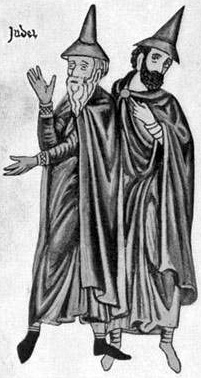
Its well documented that Romans would absorb religions and religious ideas from other cultures while 'Romanizing' them for domestic consumption This was the case with almost every culture they had contact with - and even the ones they didn't.
The glaring exception to this seems to be the Jewish faith. (Correct me if I'm wrong but) there's almost no example of syncretism towards the Jewish religion or any of its concepts even though Romans had been in contact with Judaism for centuries.
In my previous posting of this question, someone did reply [it got auto-deleted afterwards] that Judaism's monotheism didn't appeal to the Romans as well as the thousands of Talmudic laws but also its strict dietary laws.
Yet this does not answer why absolutely no attempts were made at syncretism at all, after all Roman versions of appropriated religions often bore little resemblance to their point of origin anyway.
For example why don't we ever see something like a 'Cult of Abraham' or 'Cult of David' that has no resemblance to the main Jewish faith but clearly has its origins within it?
Is it possible something like this DID exist but has since been lost or evidence of it remains buried deep underground and since forgotten?
Or was there maybe some sort of formal agreement amongst Jews and Romans that the Jewish religion would be left alone and not appropriated in any way?
2 Answers 2020-12-16



.jpg)